 Sign In



 Australia; NSW; VIC; QLD
Expert Reaction
These comments have been collated by the Science Media Centre to provide a variety of expert perspectives on this issue. Feel free to use these quotes in your stories. Views expressed are the personal opinions of the experts named. They do not represent the views of the SMC or any other organisation unless specifically stated.
Dr Chris Derry is a Senior Lecturer & Principal Research Supervisor: Toxicology and Environmental Epidemiology at Western Sydney University
Listeriosis is fortunately a rare Australian disease with an average of only 77 notified cases per year over the past 10 years, as compared with 13,331 cases of Salmonella as another foodborne infection. When Listeriosis occurs, however, it is unpleasant and dangerous, causing excruciating headaches, nausea, vomiting and in 18% of cases shock, coma and death. It can spread by the blood to most organs effecting the heart, liver, bones, joints and skin where pussy sores may erupt.
It is particularly feared in pregnancy as it may be symptomless in the mother but nevertheless passed on to the foetus causing abortion, stillbirth or sudden death of an apparently healthy infant in a few days. Although the disease rarely makes an appearance, the organism itself occurs worldwide and may be carried by up 20% of a population. The organism is also found widely in soil, water, livestock feed, manures and in animals themselves and typically causes overt disease only when transmitted in food to older adults, pregnant women, and to the immunocompromised. The latter group includes alcoholics, smokers, HIV-positives, diabetics, heart and liver disease sufferers, and corticosteroid users.
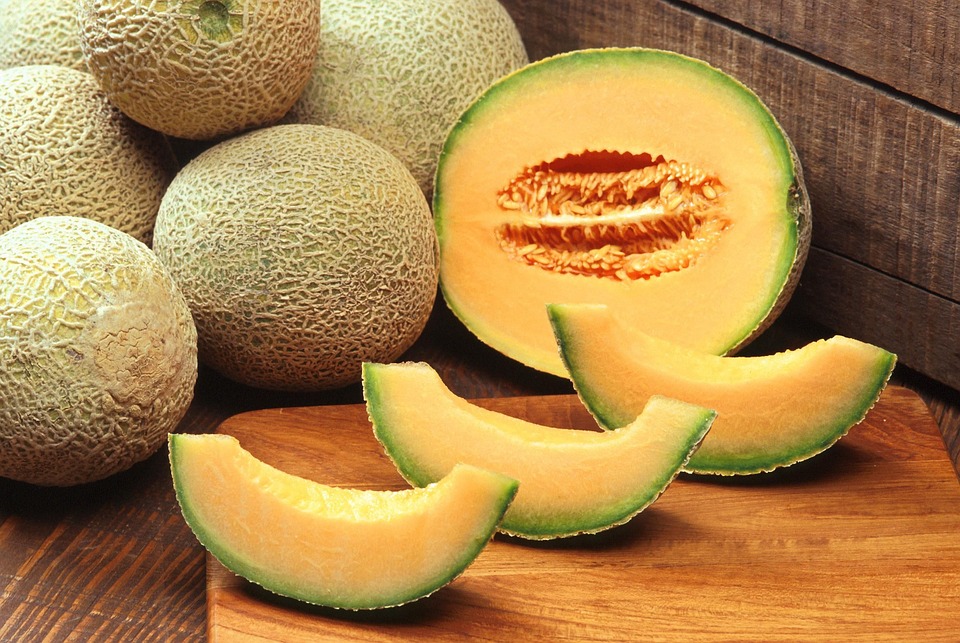
To help prevent the disease, all who work with food must practice hand washing after using the toilet or working in the garden, and again before handling food. This may be neglected on food farms, where safe handwashing facilities are far from fields, and where untrained labour is hired for picking operations. Removing adhering dirt is essential when fruit and vegetables are processed. Rock melon presents a thin, low acid, matt skin which is both good collector and poor barrier to dirt and bacteria. Nevertheless, contamination at sufficient level to cause an outbreak could be considered to indicate a serious lapse in irrigation, handling or storage hygiene.

Dr Kim-yen Phan-thien is a Lecturer in Food Science and Coordinator of the Bachelor of Food and Agribusiness at the Sydney Institute of Agriculture in the Faculty of Science at the University of Sydney
What’s happened?
The NSW Food Authority published a media release on 28 February advising of a Listeria outbreak linked with rockmelons from a property in Nericon NSW. There have been ten cases of illness in elderly patients in NSW, VIC and QLD. Two of these have unfortunately been fatal.
The advice from health authorities is for to discard or return any rockmelons currently at home.
What is Listeria?
Listeria is a bacteria that occurs naturally in the environment, and is commonly found in soil and water. Some strains can cause illness in humans, called listeriosis. In general, the majority of the population is not at risk. However this disease affects susceptible populations, for example, the very young, pregnant, the elderly, and people with weakened immune systems.
Are fruit and vegetable safe? Are rockmelons safe? Should I eat them?
Yes, fruit and vegetables are on the whole safe. This does not mean that potential contamination of fresh produce will not happen in the future. Fruit and vegetables are grown in natural environments, and as such are naturally exposed to environmental organisms. Our supply chains are complex and Australia has well defined food safety systems in place from farmer to retailer to minimise risks. The rockmelon industry is particularly vigilant because of the characteristics of the crop, for example, it’s grown on the ground and the rind has a netted surface that can trap soil and moisture. However, fresh produce is not sterile and no system is infallible.
How likely is it to occur again?
Food safety is the number one priority for the Australian fresh produce industry and there is strong support to continually improve our understanding of risks, our methods of risk assessment, and our management of risks. In particular, industry supports food safety research through the Fresh Produce Safety Centre-Australian and New Zealand, and the ARC Training Centre on Food Safety in the Fresh Produce Industry based at the University of Sydney.
Lydia Buchtmann is spokesperson for the Food Safety Information Council
There has been a national outbreak of listeriosis with 10 cases and two deaths linked to the outbreak. Disease onset was from 17 January 2018. Cases have been identified in NSW (6), Victoria (1) and Queensland (3).
There has been a significant increase in listeriosis cases in January and February 2018 with 30 cases so far compared with 71 for all of 2017. This indicated a fresh produce item such as lettuce or rockmelon was the most likely source.
Further investigation showed 10 cases that were linked. Epidemiological evidence implicates rockmelon as a potential source, most likely from a farm based in Nericon (near Griffith) in south west NSW.
Major supermarkets have withdrawn rockmelons from shelves, consumers have been assured via media release rockmelons currently available on shelves are not implicated in this outbreak.
Listeria is found widely in the environment and rarely causes serious illness in the general population but for vulnerable people, such as those who are over 70, pregnant, or have diabetes, cancer or suppressed immune systems, it can be extremely serious or even life threatening. Vulnerable people are reminded to avoid all foods that pose a risk of listeriosis, including:
➢ Pre-cut melons such as rockmelon or watermelon
➢ Pre-packed cold salads including coleslaw and fresh fruit salad
➢ Pre-cooked cold chicken, cold delicatessen meats, pâté
➢ Raw seafood, uncooked smoked seafood (e.g. smoked salmon)
➢ Unpasteurised milk or milk products, soft cheeses (e.g. brie, camembert, ricotta or blue-vein)
➢ Sprouted seeds or raw mushrooms.
For more information on Listeria see http://foodsafety.asn.au/advice-on-listeria/
Professor Enzo Palombo is Acting Dean in the School of Science at Swinburne University of Technology
Listeria is found through the environment – in soil and water – and is able to contaminate foods during any stage of production. Ready-to-eat foods are often linked to outbreaks because these foods are not processed further (e.g. by cooking).
The current incident has been linked to bacteria found on the skin, not the flesh, of rockmelons. However, the risk is that the bacteria can be transferred to the flesh during preparation (cutting and slicing). Storing whole or cut fruit in the fridge does not eliminate the risk as Listeria bacteria survive and grow at low temperatures.
The advice from the health authorities is to discard any fruit (whole or cut).
The at-risk people for Listeria are those with weakened immune systems - notably the young, the old, the pregnant and the immunocompromised.
The incubation period for Listeria is a few weeks, so people can fall ill a long time after eating the contaminated fruit. A similar outbreak in 2011 in the US resulted in 146 cases and 30 deaths across 28 states.
