Sign In



 International
News release
From:
Chemistry: Cracking the mystery of how the chemical origins of life formed *IMAGES*
Heat flows through cracks in rocks, such as those found in volcanoes or geothermal systems, can purify molecules relevant to the chemical origins of life, laboratory experiments described in Nature reveal. The study offers an explanation for how the first building blocks of life may have formed from complex chemical mixtures.
The formation of biopolymers and their components was a key moment in the origins of life on early Earth. However, these pathways are hard to replicate in the laboratory. Often, the number of by-products forming from these complex reactions means the formation of biologically relevant building blocks occurs in near-negligible amounts. Previous attempts to devise a purification method have been limited by their specificity, being unable to isolate a wide range of molecules at once.
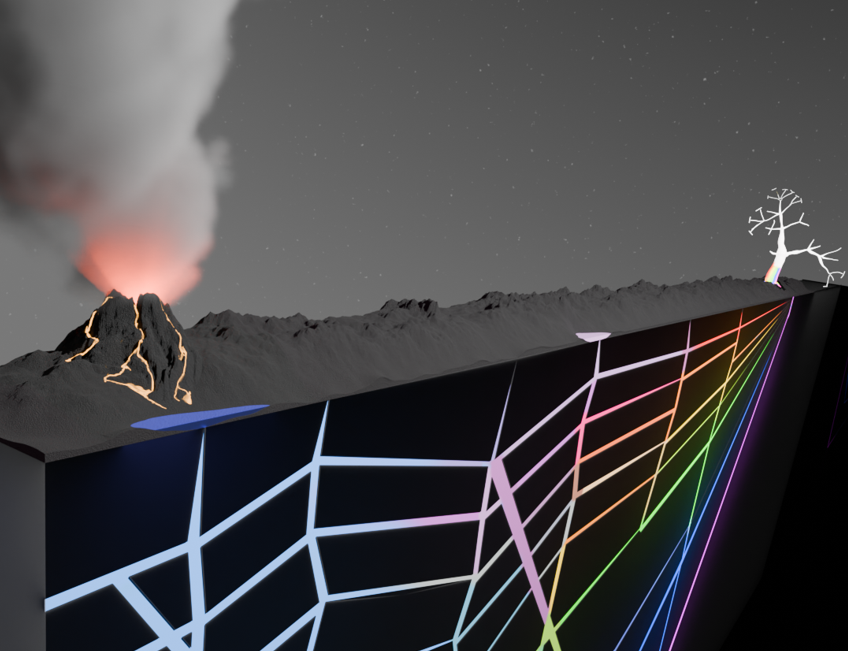
Christof Mast and colleagues use geologically inspired chambers with miniscule (170-µm) cracks to separate over 50 molecules relevant to prebiotic life from complex mixtures of amino acids, nucleobases, nucleotides and other compounds. Vast networks of similar cracks can be found in the Earth’s crust and are thought to have been abundant on Earth before life formed. The mixture was filtered along a temperature gradient, which enables the isolation and enrichment of specific molecules, owing to slight differences in their molecular structure.
The experimental results show that even a moderate temperature difference was sufficient to separate and purify several types of prebiotic molecules, including 2-aminozoles and amino acids, increasing their concentrations by a factor of ten and three orders of magnitude, respectively. The concentration ratios could be improved further by increasing the size of the network of cracks and are shown to be successful across a variety of temperatures, solvents and pH values. The experimental conditions were shown to facilitate the coupling of two glycine molecules, a starting point in peptide synthesis, aided by forming concentrations five times higher than the starting mixture.
The success of this method suggests that naturally occurring geothermal heat flows could have driven this separation in the early Earth and provides an efficient method for producing the compounds necessary to study the origins of life.
Multimedia