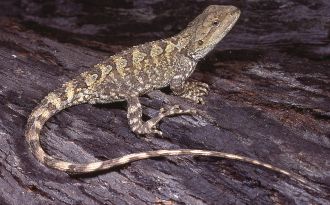
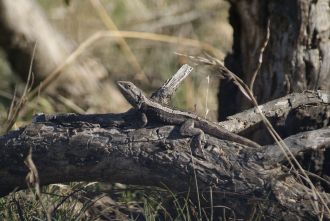
Did hot girls start as boys? Heat may override genetics when it comes to the sex of our Jacky dragon

Publicly released:
Australia; NSW; SA; ACT
 © John C. Wombey
© John C. Wombey

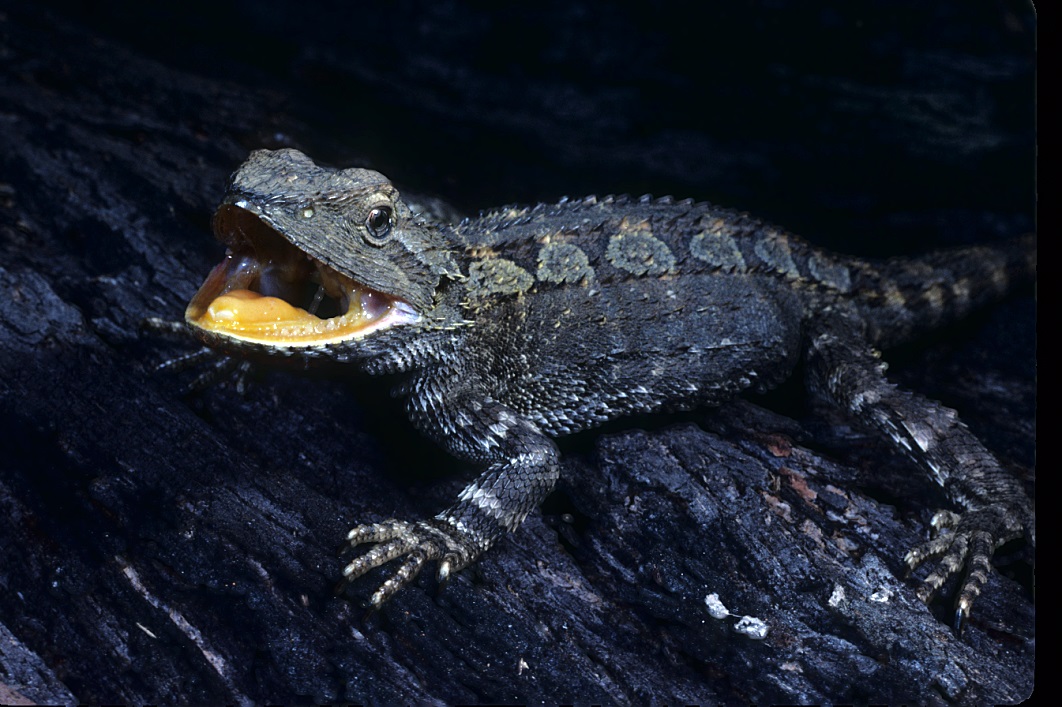
In many reptiles, sex is determined by incubation temperature, but Australian researchers say for one Aussie lizard, the Jacky dragon, there may be a previously unrecognised role for genes too. The Jacky dragon tends to have female babies when eggs are incubated at both hot and cold temperatures, but a more even 50:50 gender split at mild temperatures. The Aussie researchers discovered that around half of the lizards incubated at extreme temperatures had what's called 'ovotestes' - which have both testicular and ovarian aspects. They say this suggests that these lizards may have had a genetic 'male' component which the high temperature is overriding.

Media release

From:

Ovotestes suggest cryptic genetic influence in a reptile model for temperature dependent sex determination

Proceedings of the Royal Society B: Biological Sciences

In many reptiles, sex is determined by incubation temperature, such as in our study species, the Australian Jacky dragon. We present new developmental data that suggests this species may have an underlying genetic influence on sex. We also show that the proportions of males and females produced at different incubation temperatures differs to what was previously understood for the species. Ultimately, how temperature can interact with genetics to influence sex in reptiles, and in vertebrates more broadly, is an important area for future study.

Multimedia
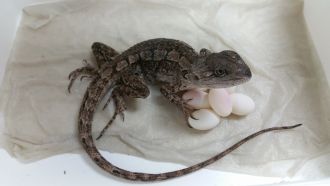
Jacky Dragon with eggs
Jacky Dragon (Amphibolurus muricatus)
Journal/
conference:
Proceedings of the Royal Society B
Research:Paper
Organisation/s: University of Canberra, CSIRO, Flinders University, The University of New South Wales
Funder: This work was supported by a CSIRO Research Plus Postgraduate Award awarded to S.L.W., and by a Discovery Grant from the Australian Research Council (DP170101147) awarded to A.G. (lead), C.E.H., Janine Deakin, Tariq Ezaz, Stephen Sarre, Lisa Schwanz, Paul Water and Jennifer Marshall Graves.
Media Contact/s
Contact details are only visible to registered journalists.