 Sign In



 New Zealand
News release
From:
A new study published in the Journal of the Royal Society of New Zealand analysed the dental health of a group of orca which stranded in Te Waewae Bay, Western Southland in 2014. The nine orca (six females and three males) stranded and subsequently died. Their remains were collected, processed and studied by marine mammal scientists in partnership with Ōraka Aparima Rūnaka.
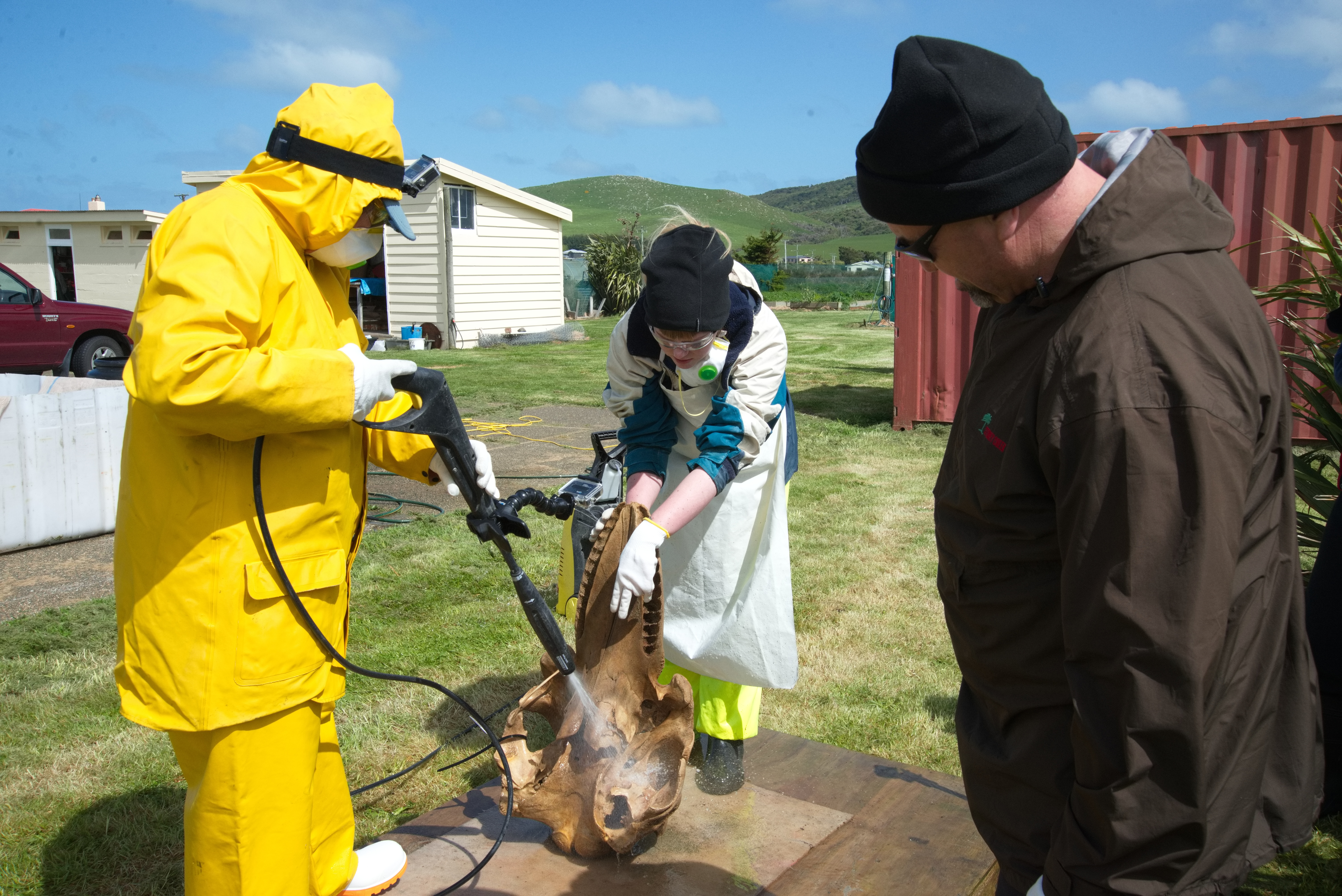
The recovery of the animals followed traditional protocols and methods guided by a senior practitioner and tohunga (Ramari Oliphant-Stewart). As part of this mahi, the recovered orca were photographed and measured on site. In keeping with Māori customary practices, each recovered orca was identified with an individual name that was used alongside their stranding catalogue ID. Skulls from 9 animals and 4 full skeletons were collected and processed using traditional methods.
The dentition of each animal was analysed for tooth wear and dental calculus deposits. All orca had some teeth worn; however, most teeth were only worn superficially. Only two individuals had severe wear; nonetheless, no exposure of the pulp cavity was observed. This is important because pulp exposure is relatively common in orca kept in captivity but seems to be uncommon in the wild. Calculus deposits were found in 8 of the nine orca, more common in the upper dentition.
This study is important due to two main reasons: 1) it provides a detailed dental evaluation of all teeth in all members of a single mass stranding event, which likely lived in the same environment and experienced the same diet and conditions of health; 2) the partnership with Ōraka Aparima Rūnaka alongside senior expertise, support from local Western Southland communities, and the Department of Conservation for the recovery, preparation and study of dental and skeletal remains. It reinforces the importance of the partnership between Mātauranga Māori and Western science to better understand our natural world.

