 Sign In



 International
News release
From:
Chemistry: Spray-on fabric coating lightens the environmental load from laundry
A newly developed spray-on fabric coating could allow clothes to be cleaned using only water. The coating, described in research published in Communications Chemistry, can be applied to natural and synthetic fabrics and could potentially decrease the water and energy consumption of a typical laundry load by more than 80%.
Modern laundry practices use large amounts of water and energy and require detergents to remove stains. These detergents often increase the release of microplastics from clothing and can pollute water bodies. Most efforts to make laundry more sustainable have so far focused on reducing water and energy consumption.
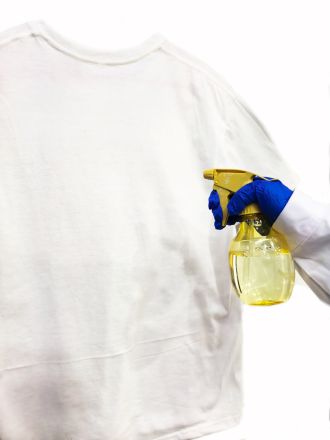
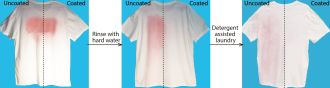
Chongling Cheng, Dayang Wang, and colleagues sprayed two chemicals — poly(diallyldimethylammonium chloride) (PDADMAC) and poly(vinylsulfonic acid) (PVS) — onto clothing in alternating cycles to produce five thin bilayers (double layers of closely packed molecules). The bilayers formed a coating with a very high surface density of sulphonate groups, which attract and hold a layer of water molecules. This prevents common stains from sticking to the fabric, allowing them to be removed with a single water-only rinse in a standard washing machine.
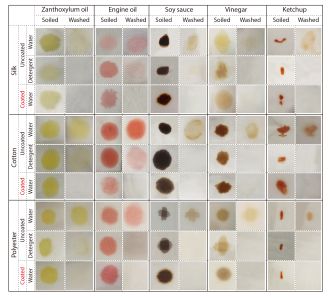
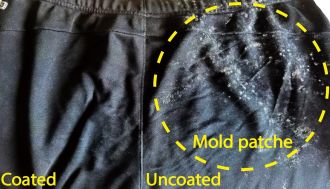
The authors tested the stain removal capability of their coating and rinse method against a conventional washing cycle with detergent. The coating matched or outperformed conventional methods on all three materials tested — cotton, polyester, and silk — and on all stain types (including engine oil and soy sauce). It also outperformed conventional methods in antibacterial and antifungal performance. Tests on mouse cells suggest that the coating is likely safe for skin contact, while experiments involving red beans (Vigna umbellata) suggest it does not affect plant growth.
The authors say the coating remains intact after exposure to sunlight, repeated wear, and over 100 laundry cycles, and also say it reduces the release of microplastics from synthetic fibres compared to conventional methods. They estimate that the coating could reduce the water, electricity, and time consumption of a laundry load by over 80%, based on typical washing machine cycles of one washing and four rinse stages. They do note that the coating would most likely need to be applied during clothing manufacturing, and also caution that its cost is substantially higher than that of detergent. However, they estimate the initial cost would be offset after 15 to 50 laundry cycles, depending on the detergent used.
Multimedia

Attachments
Note: Not all attachments are visible to the general public. Research URLs will go live after the embargo ends.


