 Sign In



 International
News release
From:
Bonobos who hear laughter are more likely to anticipate a reward *IMAGES AND AUDIO*
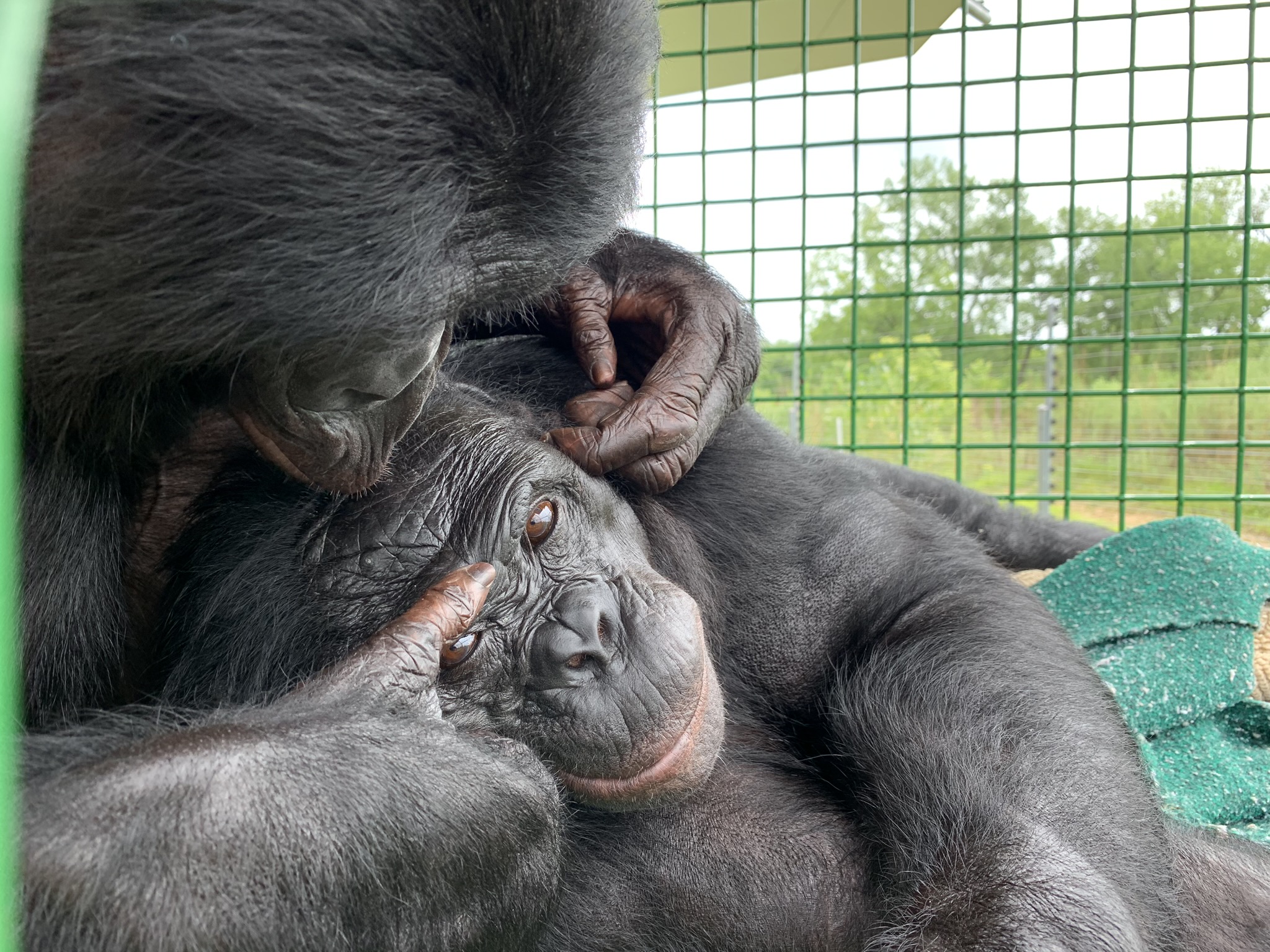
Bonobos (Pan paniscus) are more likely to approach an object which may or may not result in a reward when they hear laughter, finds research published in Scientific Reports. The study, which monitored four bonobos trained to interact with or ignore different boxes depending on whether they might contain food, suggests that hearing positive sounds may influence their foraging and searching behaviour.
Great apes have been observed producing vocalisations resembling human laughter during play and tickling. These noises are thought to have evolved to reduce the risk of play being misinterpreted as aggression, and may demonstrate emotional contagion between individuals. This emotional contagion — where emotional signals like laughter trigger similar emotional states in others — is considered an important component of empathy.
Sasha Winkler, Erica Cartmill, and colleagues assessed the cognitive abilities of four bonobos — Mali, a 14-year-old female, Teco, a 12-year-old male, Kanzi, a 41-year-old male, and Nyota, a 24-year-old male — at the Ape Cognition and Conservation Initiative in Des Moines, Iowa. The apes were familiarised with a black box containing a food reward and an empty white box, and trained to press a button to reject the white box. Three ‘ambiguous’ boxes in shades of light, medium, and dark grey were intermittently presented, and contained a food reward in 50% of trials. The tests were run with recordings of either bonobo laughter or an ambient wind sound playing for seven minutes and 28 seconds. The bonobos approached the black box 93% of the time but only approached the white box 1% of the time. When presented with the grey boxes, the apes approached darker grey boxes more frequently than lighter grey boxes. Considering all trials of grey boxes together, the bonobos were more likely to check the grey boxes after hearing recorded laughter, with laughter increasing the odds of them approaching these boxes by 3.4 times compared to the control sound.
The authors suggest that the sound of laughter may have prompted emotional contagion in the bonobos, which influenced their behaviour and made them more likely to approach an ambiguous stimulus. They note that the study sample size is small, and suggest future studies could focus on the role of laughter in the evolution of social bonding in primates.
Multimedia








Attachments
Note: Not all attachments are visible to the general public. Research URLs will go live after the embargo ends.


