 Sign In



 International
News release
From:
Scores of dinosaurs walked and swam along a Bolivian shoreline
Over 16,000 footprints identified in the world’s most extensive dinosaur tracksite.
A fossil site in Bolivia preserves thousands of traces of dinosaurs who walked, ran, and swam along an ancient coastline, according to a study published December 3, 2025 in the open-access journal PLOS One by Raúl Esperante of the Geoscience Research Institute, California, U.S., and colleagues.
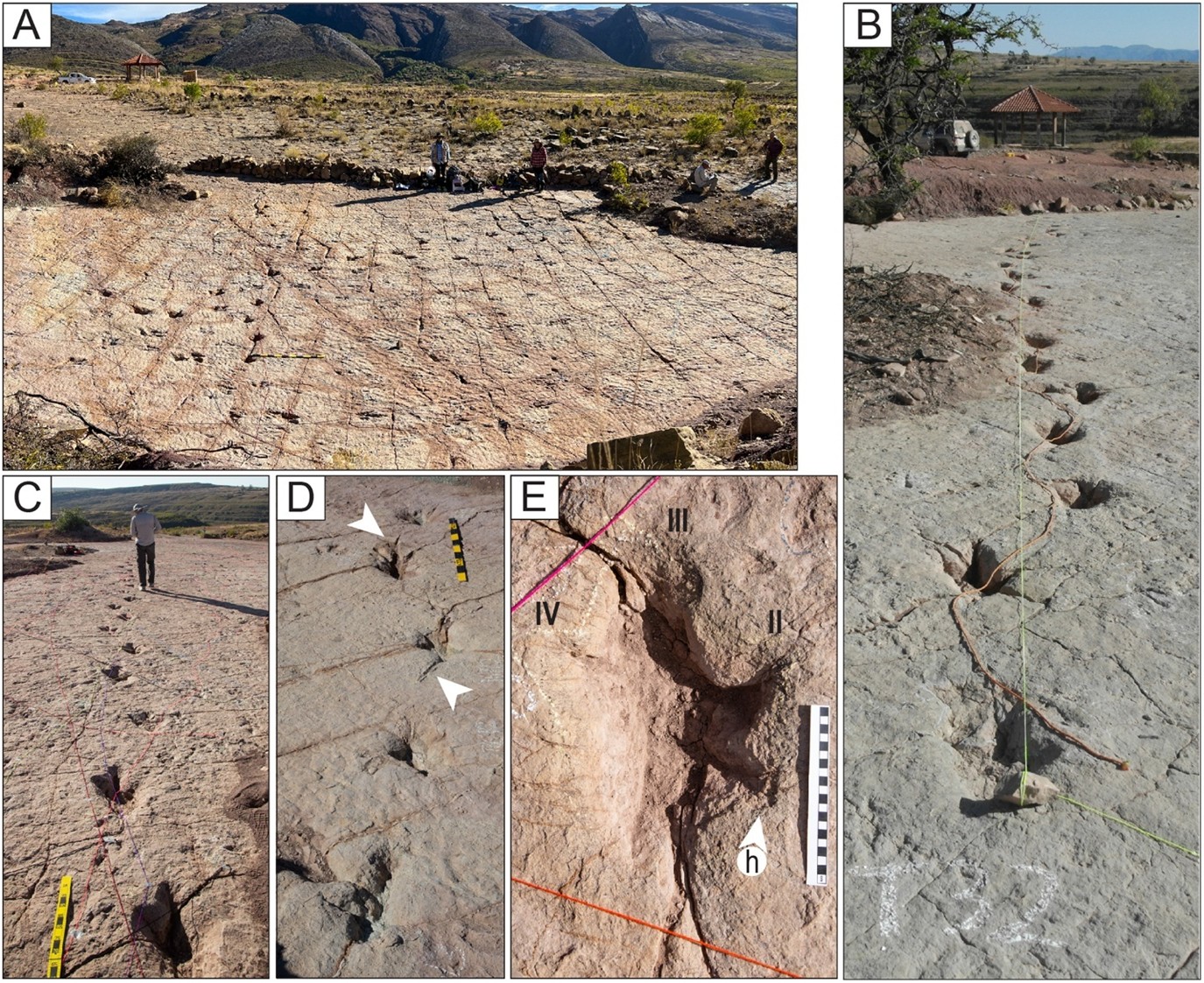
Bolivia is well known for its abundance of fossil sites preserving dinosaur footprints. These sites provide unique details into the behaviors of ancient species, but most such sites remain unpublished. In this study, Esperante and colleagues report an unprecedented variety of dinosaur tracks at the Carreras Pampas tracksite in Torotoro National Park.
Across nine study sites, the authors document more than 16,000 tracks left by three-toed theropod dinosaurs at the end of the Cretaceous Period. These tracks range in size from tiny (<10 cm) to large (>30 cm) and record a variety of dinosaur behaviors, including running, swimming, tail dragging, and even sharp turns. Most of these tracks are oriented roughly northwest-southeast, with ripple marks preserved in the sediment, suggesting these dinosaurs were roaming alongside the ancient shoreline.
The Carreras Pampas tracksite sets new world records for the number of individual dinosaur footprints, continuous trackways, tail traces and swimming traces. This unprecedented abundance suggests this was a high-traffic area, and the parallel orientation of some footprints might indicate groups of dinosaurs traveling together. The authors note that many more footprints remain to be explored at this tracksite and others in Bolivia.
“This site is a stunning window into this area’s past. Not just how many dinosaurs were moving through this area, but also what they were doing as they moved through.”
“It’s amazing working at this site, because everywhere you look, the ground is covered in dinosaur tracks.”

