 Sign In



 International
News release
From:
Whales may divide resources to co-exist under pressures from climate change
28 years of data show that three whale species in the Gulf of St Lawrence may be dividing resources to survive in an ecosystem that’s changing under a warming climate and increased human encroachment
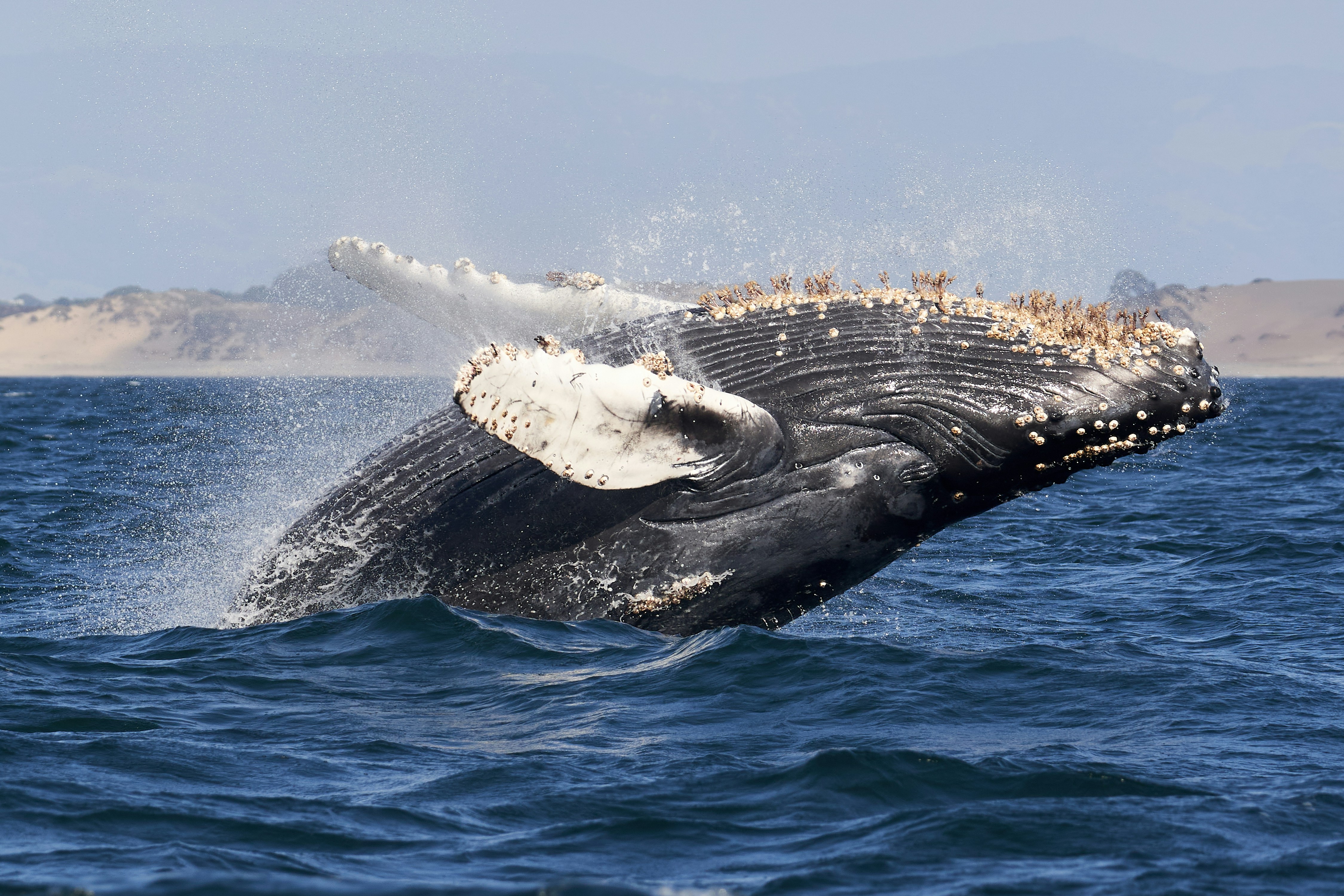
Shifting ocean conditions mean that animals have to adjust to the loss of some food sources and changes in their habitats. Now, researchers have used almost 30 years of data to document how the trophic niches and diets of fin, minke, and humpback whales have shifted in the context of environmental changes in the North Atlantic Ocean. They found that these whales are eating more fish and less krill than they used to. Whales also divvied up resources more clearly and kept more to their own niches, which could indicate reduced prey availability in recent years.
The North Atlantic Ocean is warming up. Higher temperatures and increased human activity in the region can trigger abrupt changes in marine ecosystems, for example how species are distributed and what they eat.
In a long-term study published in Frontiers in Marine Science, researchers in Canada have examined the diet of three rorqual whale species and how these whales might have adapted their feeding habits as climate change and increasing human presence reshape the ecosystem of the Gulf of St Lawrence (GSL), a seasonally important feeding area for many whale species.
“A recent increase in resource partitioning among fin, humpback, and minke whales in the study area may reflect an increased competition level in response to limited resource availability,” said first author Charlotte Tessier-Larivière, who studies changes in rorqual whale diet in the GSL under climate change at the Maurice Lamontagne Institute. “As Arctic krill is consumed less, we see fin and minke whales relying more on pelagic fish, making it an important prey source for all studied species.”
Baleen food chronicles
The study provides a rare glimpse of long-term changes in whale feeding ecology. Over 28 years, researchers collected 1,110 skin samples from fin, humpback, and minke whales. Those samples were analyzed to determine stable nitrogen and carbon isotope ratios, which can give information about what whales ate and which position they occupy in the food web. The three study periods – from 1992-2000, 2001-2010, and 2011-2019 – correspond to shifts in environmental conditions, from below-average to near-average to higher-than-average water temperatures and sea ice indices.
The results showed that whales’ food in the GSL may be running low, but that whales can and might already have adjusted their diet to what prey is available. “Highly mobile species like baleen whales can use several strategies to reduce competition, for example by shifting their feeding timing or area, or selecting different prey within a feeding area,” said Tessier-Larivière.
Sharing is caring
Minke whales showed the highest niche overlap with the other species, sharing around 65% of their core niche during the 2000s, and 47% during the 2010s. Humpback whales, who naturally occupy a smaller niche, shared around 56% and 9% of their niche with minke whales during the 2000s and 2010s. Fin whales shared their niche only with minke whales, with overlaps of 42% and 29% during the 2000s and 2010s, respectively.
Niche overlap fluctuates with resource availability. If resources are abundant, multiple species can exploit them, which increases overlap. If resources becomes scarce, competition tends to intensify and individuals and species may try to reduce competition, for example by diversifying their diet or by specializing on different prey. As a result, niche width can expand and niche overlap decrease – as it did in the GSL. “This strongly suggests a decline in resource availability and increased competition at both intra- and interspecific levels,” explained Tessier-Larivière.
Over time, all species included in the study shifted towards more fish-based diets. Fin whales primarily fed on krill in the 1990s, but shifted to feeding more on fish such as capelin, herring, or mackerel in the 2000s, and then to more sand lance and Northern krill in the 2010s. This shift to new food sources may reflect a decrease in Arctic krill abundance in the North Atlantic. Humpback whales largely relied on a few fish species, such as capelin, herring, or mackerel throughout the study period. Minke whales primarily fed on pelagic fish species but also consumed krill more frequently later into the study.
Complete competitive exclusion, where species that compete for the same resource cannot co-exist, wasn’t observed in the GSL. “This ecosystem seems sufficiently productive and offers alternative prey that are partitioned across space and time,” Tessier-Larivière said. “These conditions promote co-existence rather than one species outcompeting and excluding the others.”
Protecting species by protecting food
While nitrogen and carbon isotope analyses make it possible to learn what animals ate, uncertainties regarding time and location of feeding remain. It is possible that zooplankton consumption by some of the studied whale species was underestimated. Determining the contribution of each prey to whales’ meal plans is challenging as isotopic signatures may not differ between prey species, which limited the ability to estimate the relative importance of each fish species.
Protecting species’ habitat and prey sources is just as important in conservation as protecting species themselves, and long-term studies with large sample sizes are vital. “Rapid environmental changes occurring in the GSL seems to have already impacted rorquals,” Tessier-Larivière concluded. “It is crucial to monitor their trophic niche and consider this information for fisheries management and the development of marine protected areas.”
Multimedia

Attachments
Note: Not all attachments are visible to the general public. Research URLs will go live after the embargo ends.


