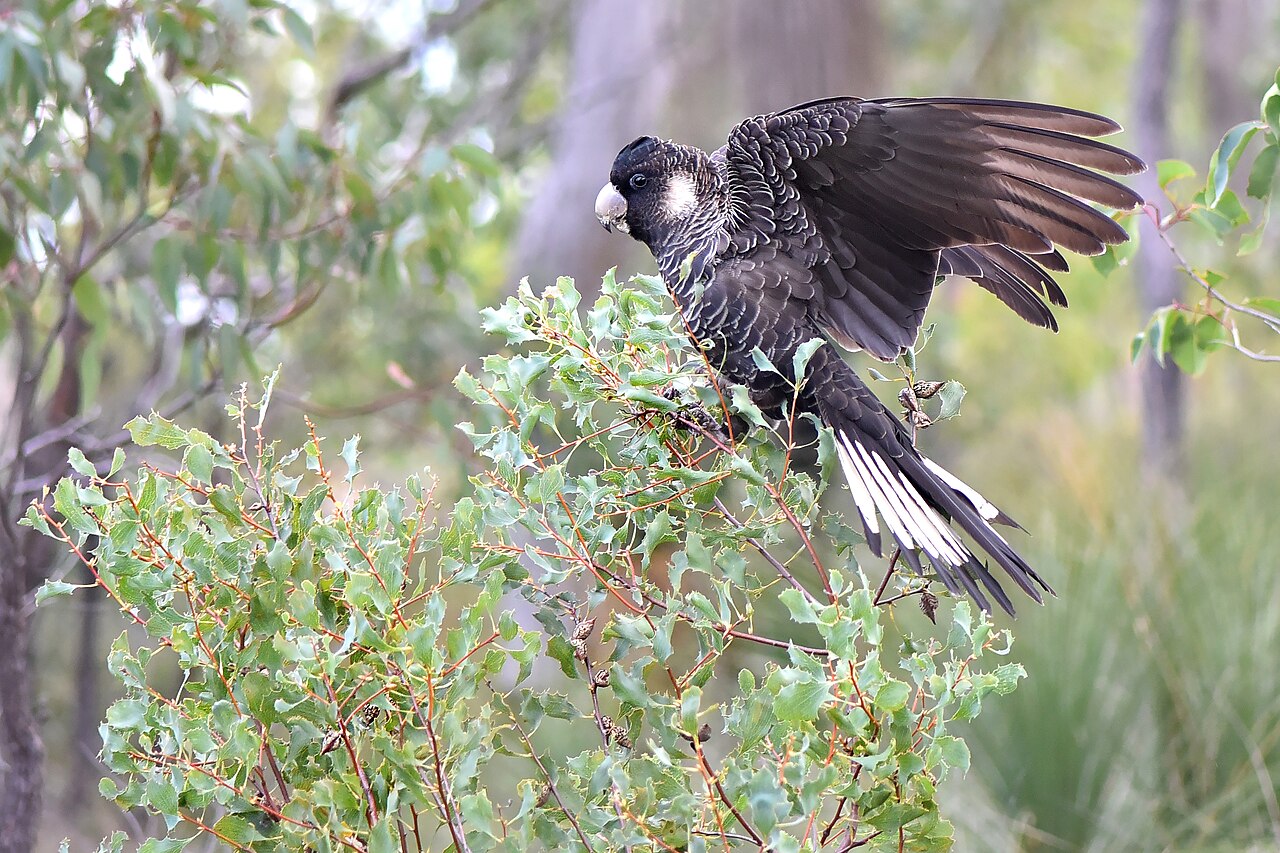
'Trauma hotspots' identified for black cockatoo vehicle collisions in WA

Publicly released:
Australia; WA
Creative Commons Attribution 2.0 Generic license. This image was originally posted to Flickr by jeans_Photos at https://flickr.com/photos/63479603@N00/50022423137

High-density road networks and nearby roosting sites can lead to 'trauma hotspots' for black cockatoo species in WA, according to Aussie research, which also found that injuries due to vehicle collisions have increased in frequency between 2011 and 2020. The researchers studied Perth Zoo's veterinary department admission records for 547 black cockatoos involved in vehicle collisions, finding several hotspots for locations where more collisions occurred. They found that these hotspots were places with higher road density, higher remnant vegetation, and closer night-time roosting sites. Hotspots were found south of the Swan/Canning Rivers, surrounding university campuses where known roosting sites exist, around the Perth metropolitan area, and close to the western edge of the Darling Scarp.

Journal/
conference:
Pacific Conservation Biology
Research:Paper
Organisation/s: The University of Western Australia
Funder: The authors received no financial support for the research, authorship or methodology of this investigation.
Media Contact/s
Contact details are only visible to registered journalists.