 Sign In



 Australia; QLD; ACT
News release
From:
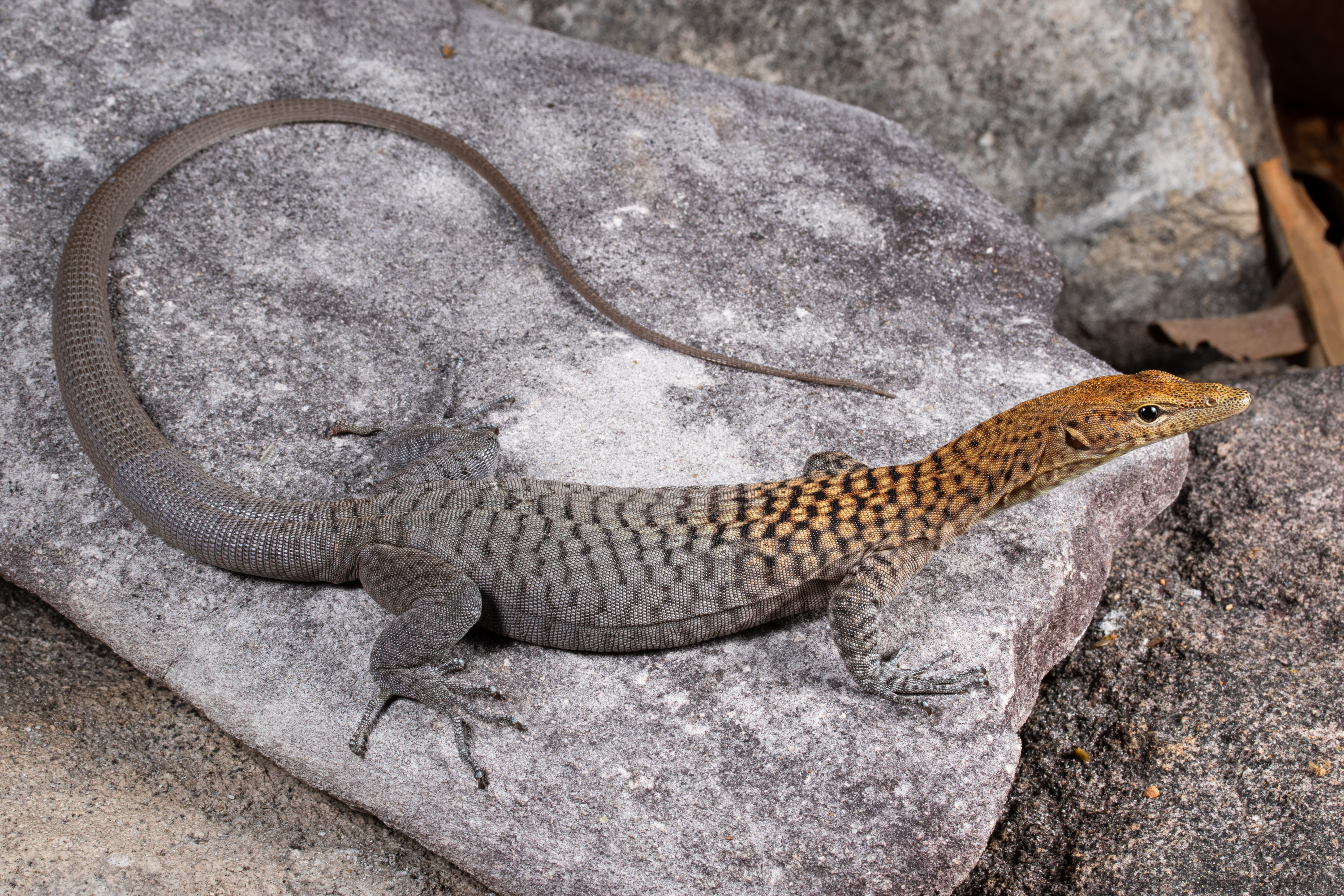
Three striking new species of rock-dwelling monitor lizards have been formally described from the savannas of north-eastern Queensland, revealing a previously unrecognised evolutionary lineage.
The discovery, led by researchers from The Australian National University (ANU), identified the Rainbow Rock Monitor (Varanus iridis), the Orange-headed Rock Monitor (Varanus umbra) and the Yellow-headed Rock Monitor (Varanus phosphoros).
Together, the three species represent the first rock-adapted monitors formally recorded from the eastern Australian savannas.
“Australia has a few rock monitors, but they’re all known from much further west,” co-lead author Dr Stephen Zozaya from ANU said.
“These are the first rock monitors known from the eastern Australian savannas.”
The team initially believed the lizards represented a single, variable species.
“We were blown away when the first genetic results came back. These three species are more distinct from one another than many monitor species that have been recognised for decades,” Dr Zozaya said.
Detailed genetic and morphological analyses confirmed the three populations are distinct species that have been evolving independently for millions of years.
The findings reshape our understanding of diversity within one of the world’s most iconic lizard groups – the same lineage that includes the Komodo dragon.
“All three species names refer to light in some way, to highlight the beautiful and distinct colouration of each of the new species. We feel very lucky to have had the chance to describe them,” Dr Zozaya said.
The newly described lizards are closely tied to rocky outcrops scattered across the savanna landscape.
Much remains unknown about their ecology, population sizes and exact distributions.
“These goannas are hard to find and hard to observe. More survey work – including records from nature enthusiasts – will be important for working out just how widespread these species really are,” Dr Zozaya said.
The discovery also underscores how much biodiversity remains undocumented in northern Australia.
“These three species suggest there may still be a lot left to discover in northern Australia, even when it comes to large reptiles,” Dr Zozaya said.
Because monitor lizards attract significant attention from wildlife observers and reptile keepers, the species may face risk from habitat disturbance and illegal collection.
“Monitor lizards attract a lot of attention, from keen naturalists to reptile keepers. Unfortunately, some people searching for these animals are careless and damage cap-rock habitat – we’ve seen it firsthand,” co-lead author and ANU PhD researcher Wesley Read said.
“Even slight rock displacement can make a shelter unusable. There’s also a poaching risk, and we’ve already seen photos on social media showing some of these lizards in captivity.
“Most populations are in remote, rugged country, but I do worry about the most accessible areas. Time will tell.”
The project brought together researchers, postgraduate students and experienced field naturalists.
“We all fed off each other’s excitement to get it done, and that made it really special,” Mr Read said.
The findings mark the first time rock-adapted monitors have been formally documented from the eastern Australian savannas, challenging long-held assumptions about where these specialised lizards occur and highlighting how much of Australia’s reptile diversity remains to be uncovered.
The study is published in Zoological Journal of the Linnean Society.
Attachments
Note: Not all attachments are visible to the general public. Research URLs will go live after the embargo ends.


