 Sign In



 Australia

News release
From:
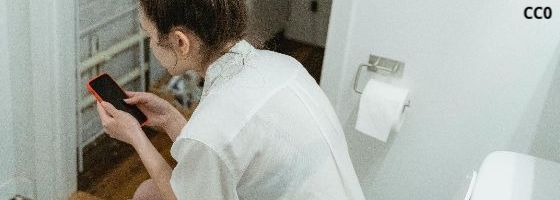
Too much ‘bogposting’ gave us piles
Chucked off social media this year, teens across Australia may miss those dopamine hits, but the ban might just have unexpected benefits that I’m 100% sure they’ll all appreciate. The pollies may have just saved them from piles!
That’s because research in September suggested your derrière could be paying dearly when you scroll through social media while ‘dropping the kids off at the pool’.
The US authors said those of us who love a phone on the throne are 46% more likely to sprout haemorrhoids (piles) than people who just do their business.
They think it’s because, like bad smells in a dunny, smartphone users tend to linger. They found 37% of us who log on while on the loo spend more than five minutes ‘logging off’, compared to just 7% of non-scrollers.
It looks like all that extra toilet time squeezes the veins in our nether regions, turning a quick pit stop into a pressure cooker.
So, next time you’re punishing the porcelain, be kind to your behind, and save the scrolling for later.
We learned that sea sponge wigs are so hot right now – if you’re a dolphin
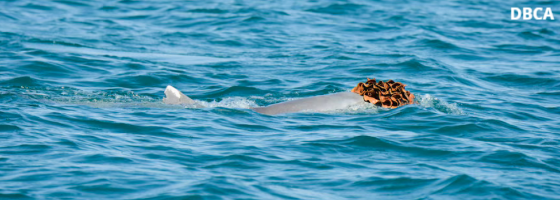
Apparently, nothing says “date me” quite like an obvious, ill-fitting wig - or so say male Australian humpback dolphins.
In Western Australia in October, scientists spotted these stylish cetaceans sporting sea-sponge ‘wigs’ on their heads - not for fishing, not as camouflage, but to woo the ladies.
The wigs were carefully placed, not accidental, so it looks like the sponges are a touch of deliberate bling, dolphin-style. They also come in a range of shapes, sizes and colours, perfect for the modish marine mammal about town.
So, next time you’re having a bad hair day, remember - somewhere beneath the waves, a dolphin is flexing its sea-sponge wig, hoping to get a few clicks of approval, and maybe even a mate.
Scientists captured snakebites in slo-mo, but one guy preferred the live performance
It was a plot that slithered straight out of a Hollywood B-movie (Snakes in a Vein, anyone?).
In May, we learned that a man called Tim Friede from Wisconsin had, for reasons that remain mysterious, injected himself with potentially deadly snake venom 856 times over nearly two decades.
His unique ‘collection’ spanned 16 snake species at doses that would normally kill a horse, but he’d been exposed so many times that he’d developed hyper-immunity.
Although his hobby rattled us, it turned out to be extremely useful when he happily handed over his blood to US scientists so they could cook up a ‘one-bite-fits-all’ antivenom using his antibodies. In trials, an antibody cocktail, in combination with drugs, fully protected mice against 13 of the 19 snakes the researchers tested and partially protected them against the other six. It’s currently being tested in Australian dogs.
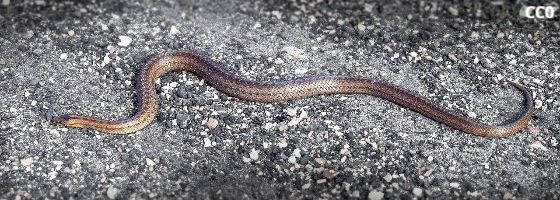
Then, in October, on the flipside of sanity, Monash University scientists investigated just how fast different snake species can strike by tempting them to bite cylinders of goopy medical gel, capturing the whole thing on high-speed 3D cameras at 1,000 frames per second.
Striking in under a tenth of a second, less time than it takes to blink, vipers were the speediest, suggesting a whole new meaning for the term ‘fast food’!
Google invented Duolingo for dolphins, sort of
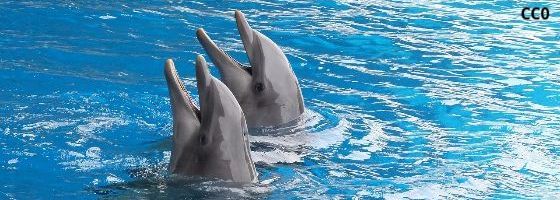
In April, we were introduced to DolphinGemma, Google’s attempt to let us to have a 'finwag' with everyone’s favourite marine mammal using artificial intelligence (AI).
So how does one build the ChatGPT of the sea? Well, the AI was trained using 40 years of recorded dolphin vocalisations – think whistles, clicks and rasps - from a pod of Atlantic spotted dolphins.
But before you slip into your budgie smugglers and ready your best banter, you, like me, might be disappointed to hear DolphinGemma can’t translate dolphinese into any human languages, or vice versa, yet.
So, what can it do? Basically, DophinGemma eavesdrops on dolphins, predicts what’s likely to come next, and replies with dolphin-style sounds. It uses predictive trickery, much like other AI chatbots, but with more clicks and whistles, and hopefully fewer howlers!
In a classy bit of acronym wrangling, the scientists have built a gadget called CHAT, or ‘Cetacean Hearing Augmented Telemetry’. Divers have taken CHAT beneath the waves and played the AI-crafted whistles to real dolphins. It’s still early days, but they say dolphins appear to be imitating the synthetic cetacean in response.
So, will we ever be able to tune in to dolphin ‘podcasts’? Perhaps not - some scientists think the animals are just repeating the AI noises, hoping they’ll be given a tasty reward, not delivering snappy comebacks.
But at least they didn't say, "So long, and thanks for all the fish."

We were bemused by a billionaire hen night in space
In April, brides-to-be around the world were well and truly left in the space dust by a hen night that’s going to be extremely hard to top - a jaunt to zero G with your besties.
Of course, it helps if your soon-to-be-betrothed is one of the world’s richest men. For Lauren Sanchez, that’s Amazon founder Jeff Bezos. As well as the online shopping behemoth, Bezos owns Blue Origin, a space tourism company, so it wouldn’t have been hard to get first class tickets.
The trip was the first all-female space mission in more than 60 years, and Sanchez’s guests were singer Katy Perry, TV host Gayle King, film producer Kerianne Flynn, and Amanda Nguyen and Aisha Bowe, two actual space scientists.
For roughly 10 minutes - marginally longer than one of Katy’s songs – the women floated around in zero gravity above the Kármán line, the boundary of outer space.
Although this had the potential to be a milestone for women in space science, many felt trips like this reduce the mystery and majesty of the cosmos into the latest way for the super-rich to flaunt their wealth.
Perry received the most attention, and backlash, for using the trip as an opportunity to spruik her tour and delivering a less than stellar rendition of “What a Wonderful World”. Clearly, Blue Origin has yet to install autotune.
It meant pre-launch remarks like “I'm excited to put the 'ass' in astronaut” may not have been interpreted as she'd hoped.
Sadly, it ended up feeling a bit like one small step for womankind, one giant marketing opportunity for Katy and Jeff.
Scientists found a spider web that could net a whale
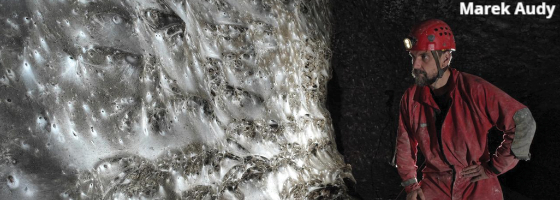
Arachnophobes, look away now! Why? Because in November, we learned that deep in a dank cave on the border between Greece and Albania lies what may be the most impressive example of an arachnid reno ever, and it’s big enough to snag a whale.
It’s not quite a world wide web, but it does stretch a whopping 106 square metres, making it the largest spider web ever seen.
Any arachnophobes still with us may be relieved to hear these silky threads weren’t spun by one mega-spider, but I suspect your relief will be short lived when I tell you that it was spun by around 111,000 spiders, which teamed up to build this monstrosity.
About 69,000 of them are humble house spiders (Tegenaria domestica) and roughly 42,000, sheet-weavers (Prinerigone vagans). They’ve clearly upgraded from your bathroom plughole to a feat of interior decoration that puts the new White House Ballroom to shame.
This collaboration is surprising, the scientists said, because house spiders normally gobble up sheet-weavers. But thanks to pitch-black darkness and an all-you-can-eat buffet of cave midges, they seem to have put their differences aside and embraced communal web development.
So, next time you’re freaked out by a tiny spider in the shower, just be thankful there aren’t 111,000 of them redecorating your house.
To avoid FOMO, because YOLO, we used whizzy Oz to see new colour olo
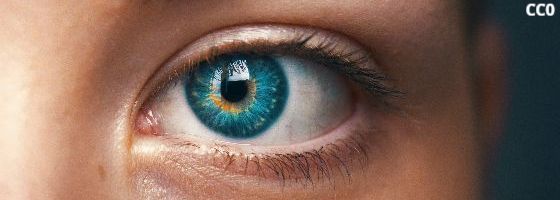
In April, US researchers introduced us to a colour so new it has yet to feature in a reno on The Block. In fact, only five people on Earth have ever seen it, but not because the scientists are keeping it under wraps until they’ve inked an exclusive deal with Pantone. It's because you can only see this new colour, named olo, if lasers are being fired into your eyeballs.
So, if you want to splash olo on a feature wall to impress the neighbours, you’ll also have to invest in a gadget called Oz. This maps the colour sensing cells called cones in the eye and and uses tiny laser pulses to zap them individually. To produce olo in the eye of the beholder, it focuses on our M-cones, which detect green colours. Our M-cones are hardly ever stimulated alone in nature, giving olo its strange and unique appearance.
Essentially, olo isn’t just a mix of light wavelengths like most colours - it’s a whole new experience, and one that could never be turned into paint or reproduced on a screen or by a printer. Bad news for that deal with Pantone, and your feature wall.
The lucky five who’ve had the pleasure say olo is unlike any other colour they’ve ever seen before, describing it as a “blue-green of unprecedented saturation”. So, it’s essentially turquoise, but so intense and vivid that it scrambles the brain and doesn’t look real.
So, why invent a new colour that nobody can see? The scientists hope their findings will help develop treatments for people who are colourblind.
We blew conch shells to stop sleep apnoea
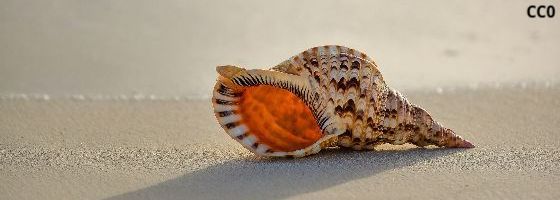
Move over CPAP, because we learned in August that the secret to beating sleep apnoea - where your breathing is interrupted while you sleep - might involve channelling your inner Moana and blowing into a conch shell like a trumpet.
Indian researchers said that playing a conch shell (a local, yogic ritual known as shankh blowing) seemed to help people sleep better with fewer pauses in their breathing at night, resulting in them feeling much perkier through the day.
Sixteen folks who tooted their way through 15-minute conch sessions five days a week for six months reported about a third less daytime drowsiness and had higher oxygen levels in their blood during the night than a comparison group of 14 who did plain old deep breathing exercises, the scientists said.
They think all that huffing and puffing into the spiral shells may be like gym session for your throat, toning the muscles around your airways and preventing them from flopping shut mid-snooze.
But don’t ditch your CPAP machine just yet, because the study was too small to be 100% conclusive.
However, it might just be the most stylish way yet to save your long-suffering partner from your snoring.
An unfortunate ancient Roman experienced the ultimate brain freeze
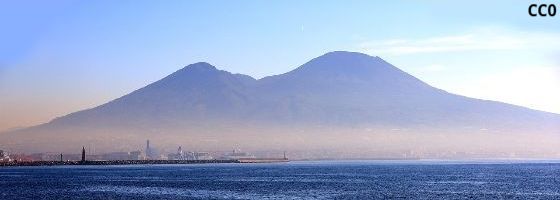
In grisly news that landed in November, international researchers said the eruption of Mount Vesuvius in 79AD was so hot that it triggered a chemical reaction which turned an unfortunate Roman’s brain into glass as he slept.
They found the remains of the man’s skull, still tucked up in bed with the rest of him, deep in the ash-buried ancient Roman town of Herculaneum, and noticed it contained dark shards that looked a lot like obsidian – the black, glass-like volcanic rock which forms from lava.
Analysing the shards, they found these were not obsidian at all, but parts of his brain which had vitrified – or been turned into glass through extreme heat followed by rapid cooling. It’s the same process we still use to seal ceramics today.
The scientists said vitrifying a human brain requires temperatures hotter than those typically seen during a volcanic eruption, which reach a mere 465°C, and faster cooling. So, it’s likely he was killed instantly by a super-heated ash cloud at 510°C or above which cleared very quickly, all before an onslaught of lava and ash smothered the town.
Fortunately for the researchers, his skull had protected his fragile brain from being completely obliterated, leaving the glassy shards to be found centuries later.
This is the world’s only known case of a human brain being turned into a glassy fossil by getting too hot, and then cool again, too fast, the scientists said.
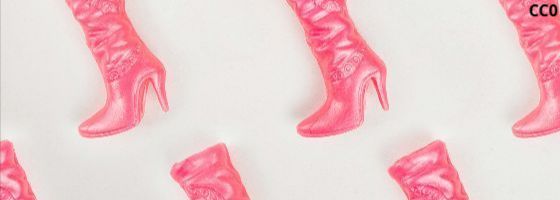
Barbie put her best footwear forward and kicked stilettos to the curb
May brought some good advice for any unrealistically proportioned plastic dolls out there, as Australian researchers revealed that the key to broadening career horizons may include ditching narrow, uncomfortable high heels in favour of a nice comfy pair of flats.
Barbie’s CV is nothing if not impressive, including stints in dentistry, pop stardom, nursing, engineering, spaceflight, and even the US Presidency, but the team found her career options didn’t really flourish until she got flat feet.
She debuted in 1959, and for 30 long, presumably very uncomfortable years, Barbie was perma-perched on impossibly high heels, a podiatrist’s worst nightmare. But, analysing more than 3,000 dolls, the researchers found she’s been quietly swapping out her stilettos, and reaping the rewards in career opportunities.
Inspired by that moment in the Barbie movie when her feet go flat, they checked out her arches over the decades and found a steady shift from tippytoes towards flatter feet, and more comfortable shoes, as her résumé grew.
In another inspired acronym, the researchers used a system called FEET – or Foot posture; Equity; Employment; and Time period - to reach their conclusions.
They found that by 2024, nearly two thirds of new Barbies were rocking flat feet, clearly more practical if you’re an astronaut one minute and a marine biologist the next.
Ken was not approached for comment.

