 Sign In



 Australia; VIC; QLD
News release
From:
Test strip breakthrough for accessible diagnosis
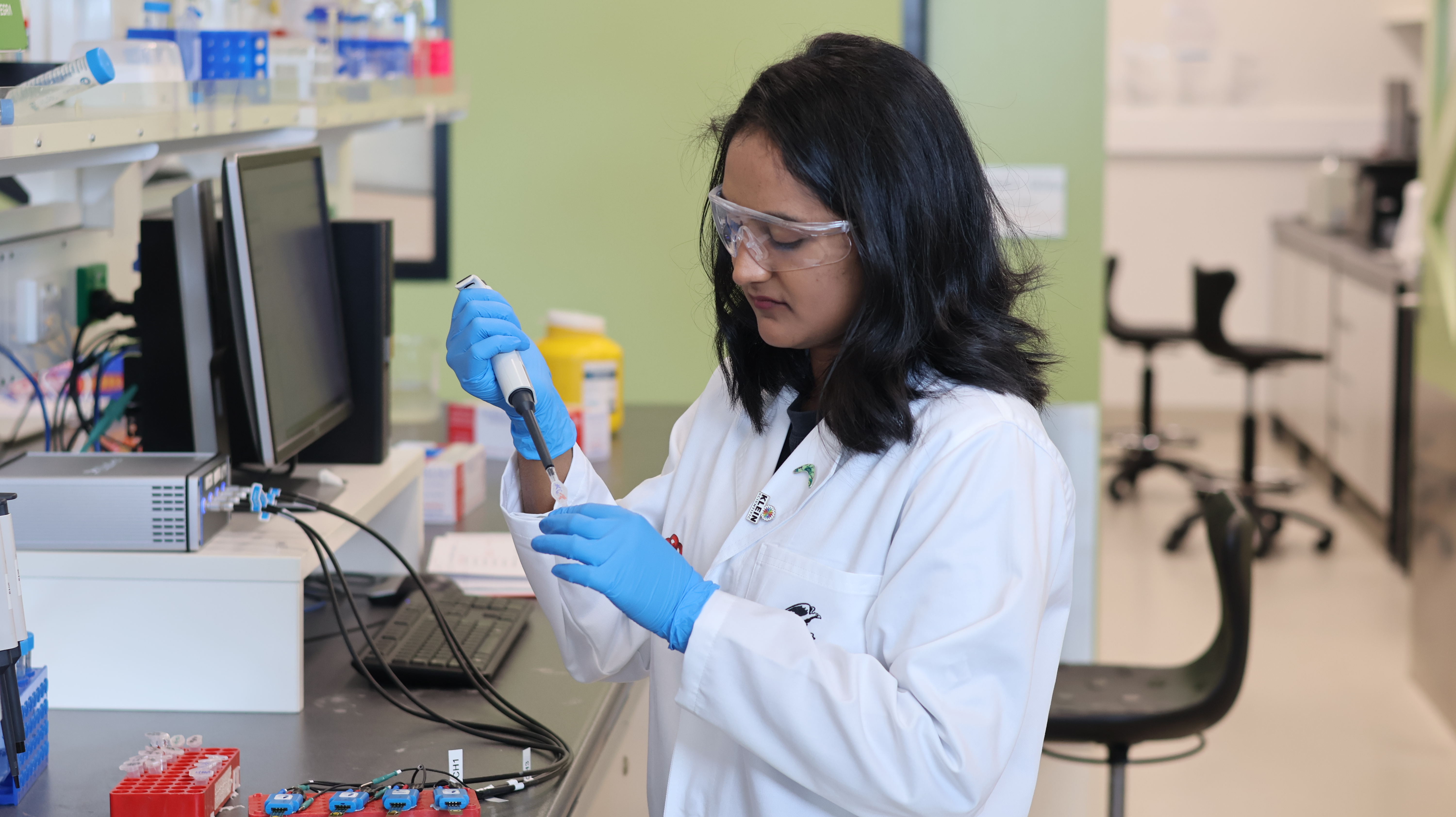
A research team led by La Trobe University has developed a single-use test strip which could ultimately change how diseases like cancer are diagnosed.
The research, published in the journal Small, used enzymes to boost an electrical signal to detect disease-indicative molecules, also known as microRNAs.
The biosensor works in a similar way to glucose test strips but senior researcher Dr Saimon Moraes Silva said it was much more sensitive, detecting microRNAs in blood plasma at ultra-low concentrations that are up to a trillion times lower than glucose.
“MicroRNAs provide early clues about health and diseases like cancer but they can be difficult to detect even using standard laboratory methods like PCR tests because they are often present in tiny amounts in blood, plasma, and saliva,” Dr Silva said.
Lead researcher and PhD candidate Vatsala Pithaih said the team’s key breakthrough came from a specialised enzyme that amplified the biosensor test strip’s response.
“When a sample is added to the test strip, the electrical signal decreases depending on how much microRNA of interest is present,” she said.
“The enzyme amplifies this change so we can detect microRNAs at concentrations 1000 times lower.”
Senior researcher Distinguished Professor Brian Abbey said the biosensor could ultimately be used in a device allowing non-specialists to test for disease as needed, without the use of expensive, centralised laboratory infrastructure.
“It is exciting to be one step closer to disease diagnosis and monitoring that is truly point-of-need: affordable, convenient, accessible, and effective,” Professor Abbey said.
The research was conducted in the La Trobe node of the ARC Research Hub for Molecular Biosensors at Point-of-Use (MOBIUS); the La Trobe Institute for Molecular Science (LIMS); La Trobe University’s Biomedical and Environmental Sensor Technology (BEST) Research Centre; and the Department of Biochemistry and Chemistry in the School of Agriculture, Biomedicine and Environment (SABE).
DOI: 10.1002/smll.202507997

