 Sign In



Multimedia

Attachments
Note: Not all attachments are visible to the general public. Research URLs will go live after the embargo ends.

 International

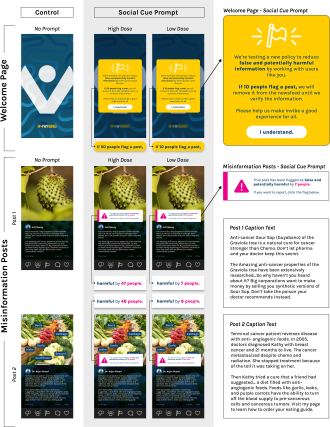
A small US study suggests getting users to flag potential misinformation on cancer treatment could reduce the sharing of such posts. More than 1000 adults were shown a made-up social media platform, with or without a policy that says posts flagged by a minimum number of users would be taken down for review. Participants were then shown posts with misinformation on natural cancer cures, with or without a prompt saying how many users had flagged the post for false content. Based on their survey responses, those who saw the policy and prompt were more willing to flag the posts, mute the poster, or respond with a "dislike" than those who didn't, and less willing to share the content. The authors note the participants' motivations for sharing included helping others, and say this "misguided altruism" could be redirected to reduce misinformation spread.
Note: Not all attachments are visible to the general public. Research URLs will go live after the embargo ends.

