 Sign In



 International
News release
From:
Animal behaviour: Sick ants signal to be sacrificed to protect the colony *IMAGES & VIDEO*
Sick, immature worker ants produce a signal that triggers their nestmates to destroy them, according to a study of a single ant species published in Nature Communications this week. This act is thought to benefit the colony as a whole by preventing the spread of infection.
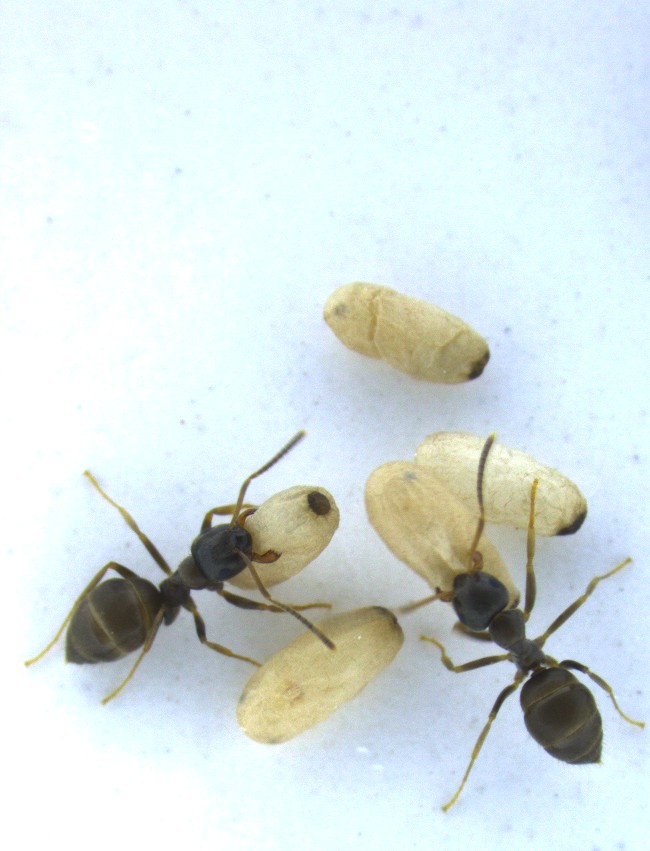
Sick adult ants are known to leave the colony to prevent the spread of disease. However, immature developing ants, which are encased in a cocoon as pupae (the transitional stage between larvae and adult) cannot do so. Previous work has shown that worker ants can identify sick pupae and destroy them to disinfect the nest, but it has not been established whether this is driven by passive cues or is an active process initiated by the infected ants.
Erika Dawson and colleagues investigate this process by infecting Lasius neglectus ants with the fungal pathogen Metarhizium brunneum and observing their behaviour in both solo and group situations. They found that sick worker pupae released a chemical signal – a modified body odour – that triggered their destruction by the adult ants in the group. This signal was only released by sick ants that were in the presence of adult worker ants, suggesting that it is not a simple byproduct of infection or the immune response. The authors then applied the chemical signal to healthy pupae, which led to the pupae being destroyed by adult workers, confirming the chemical’s function as a signal to trigger this effect.
This signalling represents a form of altruism, in which the sick pupae sacrifice themselves for the benefit of the colony as a whole. This behaviour, which is similar to how the immune system works within individual animals, demonstrates how ants within a colony function together as a superorganism for the betterment of the collective group.
Multimedia


