 Sign In



 International
News release
From:
Neuroscience: ‘Body and mind’ network a potential target to improve treatment for Parkinson’s disease *IMAGE*
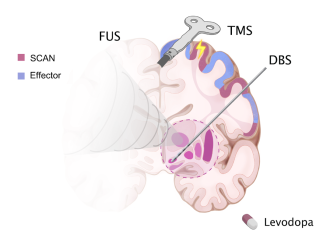
A recently discovered brain network that links cognition (thinking) and actions may have an important role in Parkinson’s disease and could improve its treatment, according to a study published in Nature. Targeting this network rather than other motor regions of the brain could potentially double the efficacy of some existing treatments for Parkinson’s disease, suggesting that this network could be a key therapeutic target.
Parkinson’s disease affects body functions such as movement and sleep, as well as motivation and thinking. Although the disease is often defined by tremors, stiffness and walking difficulties, many symptoms are not linked to specific body parts. The somato‑cognitive action network (SCAN) is a recently identified brain network that links cognition with movement and bodily state, making it a potential candidate for explaining the broad range of symptoms experienced in Parkinson’s disease.
Jianxun Ren, Nico Dosenbach, Hesheng Liu, and colleagues examined brain data from 863 people with Parkinson’s disease across multiple established treatment approaches previously shown to improve symptoms, for example, deep brain stimulation, medication, transcranial magnetic stimulation and focused ultrasound stimulation. They found that brain regions commonly involved in Parkinson’s disease connect more strongly to the SCAN than to other motor regions involved in specific movements. This connectivity was found to be increased in Parkinson’s disease but not in several other movement disorders, such as essential tremor. Treatments that improved symptoms — including deep brain stimulation, medication and transcranial magnetic stimulation — were found to reduce this SCAN hyperconnectivity, bringing it closer to levels seen in healthy volunteers. For example, targeting the SCAN instead of other brain regions associated with movement doubled the efficacy of transcranial magnetic stimulation treatments.
The findings suggest that changes in this brain network may be central to the pathophysiology of Parkinson’s disease and could help guide future treatments and brain‑based therapies. Further research is needed to confirm how best to use this information in clinical care.
Multimedia

Attachments
Note: Not all attachments are visible to the general public. Research URLs will go live after the embargo ends.


