Sign In



 Australia; NSW; QLD
News release
From:
Technology created at The University of Queensland could improve the odds of surviving brain cancer and change how we treat a range of neurological conditions.
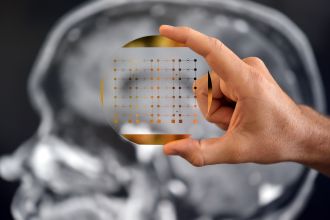
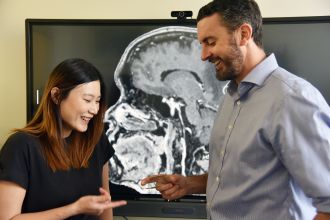
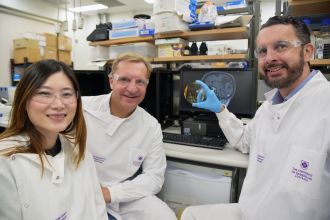
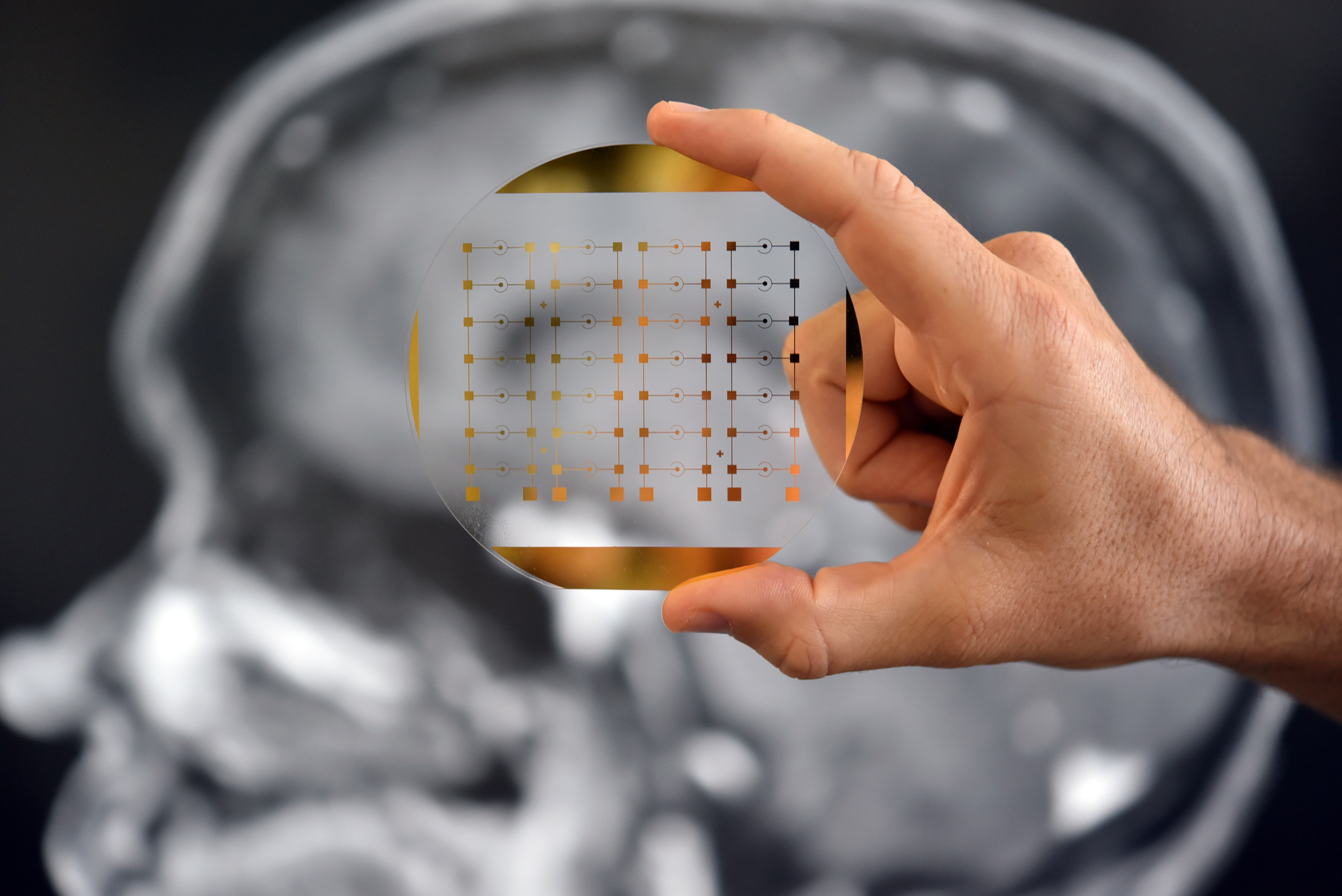
Dr Richard Lobb and Dr Zhen Zhang from UQ’s Australian Institute for Bioengineering and Nanotechnology have opened a ‘window to the brain’ with a new diagnostic device that can tell how deadly brain tumours respond to treatment from a simple blood test.
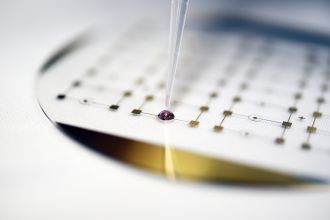
The new device, called a Phenotype Analyzer Chip, was developed in the laboratory of ARC Laureate Professor Matt Trau and reads tiny biological particles in a patient’s bloodstream to get fast and accurate information on glioblastoma.
Dr Lobb said Glioblastoma was the most common form of brain cancer in Australia and is considered particularly deadly because of its delicate location, aggressive growth and limitations in accurate therapeutic monitoring.
“There has been very little success so far in clinical trials for new and experimental glioblastoma treatments,” Dr Lobb said.
“That’s partly because there is no way to tell if a therapy is working precisely as it should at that moment without drilling into someone’s head.”
Dr Zhang said the Phenotype Analyzer Chip works by examining small samples of blood and capturing messenger cells known as extracellular vesicles that originate from glioblastoma tumour tissue.
“These particles cross the blood brain barrier laden with information on the disease, and with our hypersensitive device we can pick them up and interrogate them,” Dr Zhang said.
“It’s a completely new and non-invasive way of getting information on the brain.”
The device has been validated in more than 40 brain cancer patients and the Trau lab is now engaging with translational partners to implement the technology into clinical trials.
Professor Trau said glioblastoma patients usually had to wait until the later stages of the disease to check the therapeutic progress via MRI imaging.
“But by then it is often too late to pivot if these experimental therapies aren’t working as hoped,” he said.
“What we’re doing is getting clear, precise information on the disease as early as possible so we can better inform treatment pathways.
The Phenotype Analyzer Chip was developed in collaboration with researchers from the Mark Hughes Foundation Centre for Brain Cancer Research at the University of Newcastle using patient samples from the MHF Brain Cancer Biobank and with funding from the Mark Hughes Foundation.
University of Newcastle Professor Mike Fay, Director of the Mark Hughes Foundation Centre for Brain Cancer Research, said the technology would be particularly useful for regional patients who are usually forced to travel to metro areas for advanced medical treatment.
“We’re really proud to partner with the team at UQ and to have contributed funding and clinical material to this important project,” Professor Fay said.
“A blood test for brain cancer will be a game-changer for patients, particularly those living in regional and remote areas.”
Technology could be tweaked for other neurological conditions
As well as monitoring brain cancers, Dr Lobb said the new chip also had the potential to unlock therapies for neurological disorders such as Alzheimer’s, Parkinson’s, Motor neurone disease (MND), and depression.
The hypersensitivity of the device, enabled through unique bionanotechnology innovations specifically developed in the Trau lab, makes it an ideal platform technology that could be tweaked to monitor other neurological disorders associated with inflammatory processes.
“In previous work we’ve shown it is possible to assess the impact of neuroinflammation triggered by traumatic brain injuries by reading brain-specific biomarkers,” Dr Lobb said.
“If we can capture and analyse the right extracellular vesicles in a patient’s blood, we can get new information about the onset and mechanism of progression of a wide range of brain diseases.
“Glioblastoma really is just the beginning for this technology.”
The research is published in Science Advances.
Multimedia