 Sign In



 Australia; TAS
News release
From:
For communities worried about PFAS contamination, waiting for test results can mean days of uncertainty.
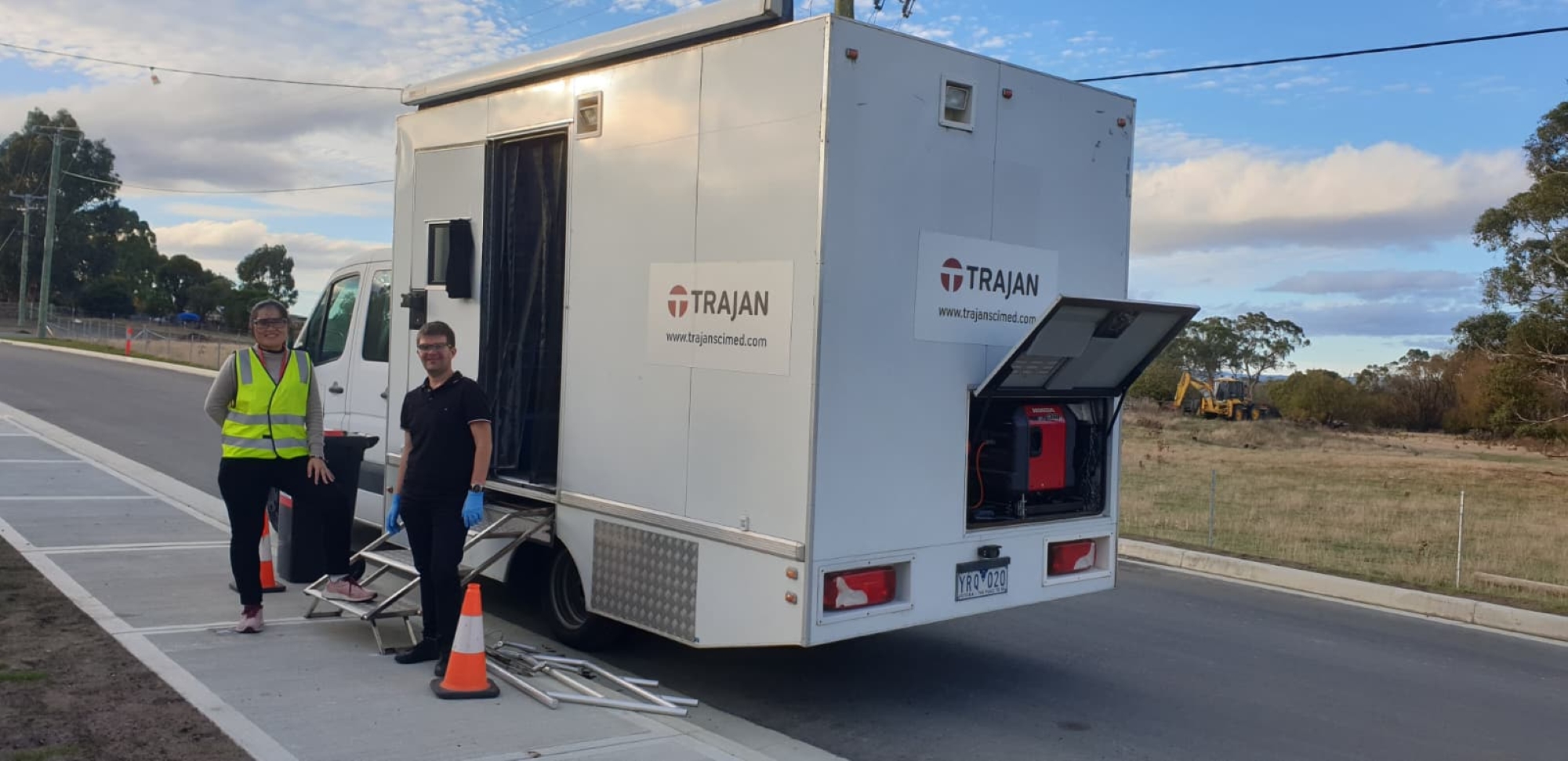
A University of Tasmania trial has used a mobile laboratory equipped with portable liquid chromatography-mass spectrometry (LC-MS) technology to test soil and water on site and provide an early indication of PFAS contamination within six hours.
Standard laboratory testing for PFAS can take up to 10 days. In the Tasmanian trial, researchers completed sampling and analysis in a single day.
PFAS are synthetic chemicals often called “forever chemicals” because they do not break down easily and can build up in soil, water and the human body.
Across Australia, PFAS contamination has been found near firefighting training grounds, manufacturing sites, landfills, former military bases, airports and industrial sites.
Researchers tested the mobile system at Barilla Rivulet in Cambridge, an area with a known history of PFAS contamination.
In a single field visit, the team collected and analysed water, soil and soil pore-water, or water held within soil, using the mobile laboratory.
The study was led by Dr Ibraam Mikhail from HyTECH, the University of Tasmania’s industry-linked analytical science training centre in the School of Natural Sciences. Professor Brett Paull was a co-author.
The findings were published in Journal of Chromatography A on 27 May.
Dr Mikhail said getting results on the same day could make a meaningful difference for communities, regulators and land managers.
“Instead of waiting more than a week for results, we can provide an indication on the same day, within six hours,” he said.
“Stakeholders can understand contamination issues much sooner and make informed decisions about the most appropriate next steps. This approach also enables data-driven sampling and more effective contaminant source tracking.”
The mobile laboratory fits inside a van and can be set up on site in under 20 minutes.
It screens for 10 key PFAS compounds across three types of samples at once.
Testing water, soil and soil pore-water together is important because PFAS chemicals do not move through the environment in one simple way.
Some bind to soil, while others move more easily through water.
At the Cambridge site, the mobile lab showed PFAS was not distributed evenly across the area.
That helps researchers and response teams understand not just whether PFAS is present, but where it may be moving.
Faster access to that information could help guide monitoring, further testing and clean-up decisions.
Professor Paull said faster field data could change how contamination is managed.
“Having data within hours allows for quicker decisions about where to focus further testing or remediation, rather than waiting for laboratory results before taking the next step.”
Melbourne-based company Trajan Scientific and Medical has been a long-term collaborator on the project with HyTECH, providing the mobile laboratory used in the trial.
Trajan Chief Scientific Officer Dr Andrew Gooley said the collaboration showed how university research and industry could work together to address real-world problems.
“Partnering with a team who understand the value in solving customer problems genuinely accelerates technology development,” he said.
“We recently presented Dr Mikhail’s HyTECH studies at a key industry conference attended by those responsible for remediating contaminated sites. Feedback was positive and attendees shared their frustration that they don’t have the right tools in the field to make informed decisions.
“This technology has the potential to provide that information much earlier in the process.”
The researchers say the system is designed for rapid screening rather than the detailed analysis carried out in a full laboratory. Results would still need to be confirmed through standard laboratory testing.
However, generating results on site within hours could provide an early picture of contamination and help teams decide where to look next, what to prioritise and when full laboratory testing is needed, particularly in the early stages of investigations where time and community confidence are critical.

