 Sign In



 Australia; VIC
News release
From:
New rapid test to diagnose syphilis and other STIs in under an hour
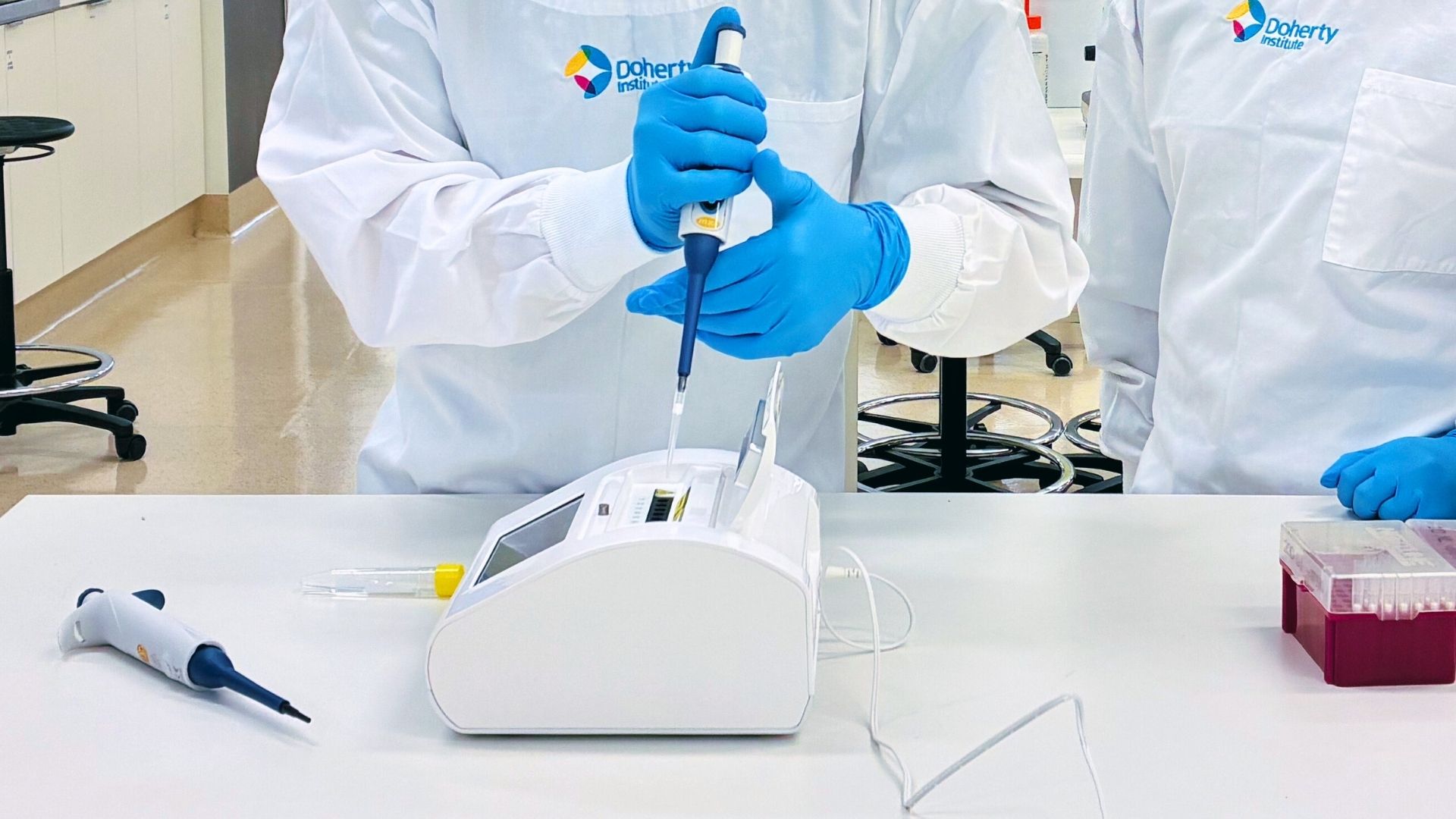
Researchers at the Peter Doherty Institute for Infection and Immunity (Doherty Institute) have developed a world-first portable point-of-care test that detects four common sexually transmitted infections at once, in under an hour. The test, which detects syphilis, a high-burden infection, could significantly reduce transmission and improve access to timely treatment.
Many sexually transmitted infections manifest with overlapping symptoms but require vastly different treatments. Early symptoms of syphilis, for example, often causes genital sores that are difficult to distinguish from those caused by herpes simplex virus (HSV).
Without rapid, multi-pathogen testing, clinicians may rely solely on symptoms or test for a single infection, increasing the risk of misdiagnosis and delayed care.
A study published today in The Lancet Microbedescribes the tool in detail: a next-generation CRISPR-based diagnostic that can simultaneously detect and distinguish between the DNA and RNA of multiple pathogens at the same time. In addition to syphilis, the test identifies the bacterial and viral causes of other sexually transmitted infections including herpes, chlamydia and gonorrhoea, while also detecting a key antibiotic-resistance marker in gonorrhoea at the point of care, a critical advance amid growing global antimicrobial resistance.
The University of Melbourne’s Matthew O’Neill, Research Support Officer at the Doherty Institute and co-first author of the paper, said the test delivers results in under an hour on a fully portable device, without the need for laboratory infrastructure.
“This new device has been validated using 900 clinical samples, the largest set of STI samples reported globally for a CRISPR-based point-of-care device.” - Matthew O’Neill“When benchmarked against gold-standard laboratory PCR, the rapid test showed 97 –100 per cent accuracy in correctly identifying negative results, a level of precision important for safe, evidence-based treatment decisions,” he added.
Syphilis is a growing public health threat in Australia, with diagnoses having more than doubled over the past decade, with around 6,000 cases reported in 2024.
In August 2025, Australia’s Chief Medical Officer declared it a Communicable Disease Incident of National Significance (CDINS) as cases continued to rise.When syphilis is mistaken for other infections, delayed treatment allows disease progression and increases the risk of serious but preventable complications, including infertility, miscarriage and congenital syphilis.
The University of Melbourne’s Dr Shivani Pasricha, Laboratory Head at the Doherty Institute and senior author of the paper, said concurrent research published in theLancet Primary Careearlier this year, conducted in urban Victoria in collaboration with, and led by researchers from Melbourne Sexual Health Centre, showed that sometimes patients tested for herpes alone were positive for syphilis, making this tool critical.
“Syphilis has long been known as the great mimicker. Correct treatment depends on correct diagnosis,” said Dr Pasricha.“
This novel enables accurate diagnosis and treatment immediately, without waiting days for laboratory testing or requiring multiple clinic visits,” she added.
The technology can also support broader use of self-collected samples, making testing more accessible and acceptable for patients and accelerating pathways to treatment.
“This makes it particularly valuable for regional, remote and underserved communities, where diagnostic delays are common and STI rates are often higher.”
The researchers will now move the device into implementation trials, aiming for routine clinical use within the next five years.
- Peer-review: Low SJ et al. CRISPR-Cas-based diagnostics for point-of-care detection of sexually transmitted infections: a laboratory development and evaluation study (2026). DOI: https://doi.org/10.1016/j.lanmic.2025.101289
- Collaboration:This work is the result of a collaborative effort between the Doherty Institute, Bayside Health (formerly Alfred Health), Melbourne Sexual Health Centre, Monash University, University of St Andrews (UK), and WEHI
- Funding: This research was supported by the Australian Research Council and the Australian Government Department of Health and Aged Care
Attachments
Note: Not all attachments are visible to the general public. Research URLs will go live after the embargo ends.


