 Sign In



 Australia; SA
News release
From:
Muscle matters: simple scan could predict heart surgery risks
Around one in four heart surgery patients develop serious lung complications – but a new Adelaide-led study is testing a simple bedside scan that could predict who is most at risk before symptoms appear.
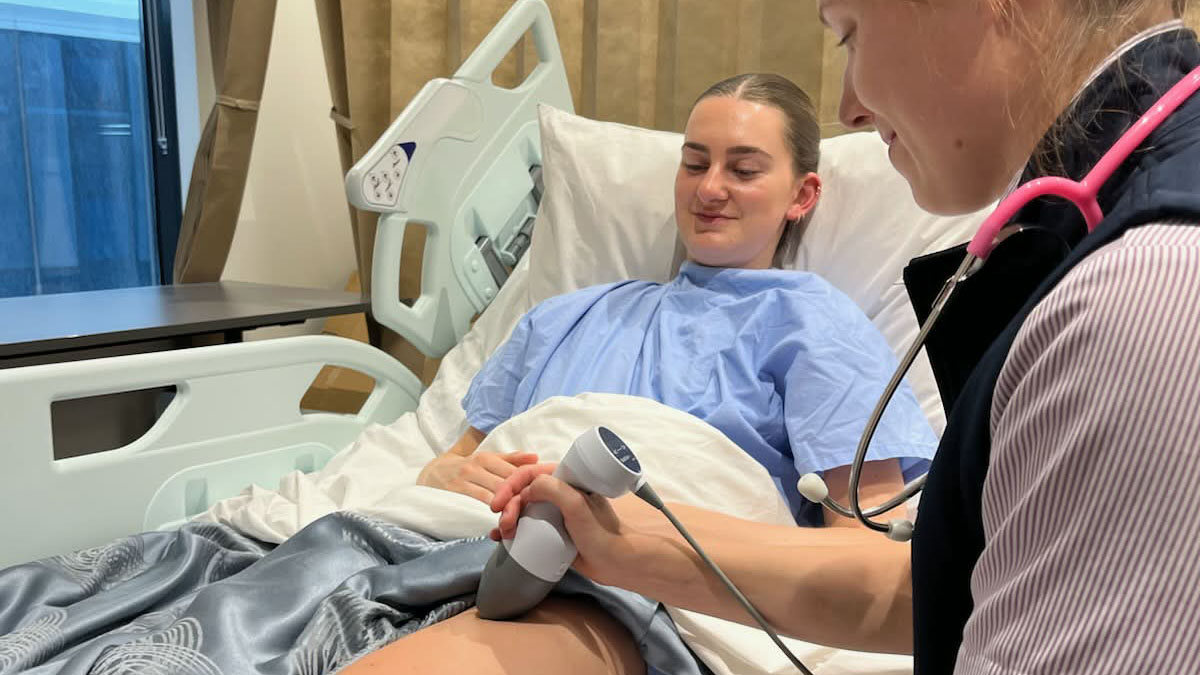
Novel research led by Calvary Adelaide Hospital (CAH) in partnership with Adelaide University is exploring whether a quick, non-invasive ultrasound of the thigh can flag early signs of post-operative decline in cardiac patients.
Funded by a $60,000 Health Translation SA grant through the Medical Research Future Fund Catalyst Grant Scheme, the new study will assess whether measuring of the rectus femoris muscle – a major thigh muscle – can predict complications following major heart surgery.
If successful, it could provide the first objectively verified bedside method to identify cardiac patients at higher risk of pulmonary complications.
Currently, between 10-25% of post-operative cardiac patients will develop pulmonary complications, leading to rapid deconditioning, delayed mobilisation and longer hospitals stays that contribute to poorer health outcomes.
CAH clinical physiotherapist and Adelaide University researcher Dr Rosa Virgara said the study is exploring a simple, practical way to better predict recovery risks following cardiac surgery.
“This research is testing whether a quick, low-cost ultrasound scan at the bedside can identify which cardiac patients are most at risk of complications, before they become critical,” Dr Virgara said.
“If we can detect early signs of decline, clinicians can intervene sooner, potentially preventing serious complications and improving recovery.
“Tracking muscle loss in real time could give us an objective way to monitor patient deterioration – including early warning signs of pneumonia or lung complications – and help reduce hospital stays.”
There is strong reason to expect this will be a valid prognostic biomarker with recent studies in COVID-19 patients linking muscle size to pulmonary complications and recovery outcomes.
The project is also focused on rural and remote populations where there are unique barriers to access and continuity of care.
“Patients in regional areas often face longer travel times and fewer follow-up options, which can increase their risk after surgery,” Dr Virgara said.
“A simple, bedside tool like this could help bridge that gap by enabling earlier detection and more consistent monitoring, no matter where patients live.”
The intervention will be piloted over 12 months in South Australia, testing how the approach performs in real-world settings.
Consumer and rural input will shape the rollout, ensuring the model is practical, patient-centred and scalable across diverse healthcare environments.

