Sign In



 Australia; QLD
News release
From:
Powerful new tool reveals potential ‘goldmine’ of cancer targets hidden in ‘junk DNA’
A QIMR Berghofer-led team has developed a powerful tool to explore and understand the mysterious workings of the vast region of our genome once dismissed as “junk DNA”, discovering thousands of molecules that could hold the key to new precision cancer treatments.
The breakthrough marks a major advance for the pioneering field of RNA-based medicine by providing a way to detect the hidden molecules, known as long non-coding RNA (lncRNA), and determine the likely role each is playing in the growth of different cancers.
Watch VIDEO explainer here.
The researchers used their cutting-edge single cell and spatial tissue analysis technologies and expertise and advanced computational and mathematical modelling to develop the platform methodologies underpinning the new tool.
Using tissue samples from 13 types of cancer, including breast, brain, bowel and skin cancers, they found 219,442 potential lncRNA molecules, including 94,795 that had never been documented before, many of which emerged as top potential functional/interesting candidates.
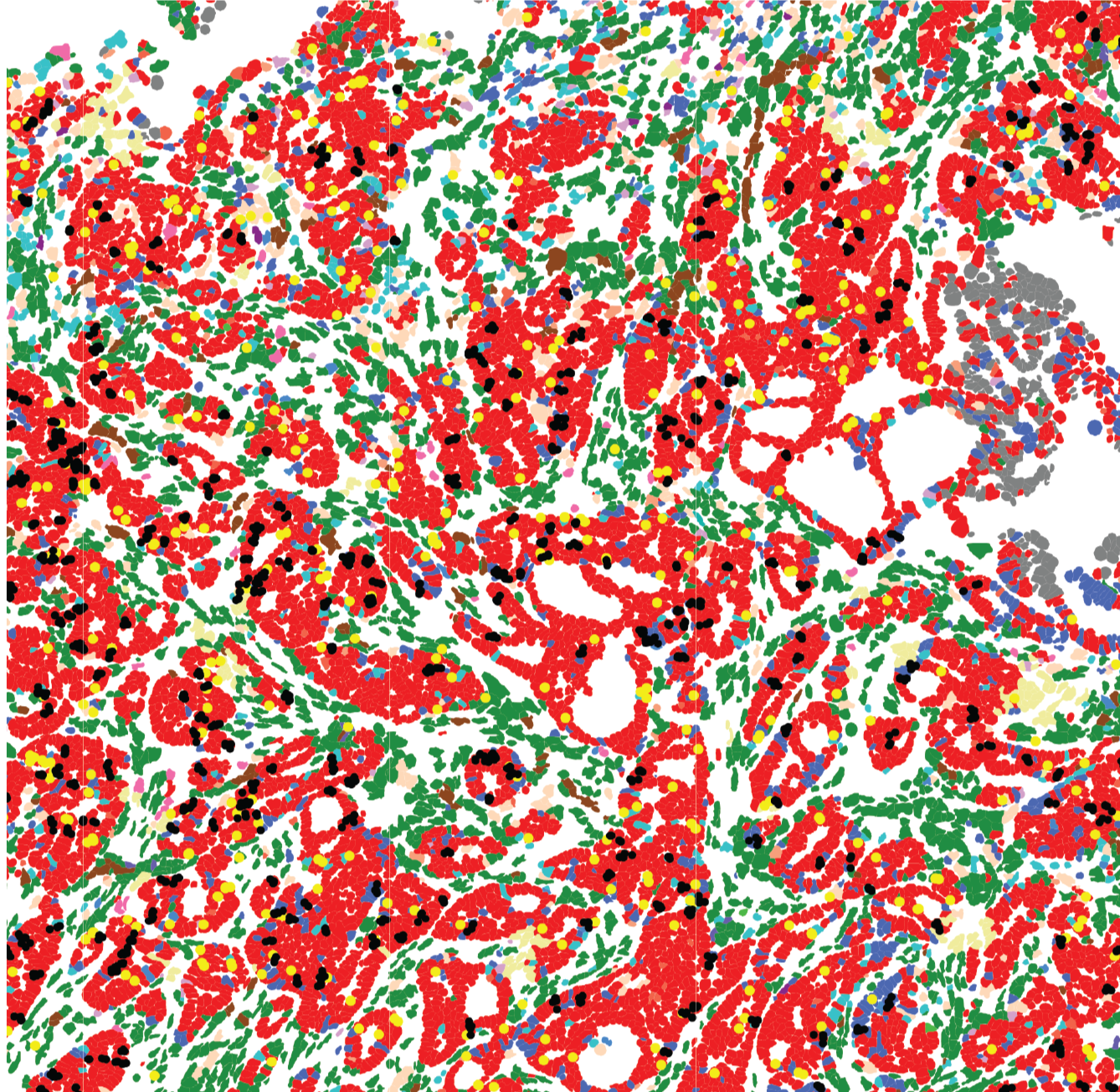
They mapped the precise 3D location of each lncRNA in a cancer tissue sample and in cells, and identified the other cells, genes and molecules it was interacting with and where that activity was occurring in the tumour.
The team were then able to predict the likely functional role of each lncRNA molecule and how it might be involved in the growth and spread of a cancer.
The findings, published in Nature Methods, have been combined into a publicly accessible, interactive “Atlas of lncRNA molecules”, called SPanC-Lnc. It is the most comprehensive resource of its kind, providing an unprecedented level of spatial detail.
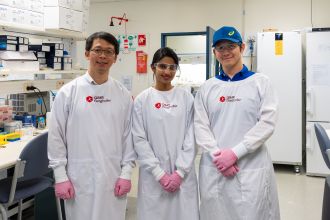
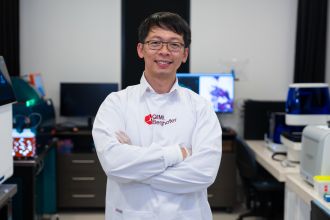
Associate Professor Quan Nguyen, the Director of QIMR Berghofer’s National Centre for Spatial Tissue and AI Research (NCSTAR) and head of the Institute’s Genomics and Machine Learning Lab, said the atlas and the tool are being shared with the global research community to accelerate discoveries and improve outcomes for cancer patients.
“I'm incredibly proud of this work. It's been a long journey to solve one of the long-standing challenges in the field which is finding lncRNA molecules and understanding how they are likely working in the body and in a cancer,” said A/Prof Nguyen.
“My hope is that the uncharted dark matter of the genome that’s largely made up of these lncRNA molecules could actually be a potential goldmine of new cancer biomarkers that will help to quickly and accurately detect and diagnose disease and lead to an entirely new class of therapeutics in the near future.”
For decades, scientists were focused on the one to two per cent of the genome that provides genetic instructions to create proteins, which do most of the work inside our cells.
The remaining 98 per cent was dismissed as “junk DNA” that had no useful function. Advances in technology are now revealing this vast region is crucial.
lncRNA molecules are thought to be “master” regulators performing complex and essential roles such as switching genes on or off or controlling cellular processes. However, they remain underexplored because each molecule is only expressed in a specific cell type or disease in very small quantities. This makes them hard to find but also makes them promising candidates for new therapeutics because they could kill only cancer cells and not healthy cells.
First author and QIMR Berghofer researcher Dr Prakrithi Pavithra said she is motivated to find new ways to target cancer having lost friends at a young age.
“Not all current treatments work for all patients. Cancer behaves differently in each individual. The ultimate goal is to find a cure for cancers and to do that it’s important to understand how the biology works so we know exactly what needs to be targeted,” said Dr Prakrithi.
“Most existing drugs work by targeting the proteins that are driving the disease. But drugs based on lncRNA molecules could intervene earlier, by influencing the genetic programs that control which proteins a cell makes.”
New lncRNA molecules will be added to the atlas as they’re uncovered. The next step is to validate each lncRNA discovery through functional experiments to find the most promising candidates for potential new diagnostics and treatments.
A/Prof Nguyen and his team are collaborating with other researchers at QIMR Berghofer to investigate promising lncRNA targets in different cancer types.
They were involved in the recent discovery of a lncRNA molecule that can fight the most common form of breast cancer by initiating an immune response. That work, led by QIMR Berghofer Professors Juliet French and Stacey Edwards, is being developed into a potential RNA-based therapy for patients with advanced stage disease.
Another collaborator is world-leading bowel cancer researcher Professor Vicki Whitehall, who heads QIMR Berghofer’s Conjoint Gastroenterology Laboratory.
“Working with Quan to understand the functions of lncRNA molecules is very important. It's a whole other layer of information that we couldn’t see previously. There are lots of opportunities for new treatments,” said Professor Whitehall.
The project was made possible by funding from a number of organisations including the Australian Cancer Research Foundation ACRF Centre for Optimised Cancer Therapy (ACRF-COCT) which enabled the purchase of one of the team’s high tech spatial tissue analysis instruments and powerful computers for data analysis and storage.
The research involved international collaborators from India and the USA including A/Professor Ishaan Gupta from the Indian Institute of Technology Delhi (IITD), as well as scientists and clinicians from organisations in Queensland and New South Wales. Dr Prakrithi was supported by The University of Queensland (UQ) and the IITD Research Academy joint PhD program.
The study is available at this link https://www.nature.com/articles/s41592-026-03071-4 in Nature Methods with DOI 10.1038/s41592-026-03071-4.
Multimedia