 Sign In



 Australia; NSW
News release
From:
Scientists have discovered mosquitoes can act like tiny “flying wildlife surveyors”, helping researchers detect elusive and endangered animals in Australia’s national parks.
Researchers from Macquarie University and the Department of Climate Change, Energy, the Environment and Water used DNA found in mosquito blood meals to identify around 70 species of birds and mammals living in Kakadu National Park, including several animals that are rarely seen or difficult to monitor.
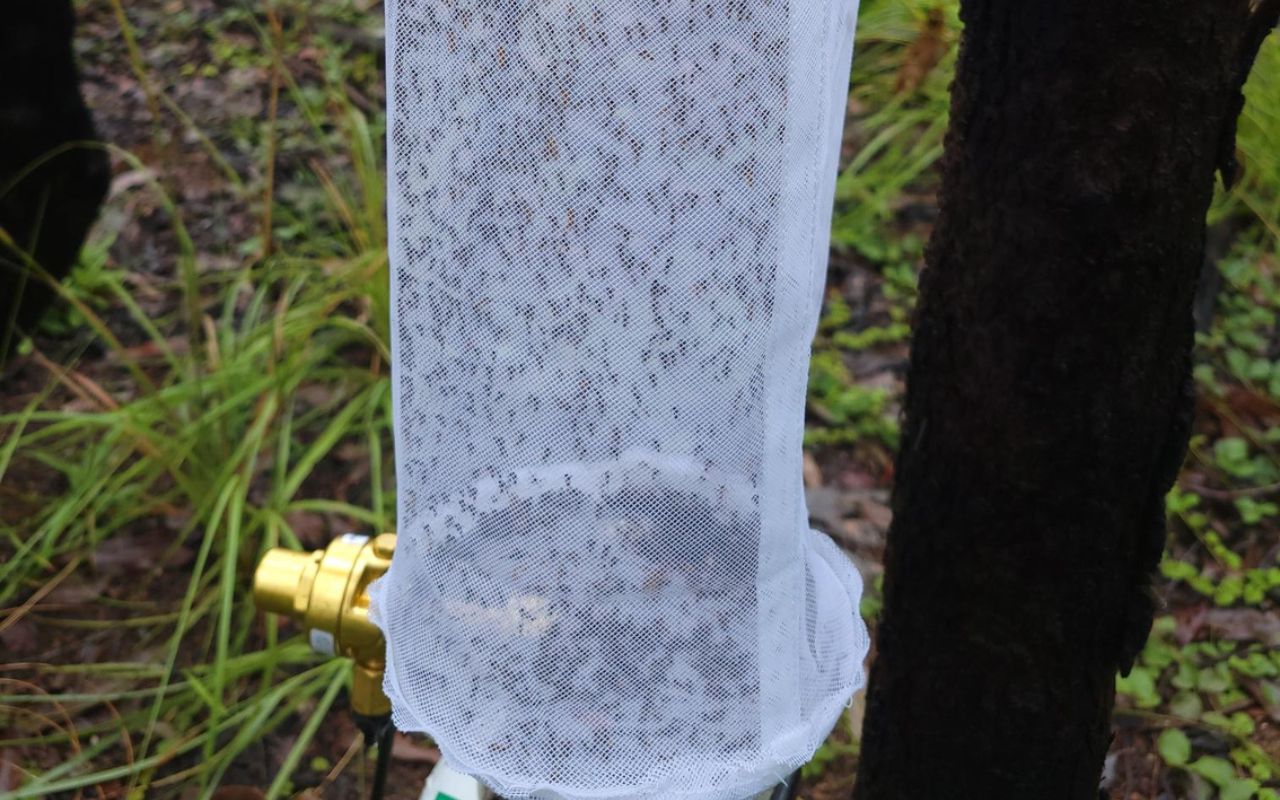
The technique involves analysing the DNA of animals from female mosquitoes which have recently fed on. When mosquitoes are trapped, scientists can extract traces of that DNA to determine which species are present in the area.
Dr Christine Chivas from Macquarie University’s Environmental eDNA and Biomonitoring Lab said the approach offers a powerful new tool for conservation.
“Monitoring wildlife in Australia is extremely challenging, particularly when you’re trying to detect threatened or elusive species,” Dr Chivas said.
“We need new non-invasive methods that can detect a wide range of animals without disturbing them.”
The research, recently published in the journal Environmental DNA, trialled the technique in Kakadu during both wet and dry seasons.
From just two nights of mosquito trapping, researchers were able to identify 70 species, including 19 mammal species.
When the results were compared with camera trap surveys, the mosquito method detected around twice as many mammal species, despite the camera traps operating for six weeks.
Among the species detected were the threatened ghost bat, the spectacled hare-wallaby, and the white-throated grasswren, a bird so difficult to monitor that it has only been recorded once in two decades of surveys in Kakadu.
Founder of Macquarie University’s Environmental eDNA and Biomonitoring Lab Prof. Anthony Chariton said mosquitoes effectively act as natural biological sampling devices.
Because mosquitoes digest blood quickly and stay close to their prey, the DNA signal gives researchers highly precise information about what animals are present in a specific location.
The method also avoids the need to capture animals, which can cause stress and sometimes injury.
“Think of them as thousands of tiny drones flying around every night collecting samples for us,” Prof. Chariton said.
“This approach allows us to monitor biodiversity without disturbing wildlife.”
The researchers believe the technique could help improve conservation programs across Australia, particularly for endangered species that are difficult to find.
“Unless you know where an animal is and where it’s distributed, you can’t protect it,” Prof. Chariton said.
“This gives us a much more efficient way to find out what species are actually out there.”
The team is currently working with the NSW Government to use the method to search for rare mammals and survey biodiversity in remote regions.
They are also exploring its use in conservation areas and wildlife rehabilitation zones.
The researchers say the technique could dramatically reduce the cost and effort involved in biodiversity monitoring, allowing conservation programs to redirect funding to habitat protection and invasive species control.
“At the moment we spend huge amounts of time and money going into remote areas and sometimes we find nothing,” Prof. Chariton said.
“With this approach we can collect a much broader picture of biodiversity much more quickly.”
With Australia experiencing some of the highest rates of mammal extinction in the world, the researchers believe innovative tools like mosquito DNA monitoring could play an important role in protecting wildlife.
“In Australia we’ve lost a huge number of species during the last few decades,” Dr Chivas said.
“If we want to protect the remaining species, we need better ways of knowing where they are and how ecosystems are changing.”
Dr Christine Chivas and Prof. Anthony Chariton are available for interview.
Pictures of the mosquitoes are also available.

