 Sign In



 International
News release
From:
Risk of whale entanglement in fishing gear tied to size of cool-water habitat
New findings could aid fishery management decisions for sustainable fishing and whale safety
New research shows that, off the U.S. West Coast, humpback whales face a higher risk of getting entangled in fishing equipment during years with lower availability of cool-water habitat, where the whales feed. Jarrod Santora of the National Oceanic and Atmospheric Administration, U.S., and colleagues present these findings in the open-access journal PLOS Climate on February 25th.
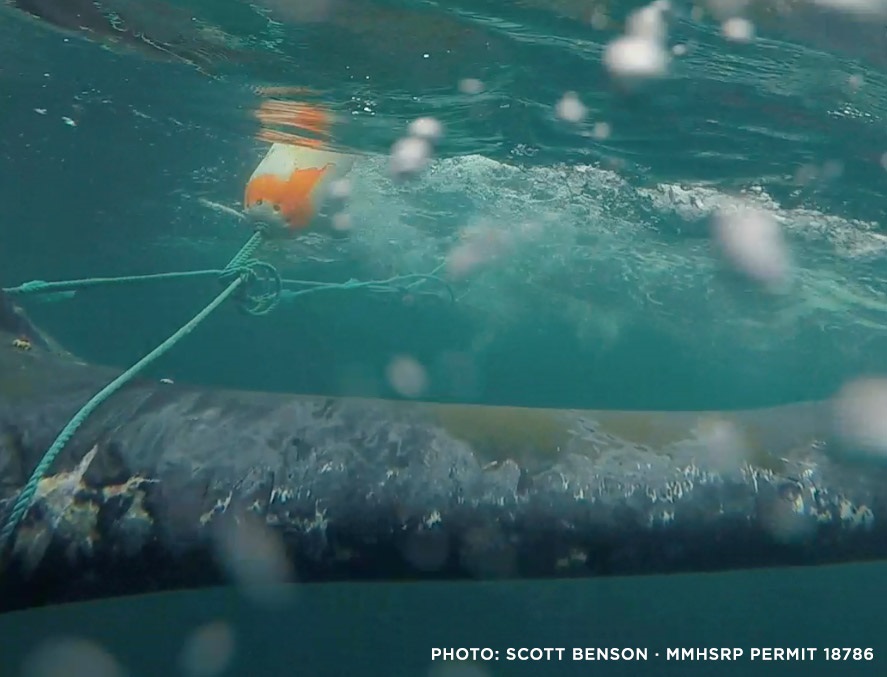
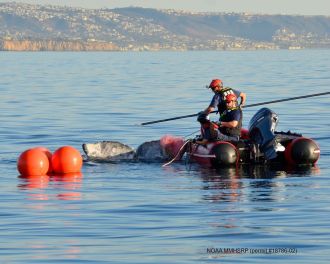
Many kinds of fishing gear, such as gillnets and traps, can entangle whales, injuring or even killing them. Before 2014, annual reported entanglements off the U.S. West Coast were below 10, but reports have risen, with 31 reported in 2024. Prior research has shown that, when sea surface temperatures rise, the area of cool water where whales feed shrinks and becomes compressed shoreward, where fishing activity is more intense—possibly boosting risk of entanglement.
However, many entanglements are never detected, and when they are, it may be unclear where and when the whale first became entangled. Additionally, humpback populations have grown, which could boost entanglement numbers. Thus, the interplay of factors contributing to entanglement risk remains challenging for researchers to understand.
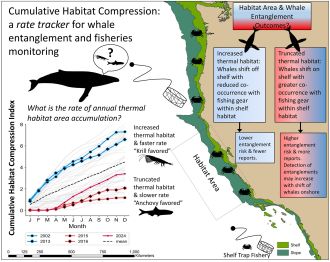
To address this challenge, Santora and colleagues analyzed associations between reported humpback entanglements, population size, and changes in cool-water habitat area off the West Coast over the last 2.5 decades. They employed the Habitat Compression Index, a metric previously developed under Santora’s leadership, which tracks changes in overall availability of cool-water habitat.
They found that more humpback entanglements occurred during years with lower cool-water habitat area, and that population growth alone was not enough to statistically explain the increases—especially during a major marine heatwave (“the blob”) in 2015 and 2016. These findings suggest the record number of entanglements—more than 40 confirmed—during that heatwave occurred not just because there were more whales, but also because of habitat compression.
The findings also show that the Habitat Compression Index can predict ocean conditions up to a year in advance. Accordingly, the researchers recommend integrating the metric as an early warning system to aid fishery management decisions that could impact entanglement risk, such as fishing season timing and trap number limits.
The authors add, “Habitat compression is a primary driver of entanglements. We found strong negative correlations between cool thermal habitat availability and entanglement reports. Years with low cumulative thermal habitat (high compression) consistently resulted in the highest number of entanglements across all US West Coast regions, making cHCI a critical predictor of both risk and detection.
“Environmental shifts influence risk more than population growth. While population recovery contributes to baseline interactions, it does not explain extreme spikes (e.g., 2015–2016 and 2024). Analysis of "excess entanglements" (residuals controlled for population size) confirmed that environmental conditions exacerbate risk significantly beyond density-dependent factors. Additionally, our "compression-assisted resolution" hypothesis suggests that extreme compression concentrates whales nearshore, artificially inflating recapture rates and explaining biologically implausible population growth estimates (>30%) during heatwaves.
“Forecasting provides an early warning system. The cHCI effectively predicts ocean conditions 6–12 months in advance. For example, January 2024 forecasts correctly predicted the year's low thermal habitat, which coincided with a rise in entanglements to 31 reports.
“Operationalizing a ‘rate tracker’ aids management. We recommend integrating cHCI into risk assessments as a ‘rate tracker’. Monitoring thermal habitat accumulation during winter and spring enables managers to make strategic decisions regarding seasonal fishing activity and mitigation efforts.”
Multimedia

Attachments
Note: Not all attachments are visible to the general public. Research URLs will go live after the embargo ends.


