How the fats we eat shape our ability to fight disease

Publicly released:
Australia; QLD
craevschii/ Adobe Stock

The types of fats we consume directly impacts the survival and strength of the body’s immune cells and ability to fight disease, researchers have found.

News release

From: The University of Queensland

The types of fats we consume directly impacts the survival and strength of the body’s immune cells and ability to fight disease, researchers have found.

A University of Queensland team led an international collaboration that found diet could change the fat composition inside T cells – the immune cells that help protect a person from infections and cancer.

Professor Di Yu of UQ’s Frazer Institute said the research showed a diet with a lower ratio of polyunsaturated fatty acids (PUFAs) to monounsaturated fatty acids (MUFAs) makes T cells much more resilient and resistant to cell death.

“The findings mark a profound leap in understanding of how our diet directly impacts immune system function,’’ Professor Yu said.

“Our immune system relies on T cells to manage the body's immune response.

“The kinds of fats you eat change the fat composition inside your T cells and those changes can make T cells either weaker or stronger in terms of immune protection.

"How our bodies and cells process dietary fats - called lipid metabolism – is a critical part of the immune system.

“This discovery shows that dietary changes could potentially boost the effectiveness of vaccines and cancer therapies.’’

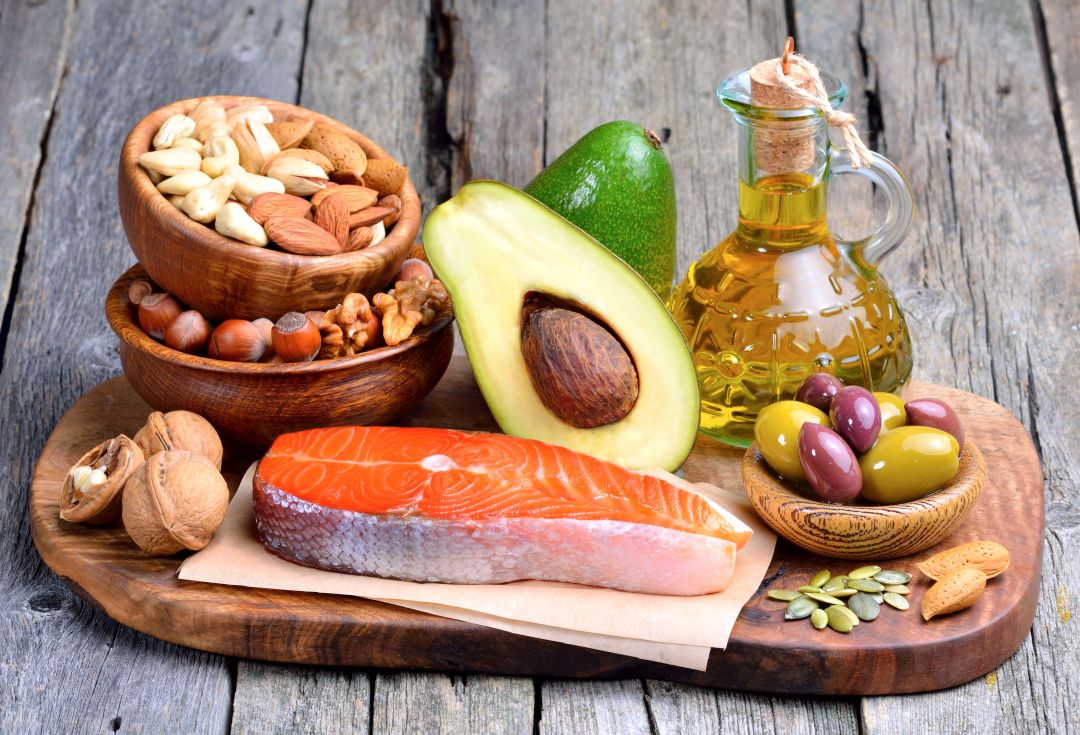
Examples of foods high in PUFAs include fatty fish and soybeans, while MUFAs include olive oil and avocadoes.

Professor Yu said T-cells were vulnerable to a type of cell death that occurred when oxidised fats build up and destroy the cell’s outer membrane.

“When T cells are protected from this oxidation-induced cell death, specific T cells (called follicular helper T cells) become much better at assisting the body in producing antibodies, which could suggest enhanced vaccine protection,’’ he said.

“Stronger, more resilient T cells are also better at multiplying and actively attacking tumours.

“Experimental models demonstrate that dietary fat modifications could improve the success of cancer treatments which could help eliminate tumours and significantly prolong survival.

“In future, optimising a patient's diet and targeting lipid metabolism could become an easily accessible way to enhance our immunity.

“This could represent a powerful approach, used alongside vaccines or cancer immunotherapies, to ensure immune cells are strong enough to fight off disease.’’

The ideal ratio of PUFA to MUFA foods in the diet is not yet known and Professor Yu said further research was needed to determine exact role of the different fats in T cell death.

Collaboration and acknowledgements:

The research was conducted in collaboration with Gallipoli Medical Research at Greenslopes Private Hospital, QIMR Berghofer Medical Research Institute, Qilu University of Technology, Huazhong University of Science and Technology Tongji Medical College, Institute of Process Engineering, Chinese Academy of Sciences, and Shandong University Cheeloo College of Medicine.

Journal/
conference:
Nature
Research:Paper
Organisation/s: The University of Queensland
Funder: The authors acknowledge the Translational Research Institute (TRI), the Biological Research Facility (BRF) and the Flow Cytometry Core Facility (L. Leveque-El Mouttie, D. Khalil, Y. Ding, A. Wu and S. P. Narla) for providing the excellent research environment and core facilities that enabled this research; the technical assistance of the TRI Gnotobiotic Facility for germ-free dietary studies; The UQ Centre for Microscopy and Microanalysis (R. Parton and J. Rae); X. Zhou, T. Chen, X. Liu and S. Yang for technical help in experiments; P. Canete and K. Tuong for scientific discussion; L. You, Z. Yu and F. Liu for help with animal experiment; and the Monash Proteomics and Metabolomics Facility (MPMF) for the provision of technical support and infrastructure, which was enabled by Bioplatforms Australia (BPA) and the National Collaborative Research Infrastructure Strategy (NCRIS). D.Y. is supported by Australian National Health and Medical Research Council (NHMRC) grants (GNT1147709 and GNT2009554), Medical Research Futures Fund (MRFF) National Critical Infrastructure Initiative (NCRI000155), a Bellberry-ViertelSenior Medical Research fellowship and fundings from Children's Hospital Foundation, the Australia and New Zealand Society for Immunology (AbbVie New Horizon Award) and Tour de Cure (RFP-660-2023, RSP-585-2024 and RSP-616-2024). Z.C. is supported by an NHMRC Investigator Grant (2026153), a Cure Cancer Foundation Early Career Grant, a Ramaciotti Health Investment Grant (2025HIG-1534), and the UQ Health Research Accelerator Program. Y. Yao is supported by the National Natural Science Foundation of China grants 82322018 and 82471146. C.S. is supported by a Youth Excellent Talents Program of Qilu University of Technology (Shandong Academy of Sciences) (no. 2024QZJH04). W.W. was supported by the National Natural Science Foundation of China grant (T2225021) and Open Funding Project of the State Key Laboratory of Biopharmaceutical Preparation and Delivery (2024KF-04). H.Z. and Y.W. were supported by Shandong Provincial Key Research and Development Program (Major Science and Technology Innovation Project) (2021ZDSYS12), National Natural Science Foundation of China (22206092, 82071792), University and Institute Innovation Team Project of Jinan (202333028), the Key Program of Science and Technology Plan Foundation of Hubei Province (2024BCB041) and Science, Education and Industry Major Innovation Pilot Project from Qilu University of Technology (Shandong Academy of Sciences) (2025ZDZX07). H.Z. and Z.Y. were supported by Enshi Prefecture People's Government.
Media Contact/s
Contact details are only visible to registered journalists.