Sign In



 Australia; NSW
News release
From:
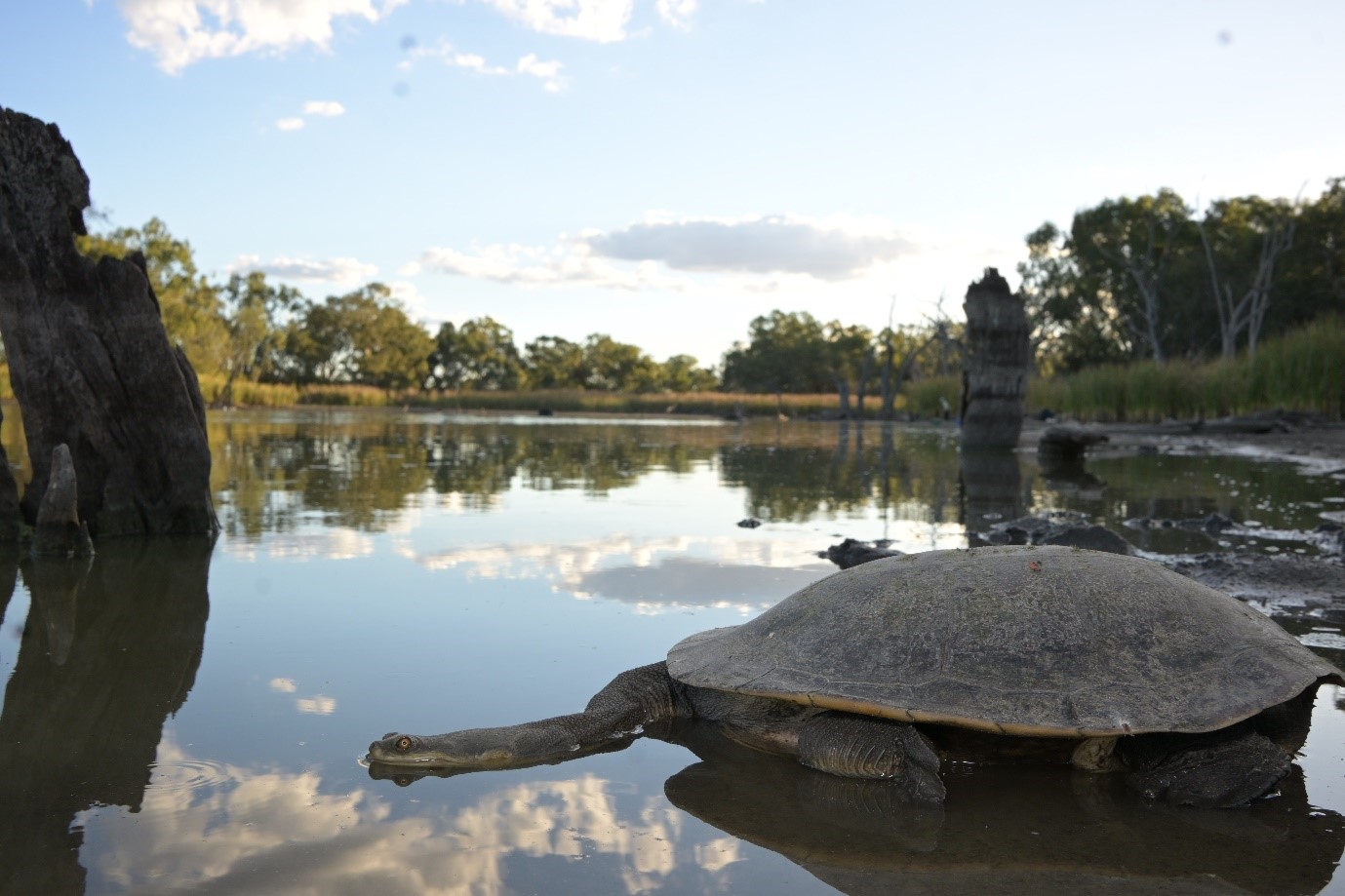
One of the last strongholds for the broad-shelled turtle in the Gwydir Wetlands is on the brink of disappearing as the Gingham Waterhole rapidly dries, prompting urgent calls for environmental water releases from Copeton Dam.
Field surveys conducted this week by freshwater turtle researchers revealed a worsening ecological crisis at the site.
“We are watching the collapse of a turtle population in real time,” said freshwater turtle biologist Professor Deborah Bower.
“The Gingham Waterhole has supported multiple turtle species for decades. If it dries completely, the broad-shelled turtle population here will almost certainly be lost. Importantly, Copeton Dam currently holds over 800 GL, including approximately 217 GL of environmental water available for delivery before July 2026, presenting a clear and immediate opportunity to intervene.”
Researchers also confirmed that the Murray River turtle population previously recorded at the site has nearly disappeared.
The team’s recent field inspection revealed clear signs that the ecosystem is already under severe stress. Researchers confirmed that the eastern long-necked turtle population is stressed, during the latest survey they discovered a freshly dead eastern long-necked turtle and another individual alive but severely diseased, suffering from shell and mouth infections consistent with deteriorating water quality and algal blooms.
“These are classic symptoms of wetlands collapsing under extreme drying,” Professor Bower said.
“If the waterhole continues to shrink, turtles will become trapped in increasingly poor-quality water before eventually dying from disease, predation from pigs, or desiccation.”
The Gwydir Wetlands are one of Australia’s most important inland wetland systems and historically relied on periodic flooding from the Gwydir River to maintain refuge habitats for wildlife. Today those flows are regulated by Copeton Dam upstream.
Current water data show that Copeton Dam is about 62% full, holding more than 830 gigalitres of water, meaning there is still substantial water in storage upstream of the wetlands.
Professor Bower said the crisis unfolding at Gingham Waterhole raises a critical question about how environmental water is used.
“A relatively small environmental flow could maintain refuge habitat and prevent the loss of this population,” she said.
“This is exactly the type of ecological emergency environmental water was designed to respond to.”
Freshwater turtles are among Australia’s most threatened vertebrates, populations are particularly vulnerable because turtles can take more than eight years to mature, making population recovery very slow. When key refuge wetlands dry completely, entire local populations can disappear.
“If this waterhole dries, we will likely witness the extirpation of a population that has persisted here for generations,” Professor Bower said.
“Once these populations are gone, they rarely return.”
Multimedia