 Sign In



 Australia; SA
News release
From:
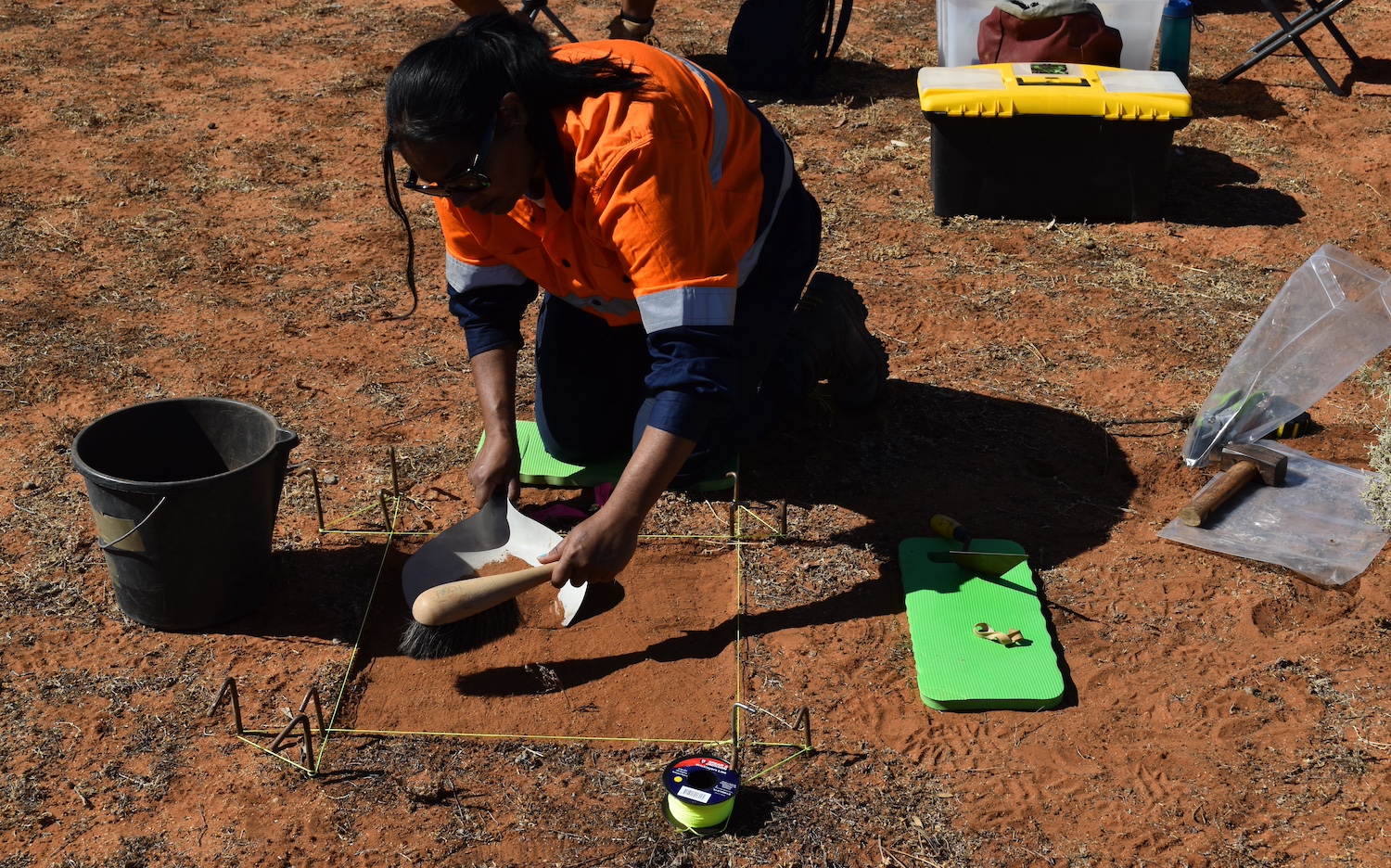
The dating has formed part of the first detailed investigation into an Aboriginal chert and silcrete quarry in the Riverland region.
These hard, fine-grained rocks were mined by Aboriginal people to craft tools, weapons and for trade – with Riverland-sourced materials likely to have been widely redistributed beyond this area.
The Sugarloaf Hill Quarry represents one of several sources of silcrete and chert traditionally utilised by Aboriginal people within a highly localised region of the Murray River corridor between Berribee in northwestern Victoria and Overland Corner in SA.
Given the scale of the Sugarloaf Hill Quarry, this site was an important source of material, though is less emphasised in historical literature.
“The key outcome from our research has been establishing a plausible timeline for the mining of these materials at Sugarloaf Hill,” says lead researcher Dr Craig Westell, from the Archaeology discipline at Flinders University.
Chronologies established at quarries elsewhere in Australia have provided valuable context for this essential aspect of Aboriginal life and an appreciation of the sociocultural and political systems embedded in it.
“We believe similar outcomes can be achieved in the Riverland through further integration of ethnohistorical, archaeological and contemporary community views,” says Dr Westell.
The timing and nature of exchange in fine-grain siliceous materials sourced from the Riverland quarries may contribute to an ever more nuanced appreciation of the many entangled aspects of Aboriginal society and economies in the southwestern region of the Murray Darling Basin.
This new chronology also allows comparison to stone quarries elsewhere in Australia.
The team will conduct further research to compare other Riverland quarries and determine whether this timeline is representative of the use of Riverland stone sources more generally.
“The relationships that Aboriginal people share with their ancestors, the river and land shaped connections and responsibilities to country and ultimately systems of traditional land ownership. Stone quarries are an essential part of this inheritance,” says co-author Professor Amy Roberts, Deputy Director of the ARC Centre for Transforming Human Origins Research at Flinders University.
“This timeline demonstrates both the deep time and long-term connections that our ancestors have maintained with all aspects of our riverscape,” says Sheryl Giles, a spokesperson for the River Murray and Mallee Aboriginal Corporation.
The research – “7000 Years of Aboriginal Mining at Sugarloaf Hill in the Riverland Region of South Australia”, by Craig Westell, Ian Moffat, Richard Fullagar, Amy Roberts, Justine Kemp, Mike Morley, Marc Fairhead and Simon Hoad – has been published in Archaeology in Oceania. DOI: 10.1002/arco.70028
* The research has been funded by the Australian Research Council for the project entitled ‘Rockshelters and Rock Art in the River Murray Gorge: New Data and Syntheses’ (LP200200803). Amy Roberts is the recipient of an Australian Research Council Future Fellowship (FT230100499). Ian Moffat is the recipient of an ARC Future Fellowship (project number #FT220100184).

