 Sign In



 International
Media release
From:
Captive bottlenose dolphins vary vocalizations during enrichment activities
Study suggests the frequency, and duration of vocalizations reflect cognitive engagement
Dolphins produce a range of vocalizations used for echolocation and communication. These vocalizations vary with social context, environmental conditions, external stimuli, and communication, reflecting their cognitive and behavioral complexity. A study published in PLOS One on December 3, 2025 by Francesco Di Nardo at Università Politecnica delle Marche, Ancona, Italy and colleagues suggests that the frequency and duration of captive dolphin vocalizations may indicate engagement with structured activities.
Captive dolphins require enrichment activities, such as training sessions and play interactions. However, best practices for managing captive dolphin environments and optimizing welfare practices could be improved with a more detailed understanding of what activities motivate and engage them.
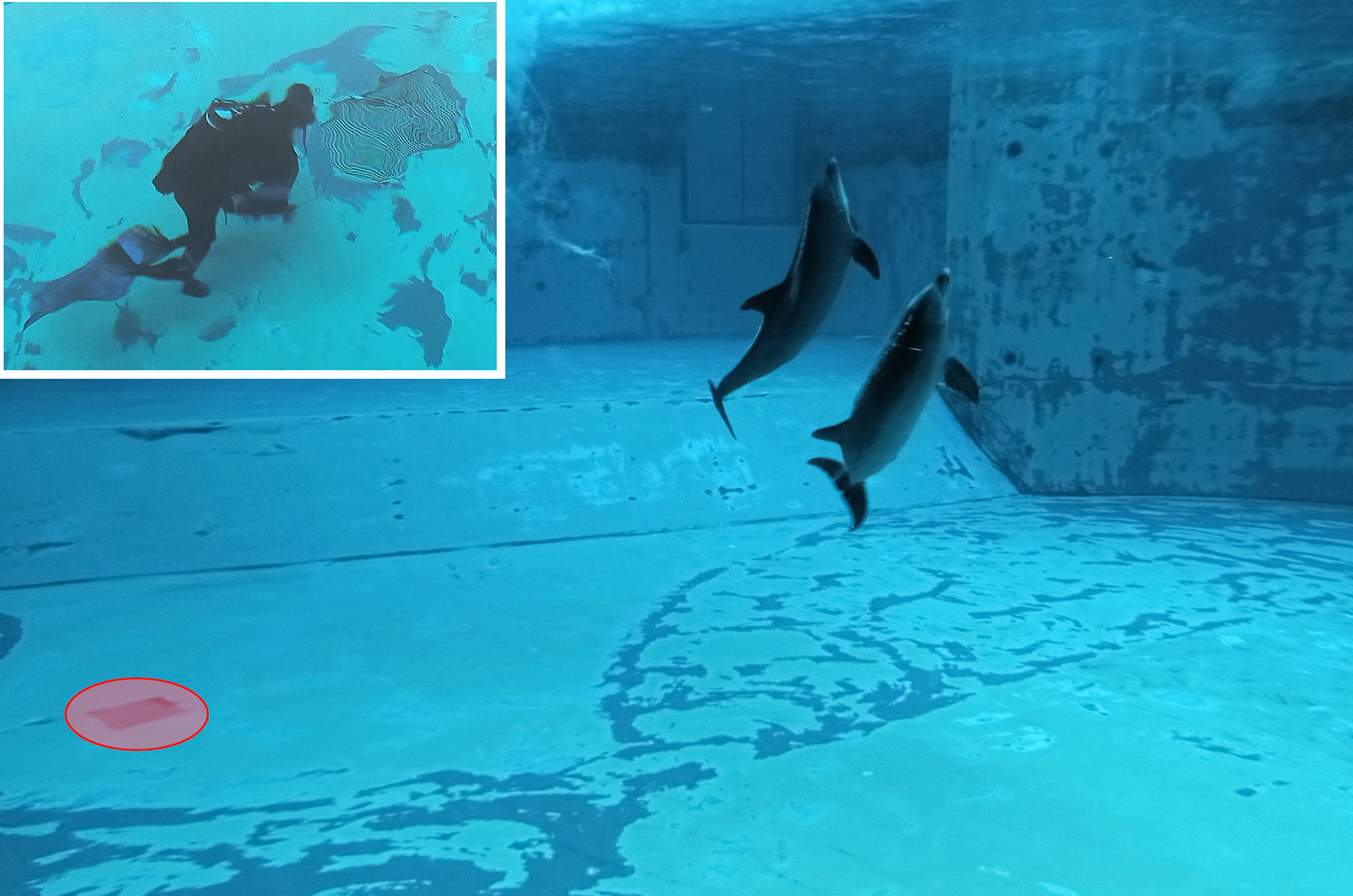
In order to better understand the relationship between vocal behavior and different kinds of structured activities, researchers conducted acoustic analyses of seven bottlenose dolphins (Tursiops truncatus) at Oltremare Marine Park in Ricci¬one, Italy. Researchers recorded the vocalizations of two males and five females over a 24-hour period in 2021 while monitoring the dolphins’ environment and activities, including feeding sessions and trainer-led exercises. Researchers then analyzed the recordings to classify vocalizations as whistles and pulses, quantified their diversity, number, and duration, and compared periods of organized activity with periods of no organized activity.
The researchers found that organized activities influenced all vocalizations, reflecting increased motivation, social coordination, and negotiation with fellow dolphins, as well as engagement with human trainers. The study was limited by its small sample size of seven dolphins and short study duration of one day. Future research focusing on comparisons between different types of activities and environments rather than comparing activity to periods of no activity could yield richer insights about the enrichment needs of captive dolphins.
According to the authors, “Understanding the relationship between vocalization patterns and activity types has direct implications for dolphin welfare. Our study can improve the design of enrichment programs to ensure that dolphins in human care maintain a healthy and dynamic acoustic repertoire.”
The authors also add: “The goal of our study was to understand how dolphins adjust their vocal behavior throughout the various activities of one day at Oltremare Marine Park (Riccione, Italy). Our findings show that dolphins tend to ‘speak’ much more during structured moments like training, feeding, or play, revealing how closely their vocal activity reflects their social and emotional engagement. This work also illustrates how detailed acoustic datasets can deepen our understanding of dolphin communication and support better welfare and conservation practices. Alongside the scientific analysis, indeed, this study also releases the full database of dolphin vocalizations in the hope that it will support and inspire further research. Working with these highly social animals is truly inspiring; they remind us how much we can learn about the marine environment and the relationships among its inhabitants.”
“The authors would like to highlight that this work was carried out through a collaboration among Università Politecnica delle Marche (Ancona, Italy), IRBIM – CNR (Ancona, Italy), and Oltremare Marine Park (Riccione, RN, Italy).”

