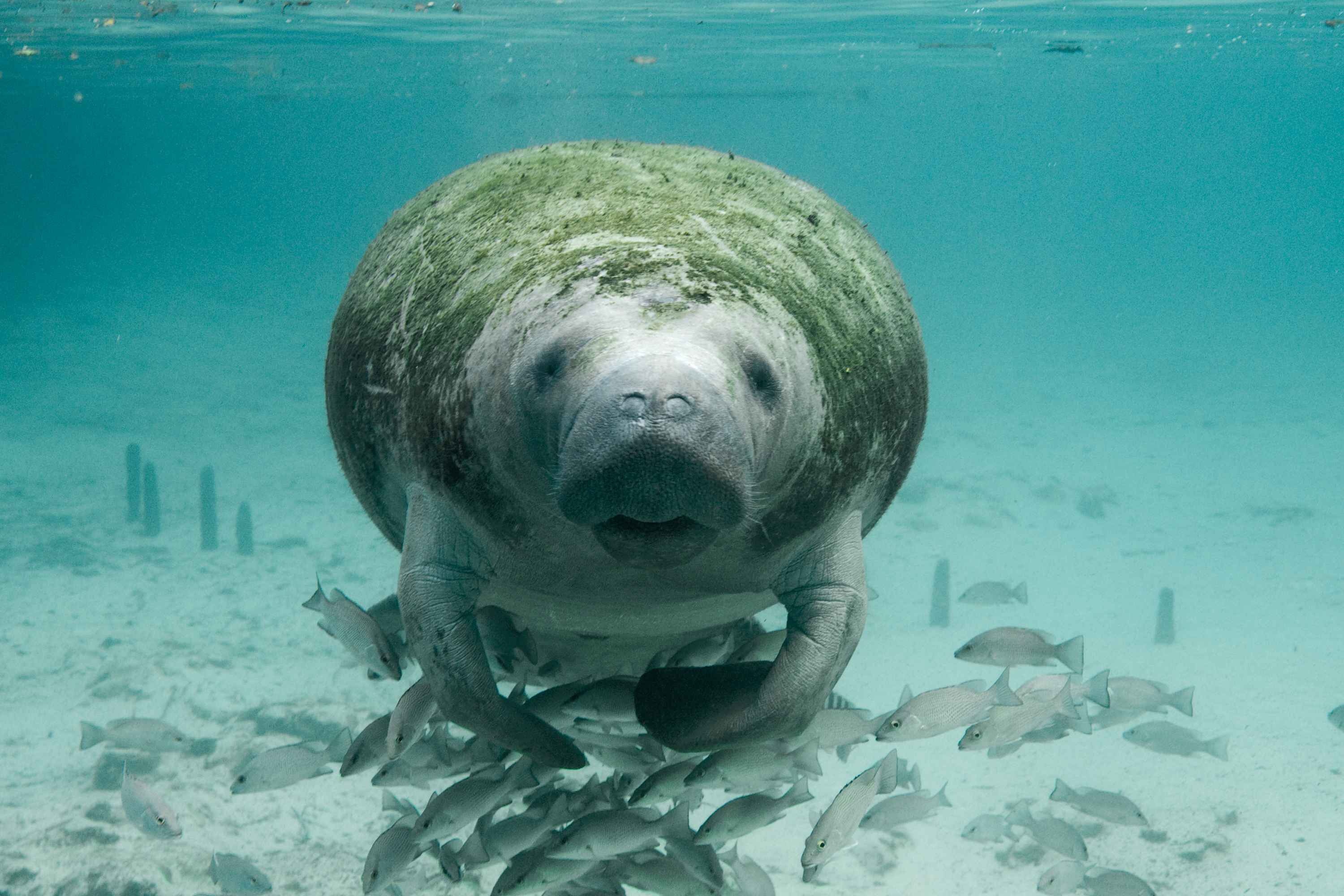
Diving dugongs only breathe deeply when they have to!

Publicly released:
Australia; QLD; WA
Image by PublicDomainImages from Pixabay

Dugongs regulate how they float when diving by changing the amount of air they inhale, according to Aussie researchers, who say this contrasts with other marine mammals that exhale air as they dive. The team found that for deep dives, dugongs breathe in deeper and swim harder early in the dive to avoid floating back to the surface, but for shallow dives, they inhale less air, reducing the force pushing themselves back to the surface. This strategy, the authors say, helps dugongs save energy while foraging underwater, which frequently requires hundreds of short and shallow dives daily.

News release

From: Frontiers

Study shows how dugongs regulate how they float, rise, and sink during shallow-water dives

Dugongs need to breathe air but forage underwater, so they must maximize the time they spend underwater by performing hundreds of short and shallow dives daily. Controlling their buoyancy – the upward force exerted by water against a body in it – is especially important for dugongs, who have large lungs relative to their body size, a feature that adds to buoyancy. Now, in a new Frontiers in Marine Science article, scientists found evidence that dugongs adjust how much air they inhale before dives, which helps them control their buoyancy. When diving deep, they breathe in deeper and swim harder early in their dives to avoid floating back to the surface. When performing shallow dives, they inhale less air which reduces the force pushing them back to the surface – an energy-saving strategy.

Journal/
conference:
Frontiers in Marine Science
Research:Paper
Organisation/s: James Cook University, Murdoch University
Funder: The author(s) declared that financial support was received for this work and/or its publication. Renae N. Lambourne is supported by an Australian Government Research Training Program (RTP) Scholarship and is supported by James Cook University. Publication of this research was funded by the Holsworth Wildlife Research Endowment -Equity Trustees Charitable Foundation & the Ecological Society of Australia. The deployment of telemetry devices on dugongs inNew Caledonia and the Exmouth Gulf was funded by Koniambo SAS, Artemis Media, the Department of Climate Change, Energy, the Environment and Water (DCCEEW), and James Cook University, respectively
Media Contact/s
Contact details are only visible to registered journalists.