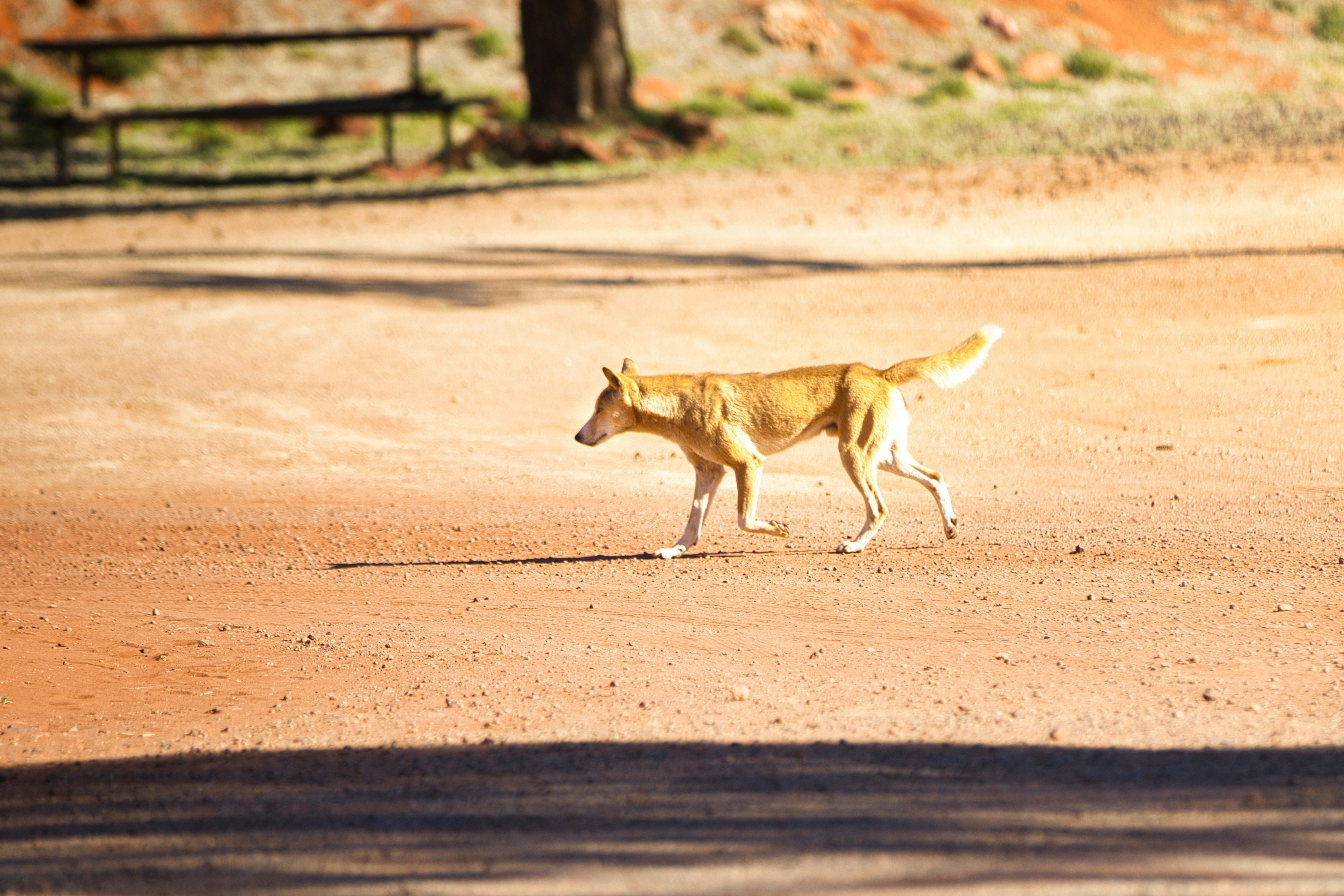
Dingoes were almost non-existent for over 50 years in the Murchison region of WA but now they've bounced back

Publicly released:
Australia; NSW; VIC; WA
Photo by 𝕡𝕒𝕨𝕤 𝕒𝕟𝕕 𝕡𝕣𝕚𝕟𝕥𝕤 on Unsplash, Story by Lyndal Byford, Australian Science Media Centre

Sightings of dingoes and livestock impacts from dingo attacks were rare or non-existent between the 1940s and 2000, but since then, the population has bounced back, according to Australian research.  The researchers say that, with effective control measures and economic forces from the wool industry, alongside a local community that prioritised eradicating dingoes, successful dingo control in the region was possible. The re-establishment of dingoes after 2000 coincided with changes in social, environmental and economic conditions, including the shift from sheep to cattle grazing in the region. The authors say that this implies that effective eradication of dingoes may be possible with adequate resources, high regional income, and a high community priority, but without those pressures, dingoes may re-establish and effective control becomes difficult.

Attachments

Note: Not all attachments are visible to the general public. Research URLs will go live after the embargo ends.

Research CSIRO Publishing, Web page Please link to the article in online versions of your report (the URL will go live after the embargo ends).
Journal/
conference:
Pacific Conservation Biology
Research:Paper
Organisation/s: The University of Sydney, RMIT University
Funder: This project was supported by the Paddy Pallin Research Grant by the Royal Zoological Society of New South Wales and the Macintosh Student Grant by the Australian Dingo Foundation.
Media Contact/s
Contact details are only visible to registered journalists.