Sign In



 Australia; WA
News release
From:
Microalgae‑based architecture is gaining attention globally as a sustainable design solution, and the concept could soon become a reality in Western Australia.
Amin Mirabbasi, a PhD student at Murdoch University’s newly minted Algae Innovation Hub, has spent three years designing microalgae filled photobioreactors, which can be incorporated into a variety of builds such as houses, apartments, mining dongas, and urban designs.
Mr Mirabbasi believes WA’s climate offers ideal growing conditions for microalgae, making it a largely untapped opportunity for the state.
“Compared with colder European and southern Australian climates, Perth presents negligible freezing risk and high solar availability, which supports microalgae cultivation; however, overheating control is essential,” Mr Mirabbasi said.
Microalgae deliver a range of environmental benefits, most notably through carbon capture and the reduction of greenhouse gas emissions.
Microalgae have been reported to exhibit CO₂ fixation efficiencies 10–50 times higher than terrestrial plants, together with rapid growth rates and high biomass productivity.
In addition to these benefits, Mr Mirabbasi believes its ability to absorb heat could be a gamechanger for sustainable architecture.
“Because the microalgae culture (water medium) absorbs heat and filters solar radiation, these photobioreactors can significantly reduce indoor overheating, as our tests showed,” he said.
“In WA’s climate, that means less reliance on air conditioning during peak hours, which translates into real energy and cost savings.”
Mining Dongas
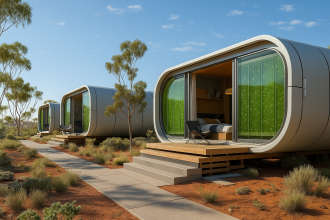
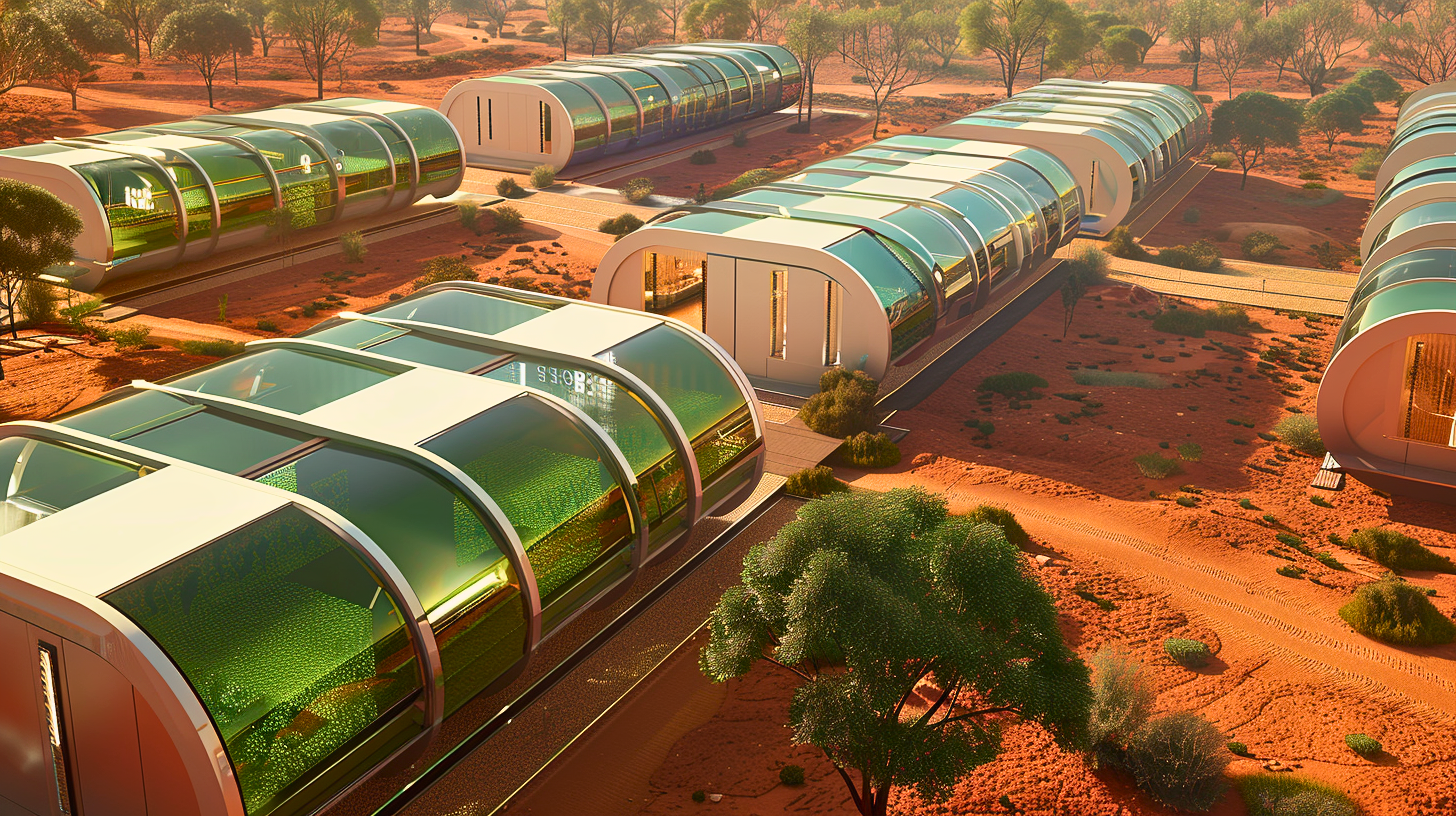
A focus of Mr Mirabbasi’s research has been designing prefabricated mining accommodation units, purpose built for harsh environments in rural areas.
The microalgae photobioreactors installed on the dongas act as a passive solar control system, shading the building and absorbing heat, while simultaneously generating oxygen and purifying the air.
Furthermore, Mr Mirabbasi believes the futuristic, Sci-Fi aesthetic of the buildings will offer workers escapism from physically demanding conditions and help them reconnect with nature.
“Beyond energy efficiency, this design is about people. A cooler, nature‑inspired space can help workers step away from demanding conditions, clock-off mentally and return the next day feeling better supported and recharged,” he said.
Urban BioDesign
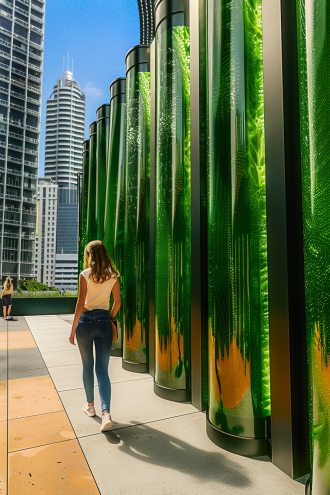
In addition to mining accommodation, Mr Mirabbasi’s research has included bio-urban designs, such as bus stops, shelters, garages and artistic streetscapes. Many of his designs incorporate tubular photobioreactors which could be positioned along walkways, building exteriors and shopping districts, to create visually engaging public spaces. These can be fitted with LED lighting to illuminate the green culture at night.
“The beauty of these biodesigns is they combine science and nature in a way people can see and feel. Watching the microalgae grow, bubble and respond to light creates a biophilic experience that draws people in, connects them to nature and quietly reinforces sustainability awareness in everyday spaces,” Mr Mirabbasi said.
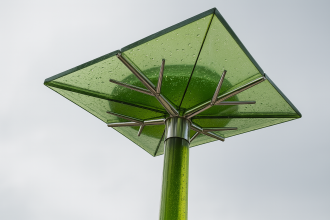
His Urban Algae Tree embodies how microalgae technology can directly replicate nature. The tree-like prototype provides shade from the sun by absorbing heat, captures rainwater, and operates self-sufficiently by using its own harvested solar energy.
This tree can hold 1,500 L of culture medium and is designed to produce up to 700 kg of oxygen per year, while removing approximately 1,000 kg of CO₂ per year.
Having nearly completed his PhD, Mr Mirabbasi said he is now focused on testing his ideas in the real world.
“For me, this research isn’t about staying on the drawing board. It’s about turning ideas into tangible outcomes — designs that can be built, tested and implemented in real settings, where they can genuinely make a difference,” he said.
Multimedia