 Sign In



 Australia; New Zealand; NSW; VIC; QLD; TAS
News release
From:
A trans-Tasman clinical trial led by University of Queensland researchers has marked a key step towards easing the kidney dialysis crisis in Australia and New Zealand.
UQ researchers led a large-scale trial to test whether a standardised peritoneal dialysis program called ‘TEACH-PD’ could reduce infection compared with existing patient training.
Professor David Johnson, of UQ’s Australasian Kidney Trials Network and Frazer Institute, said the kidney dialysis systems in Australia and New Zealand were at breaking point, with an urgent need to find ways to keep patients with kidney failure out of hospital settings.
“Our study is the first randomised trial to examine if an internationally guided peritoneal dialysis training curriculum reduces infections compared with existing local training practices,” Professor Johnson said.
“This was a well-executed trial that has reinforced peritoneal dialysis - a home-based treatment - as an effective option to ease the load on struggling hospital-based dialysis units.”
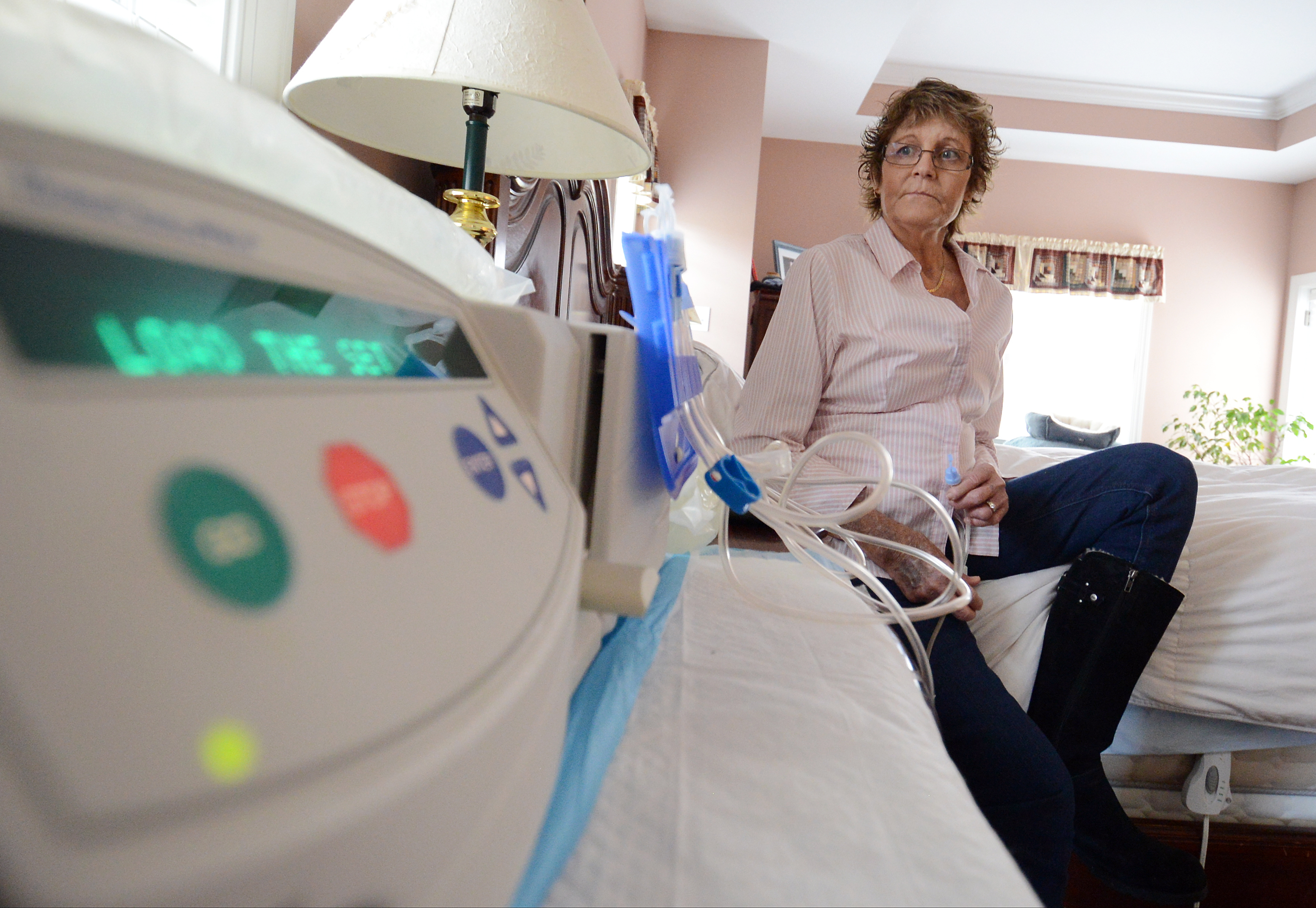
Peritoneal dialysis (PD) is a treatment option for patients with kidney disease that has progressed to the point where kidneys can no longer function effectively on their own.
The treatment can be administered by a patient at home following training from a healthcare provider – a method estimated by Deloitte Access Economics to save the Australian taxpayer $67,750 per patient annually compared with hospital-based dialysis units.
It estimates kidney disease dialysis demand will grow by 42% between 2021 and 2030.
“We are facing a hospital-based dialysis capacity crisis that is putting patients’ lives at risk,” Professor Johnson said.
“Hospitals are having to ration dialysis care and reduce treatment hours to accommodate more patients in a single unit, while managing significant staff shortages.”
The study recruited 1462 patients with kidney failure and healthcare professionals from 42 peritoneal dialysis training centres across Australia and New Zealand.
TEACH-PD was delivered to 667 participants with findings compared against 795 participants who undertook existing training.
Professor Yeoung Jee Cho of UQ’s Australasian Kidney Trials Network and Frazer Institute said TEACH-PD is a landmark clinical trial that provides critical evidence on the role of training.
“For the first time, our study has demonstrated that the way in which patients and nurses are trained has a measurable impact on PD‑related infections,” Professor Cho said.
“The TEACH-PD intervention was associated with a small increase in infection risk, but the findings offer invaluable insights into the complexity of training delivery.
“Our learnings will help shape safer, more effective training programs, while minimising unintended harm.
“This is important, as peritoneal dialysis is effective but underutilised worldwide – of 4.5 million people on dialysis for kidney failure, only 11 per cent use the home-based treatment.”
Professor Josephine Chow, of Western Sydney University’s School of Nursing & Midwifery, and co-principal investigator on the project, said strong engagement from PD nurses and patients was a key success of the trial.
“This high level of engagement will be critical in supporting the translation of our findings into clinical practice.”
A post-trial evaluation was underway to investigate improvements.
Read the research published in eClinicalMedicine.
Collaboration and acknowledgements:
The clinical trial included researchers Professor Josephine Chow, Western Sydney University, Professor Neil Boudville, The University of Western Australia, Professor Suetonia Green, University of Otago and Associate Professor Rachael Walker, University of Auckland.

