 Sign In



 Australia
Media release
From:
Australia’s revived shellfish reefs gain global recognition as World Restoration Flagship
Nairobi, 4 December 2025 – The UN today recognized the restoration of Australia’s shellfish reefs as a World Restoration Flagship, acknowledged for its Indigenous and local leadership together with The Nature Conservancy and the Ministry for Environment and Water. The Australian achievement – alongside initiatives in Canada and South Africa – was announced ahead of the 7th UN Environment Assembly (UNEA-7), boosting agrifood systems, biodiversity and global climate goals.
Jointly led by UN Environment Programme (UNEP) and the Food and Agriculture Organization of the United Nations (FAO), the awards are announced under the UN Decade on Ecosystem Restoration (2021–2030). The World Restoration Flagships represent some of the most ambitious, science-based, and inclusive examples of restoration in action.
“One hectare at a time, governments, communities and partners are restoring forests, grasslands, shrublands, coastlines and marine environments,” said Inger Andersen, Executive Director of UNEP. “By combining lessons from Indigenous Peoples with modern science, we are restoring damaged ecosystems. One hectare at a time.”
Reef Builder: Restoring Shellfish Reefs in Australia
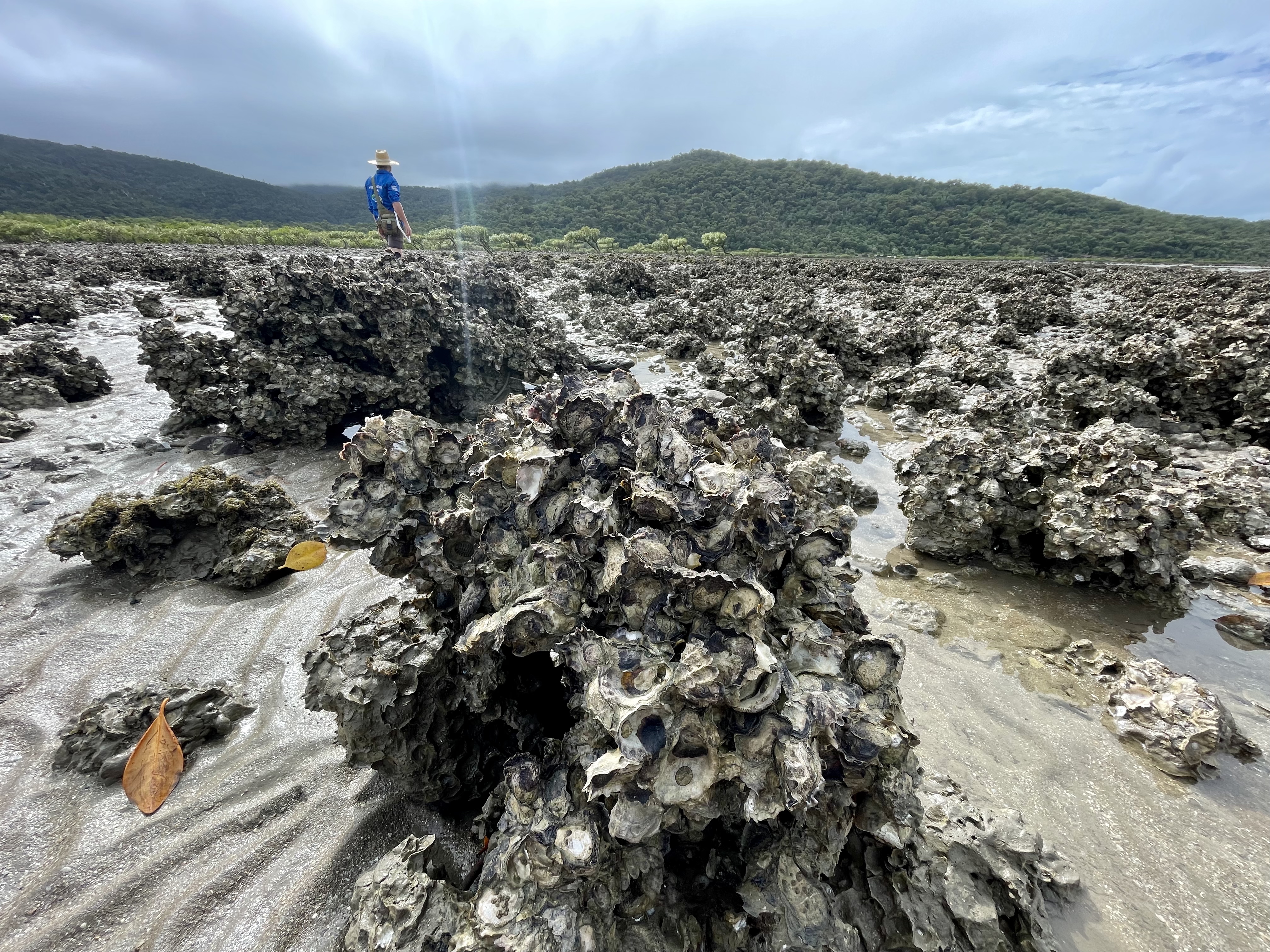
Australia’s once-abundant shellfish reefs – comprising oysters and mussels – have become critically endangered by overharvesting, sedimentation, and pollution, among other things. Between 2021and 2023, The Nature Conservancy and the Australian Government, in partnership with local communities, embarked on the Reef Builder programme to rebuild these vital coastal ecosystems at 13 locations spanning all six states cross southern Australia. The Nature Conservancy continues this partnership-based work to restore native shellfish reefs across 30 per cent of their original locations around Australia’s expansive coast by 2030.
“Shellfish reefs are natural solutions to some of our greatest conservation challenges, and Reef Builder has shown that restoring them at a national scale is not only possible—it’s transformative,” said Australia’s Minister for the Environment and Water, Senator the Hon. Murray Watt. “This recognition as a UN World Restoration Flagship highlights Australia’s leadership in marine ecosystem recovery. Reef Builder is delivering real benefits for nature and communities alike; supporting local jobs, strengthening coastal resilience, and revitalising biodiversity along our shorelines.”
Shellfish reefs serve as natural ecosystem engineers, purifying water and providing habitat for hundreds of marine species. Since the initiative’s launch, it has helped remove nearly 15 tonnes of nutrient pollution, filter 125 billion litres of seawater, boost fish stocks to nearly 50 tonnes per year, and has achieved significant biodiversity gains: approximately 250 species of fish and mobile invertebrates have been recorded on the restored reefs to date, compared to 175 species on adjacent sites.
The restoration of 62 hectares of reefs has generated over 425 jobs – more than double than expected – and will generate nearly AUD$14 million per year in ongoing benefits, supporting over 50 small and medium sized businesses.
This project has brought together over 5000 people and helped forge deep collaboration between many different groups, including Indigenous Traditional owners, fishers, restaurants, scientists, and local communities.
The Nature Conservancy’s (TNC) shellfish reef building program is Australia’s largest marine habitat restoration initiative. It aims to rebuild 60 shellfish reefs by 2030, restoring 30% of their original locations and helping to recover an ecosystem from possible extinction. Shellfish reefs, comprising oysters, mussels and clams, are ‘ecosystem engineers’ that enhance coastal water quality, fish stocks, biodiversity and human connection to the ocean.
The IUCN has assessed shellfish reefs in southern and eastern Australia as Critically Endangered. These habitats were once abundant across southern Australia’s 8,000 km stretch of coastline, but since the 1800s over 90% have been lost through overharvesting, pollution and disease. This loss in Australia reflects comparable declines globally.
Beginning in 2014, TNC started trialling pilot-scale reefs before progressing to reef arrays up to 20 hectares in size. In 2020, TNC in partnership with the Australian Government launched Reef Builder, the first national-scale shellfish reef restoration initiative. Reef Builder restored shellfish reefs in 13 locations across southern Australia, rebuilding 40.5 hectares of reef. Continuing the momentum of Reef Builder, this flagship focusses on restoring the remaining 39 reefs to achieve the 30% restoration target by 2030, making Australia the first nation to recover a critically-endangered marine ecosystem.
Notes to Editor
About the UN World Restoration Flagships
Countries have already promised to 1 billion hectares – an area larger than China – as part of their commitments to the Paris climate agreement, the targets of the Kunming-Montreal Global Biodiversity Framework, the Land Degradation Neutrality targets and the Bonn Challenge. However, little is known about the progress or quality of this restoration. With the World Restoration Flagships, the UN Decade on Ecosystem Restoration is honouring the best examples of large-scale and long-term ecosystem restoration in any country or region, embodying the 10 Restoration Principles of the UN Decade. Progress of all World Restoration Flagships will be transparently monitored through the Framework for Ecosystem Restoration Monitoring, the UN Decade’s platform for keeping track of global restoration efforts.
About the UN Environment Programme (UNEP)
UNEP is the leading global voice on the environment. It provides leadership and encourages partnership in caring for the environment by inspiring, informing and enabling nations and peoples to improve their quality of life without compromising that of future generations.About the Food and Agriculture Organization (FAO)
FAO is a specialized agency of the United Nations that leads international efforts to defeat hunger. It aims to achieve food security for all and make sure that people have regular access to enough high-quality food to lead active healthy lives. With over 194 Members, FAO works in over 130 countries worldwide.
For more information, please contact:
News and Media Unit, UN Environment Programme
Newsroom, Food and Agriculture Organization (FAO)
See the photo library for images and video footage to use
About the UN Decade on Ecosystem Restoration
The UN Decade on Ecosystem Restoration 2021-2030 , led by the United Nations Environment Programme, the Food and Agriculture Organization of the United Nations and its partners, covers terrestrial as well as coastal and marine ecosystems. As a global call to action, it will draw together political support, scientific research and financial muscle to massively scale up restoration. Find out how you can contribute to the UN Decade . Follow #GenerationRestoration

