 Sign In



 International
Media release
From:
Penguins starved to death en masse, study warns, as some populations off South Africa estimated to have fallen 95% in just eight years
With a key food source falling to below a quarter of its peak levels in 17 of 20 years, the findings could be key in helping secure these penguins’ long-term survival
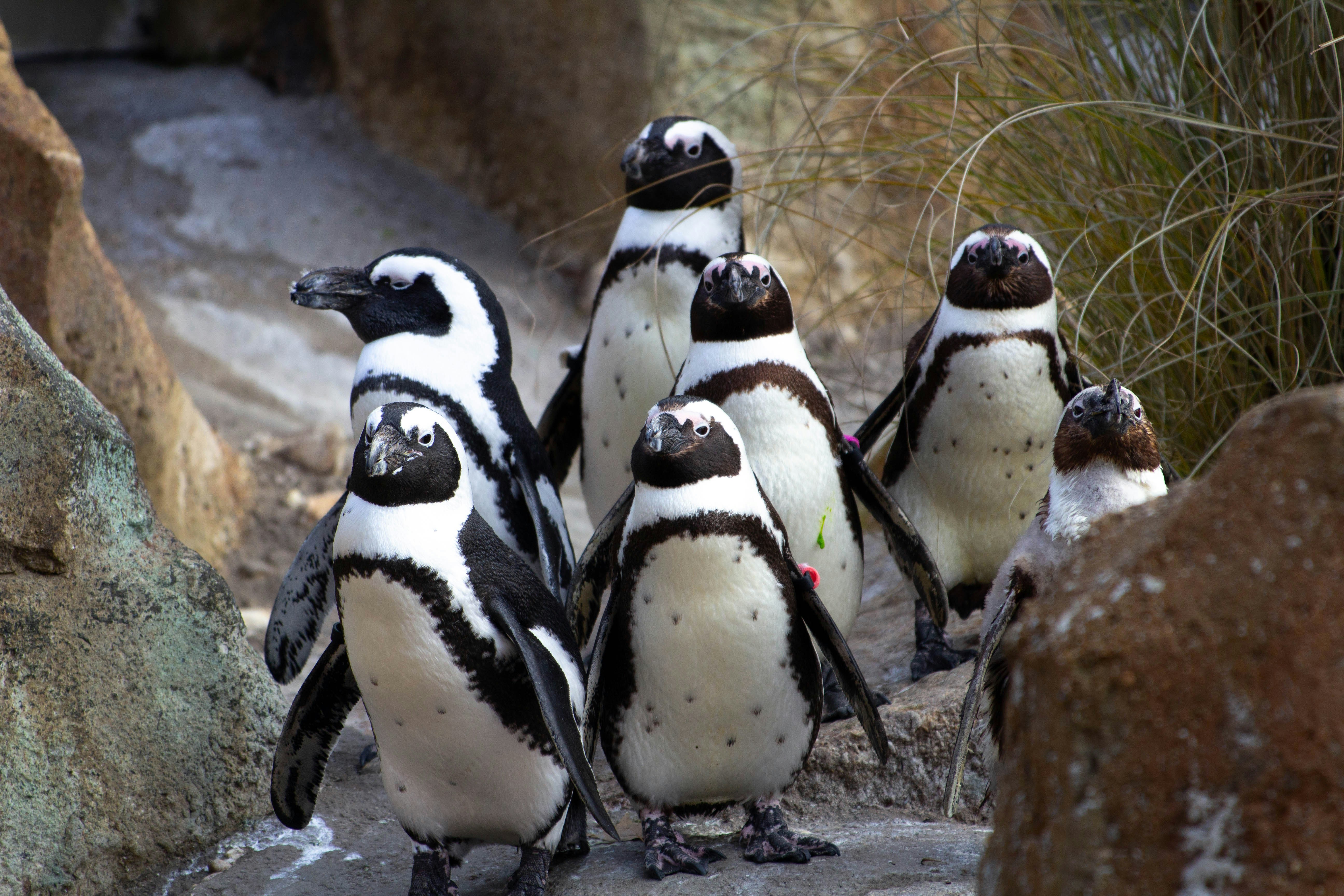
Penguins living off the coast of South Africa have likely starved to death en masse during their moulting season as the result of collapsing food supplies.
In fact, on two of the most important breeding colonies of the African penguin (Spheniscus demersus) — Dassen Island and Robben Island — some 95% of the birds that bred in 2004 were estimated to have died over the next eight years as a result of food scarcity.
This is the conclusion of a new study by an international team of researchers from the South African Department of Forestry, Fisheries and the Environment and the University of Exeter, in the UK, published today in the peer-reviewed publication Ostrich: Journal of African Ornithology.
“Between 2004 and 2011, the sardine stock off west South Africa was consistently below 25% of its peak abundance and this appears to have caused severe food shortage for African penguins, leading to an estimated loss of about 62,000 breeding individuals,” says co-author and conservation biologist Dr Richard Sherley, from the Centre for Ecology and Conservation – a world-leading research and education hub, based at the University of Exeter.
The findings, say the researchers, could have important relevance to management strategies to help secure the long-term survival of the birds.
“In 2024, African penguins were classified as Critically Endangered, and restoring sardine biomass in key foraging areas would seem to be essential for their long-term survival.”
African penguins moult annually, shedding and replacing all their worn-out feathers with fresh new ones in order to keep up their insulation and water-proofing.
However, the temporary loss of this protection means that the birds must remain on land, and are unable to hunt during the moulting process—which takes around 21 days.
To prepare for this period without food, the penguins must first fatten up.
“They are evolved to build up fat and then to fast whilst their body metabolises those reserves, and the protein in their muscles, to get them through moult,” explains Dr Sherley, whose research focuses on using long-term data on animal populations to examine human impacts on, and interactions with, the oceans.
“They then need to be able to regain body condition rapidly afterwards.
“So, essentially, if food is too hard to find before they moult or immediately afterwards, they will have insufficient reserves to survive the fast.”
This is exactly the peril the penguins have faced in the last couple of decades.
Since 2004, all bar three years have seen the biomass of the sardine Sardinops sagax, a key food for African penguins, fall to less than 25% of its maximum abundance off western South Africa.
“Changes in the temperature and salinity of the spawning areas off the west and south coasts of South Africa made spawning in the historically important west coast spawning areas less successful and spawning off the south coast more successful,” says Dr Sherley.
“However, due to the historical structures of the industry, most fishing remained to the west of Cape Agulhas, which led to high exploitation rates in that region in the early to mid 2000s.”
In their study, Dr Sherley and colleagues analysed counts of the number of breeding pairs and moulting adult-plumaged penguins on Dassen and Robben islands from 1995–2015.
“These two sites are two of the most important breeding colonies historically—holding ~25 thousand (Dassen) and ~9 thousand (Robben) breeding pairs in the early 2000s. As such they are also the locations of long-term monitoring programmes,” adds study co-author Dr Azwianewi Makhado from the Department of Forestry, Fisheries and the Environment.
The authors factored in estimates of adult penguin survival rates based on capture-mark-recapture analysis for 2004–2011.
Survival rates and the proportion of breeders that failed to return to their colonies to moult were compared with an index of prey availability developed for the region.
“Adult survival, principally though the crucial annual moult, was strongly related to prey availability,” Dr Sherley says. “High sardine exploitation rates—that briefly reached 80% in 2006—in a period when sardine was declining because of environmental changes likely worsened penguin mortality.”
Losses are not just confined to Dassen and Robben, the team note. “These declines are mirrored elsewhere,” Sherley said, adding that the species has undergone a global population decline of nearly 80% in the last 30 years.”
The prey index—developed by the team in a previous study published in the ICES Journal of Marine Science—is based on the proportions of anchovies and sardines, both of which are eaten by African penguins, in the diet of another bird, Cape gannets (Morus capensis).
“Cape gannet diet is thought to be a good ‘sampler’ of the availability of sardine and anchovy because they are the most wide-ranging of the seabirds in Southern Africa that feed on these species,” explains Dr Makhado.
Picking up the penguin population going forward, the team note, is a “difficult” proposition—as the required improvement in sardine spawning is fundamentally dependent on environmental conditions.
However, there are measures we could take, Dr Sherley says.
“Fisheries management approaches that reduce the exploitation of sardine when its biomass is less than 25% of its maximum and allow more adults to survive to spawn, as well as those that reduce the mortality of recruits [juvenile sardines], could also help, although this is debated by some parties,” he explains.
Meanwhile, several conservation actions have been put into place to protect the penguins directly; these include the provision of artificial nests, predator management, as well as the rescue, rehabilitation and hand-rearing of adults and chicks.
In addition, commercial purse-seine fishing has recently been prohibited around the six largest breeding colonies in South Africa. This, Dr Makhado says “is hoped will increase access to prey for penguins at critical parts of their life cycle, such as during chick rearing and pre- and post-moult”.
With this study complete, the researchers are continuing to monitor the breeding success, chick condition, foraging behaviour, population trajectory and survival of African penguins.
Dr Sherley concludes: “We hope that the recent conservation interventions put in place, together with reduced exploitation rates of sardine when its abundance is less than the 25% of maximum threshold, will begin to arrest the decline and that the species will show some signs of recovery.”
Attachments
Note: Not all attachments are visible to the general public. Research URLs will go live after the embargo ends.


