 Sign In



 Australia; WA
News release
From:
Artificial waterbodies can act as ‘arks’ for vulnerable freshwater mussels
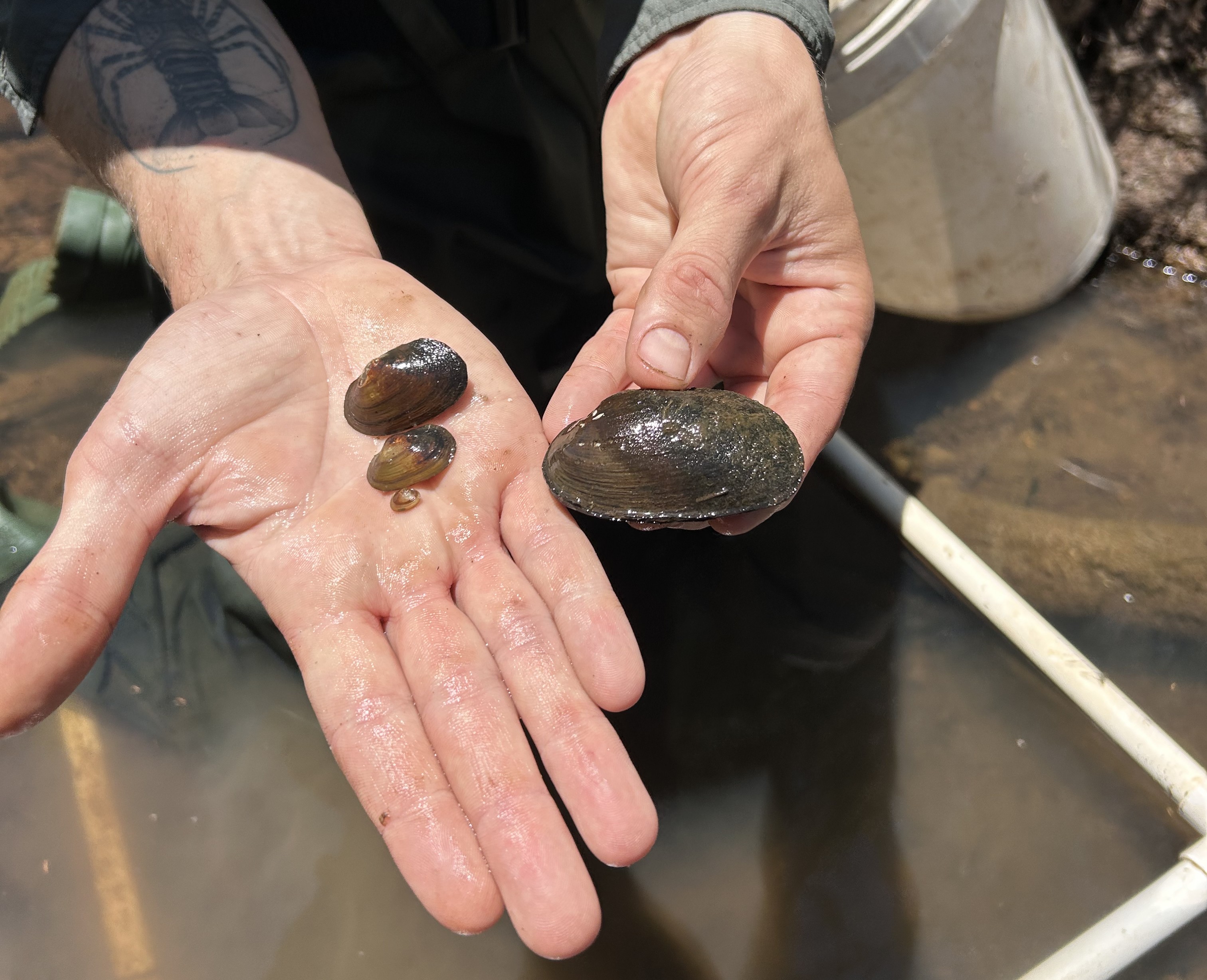
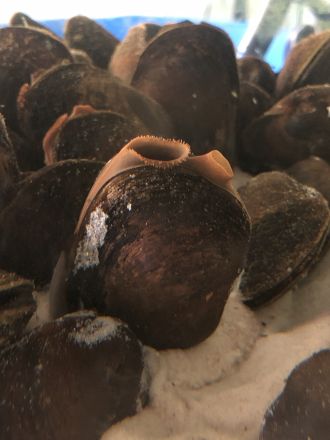
Researchers at Murdoch University have found that artificial waterbodies could play a crucial role in slowing the decline of Carter’s freshwater mussel (Westralunio carteri), a vulnerable species of freshwater mussel found only in southwestern Australia.
Carter’s freshwater mussel typically lives in freshwater rivers and lakes, and plays a vital role as a natural water filter.
Mussels purify aquatic ecosystems by filtering algae and bacteria, and can also signal declines in environmental health.
For more than 50 years, Carter’s freshwater mussel has undergone successive population declines due to a loss of viable habitat through both direct habitat destruction, and through indirect means such as salinisation and the drying of historically fresh, perennial streams and rivers.
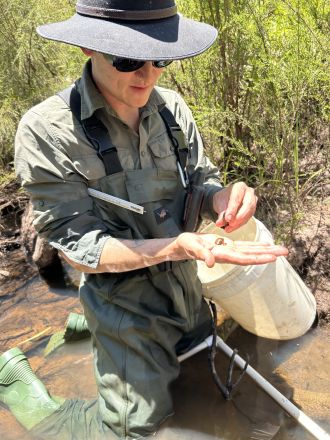
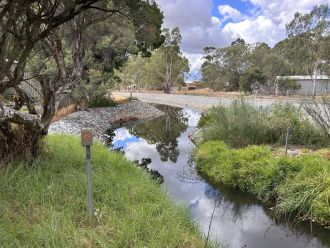
Led by Jake Daviot, an Aquatic Ecologist at the Centre for Sustainable Aquatic Ecosystems at Murdoch University’s Harry Butler Institute, a research team investigated whether artificial waterbodies, such as farm dams, mine lakes and drainage canals, could support healthy populations of Carter’s freshwater mussel.
The team surveyed both artificial and natural sites along the west coast of southwestern Australia and studied the abundance and distribution of mussels, their size and habitat conditions.
The study revealed that most artificial sites supported abundant mussel populations, with some even showing higher densities compared to natural waterbodies and evidence of recent recruitment.
“Five of the six artificial sites we surveyed demonstrated at least some evidence of recruitment within the past 10 years, which is comparable to the natural sites surveyed, however natural populations generally showed higher levels of recruitment than artificial sites,” Dr Daviot said.
“Interestingly, three of the mussel populations in artificial dams had very high mussel abundance, with mussel density exceeding densities previously reported for 14 natural riverine populations.”
While most artificial waterbodies supported healthy mussel populations, their success varied strongly from site to site and was dependent on the level of human alteration.
“Artificial waterbodies can give these mussels a lifeline, but only if we look after them and manage them correctly,” he said.
“Without careful management, artificial habitats can quickly become an ecological trap, resulting in poor mussel recruitment, and low survival of adults.”
Dr Daviot said the study proves that artificial habitats can be a valuable tool for the conservation of Carter’s freshwater mussel.
“Substantial losses of Westralunio carteri populations have been observed over the last 50 years, and without proactive and novel approaches to conservation, more populations are going to be lost in the face of human development exacerbated by climate change” he said.
“Our natural habitats are irreplaceable, but artificial waterbodies can buy these mussels precious time. Artificial habitats can act as ‘arks’, safeguarding populations until our rivers recover.”
The study, Artificial habitats provide refuge for a threatened freshwater mussel in south-western Australia, can be found in the journal Pacific Conservation Biology.
Multimedia

Attachments
Note: Not all attachments are visible to the general public. Research URLs will go live after the embargo ends.


