 Sign In



 Australia; International; ACT
News release
From:
A thin, soft and slippery layer of clay-rich mud embedded in rock below the seafloor intensified the 2011 Japan earthquake that produced a tsunami that claimed tens of thousands of lives and decimated coastal communities along with the Fukushima Daiichi nuclear power plant.
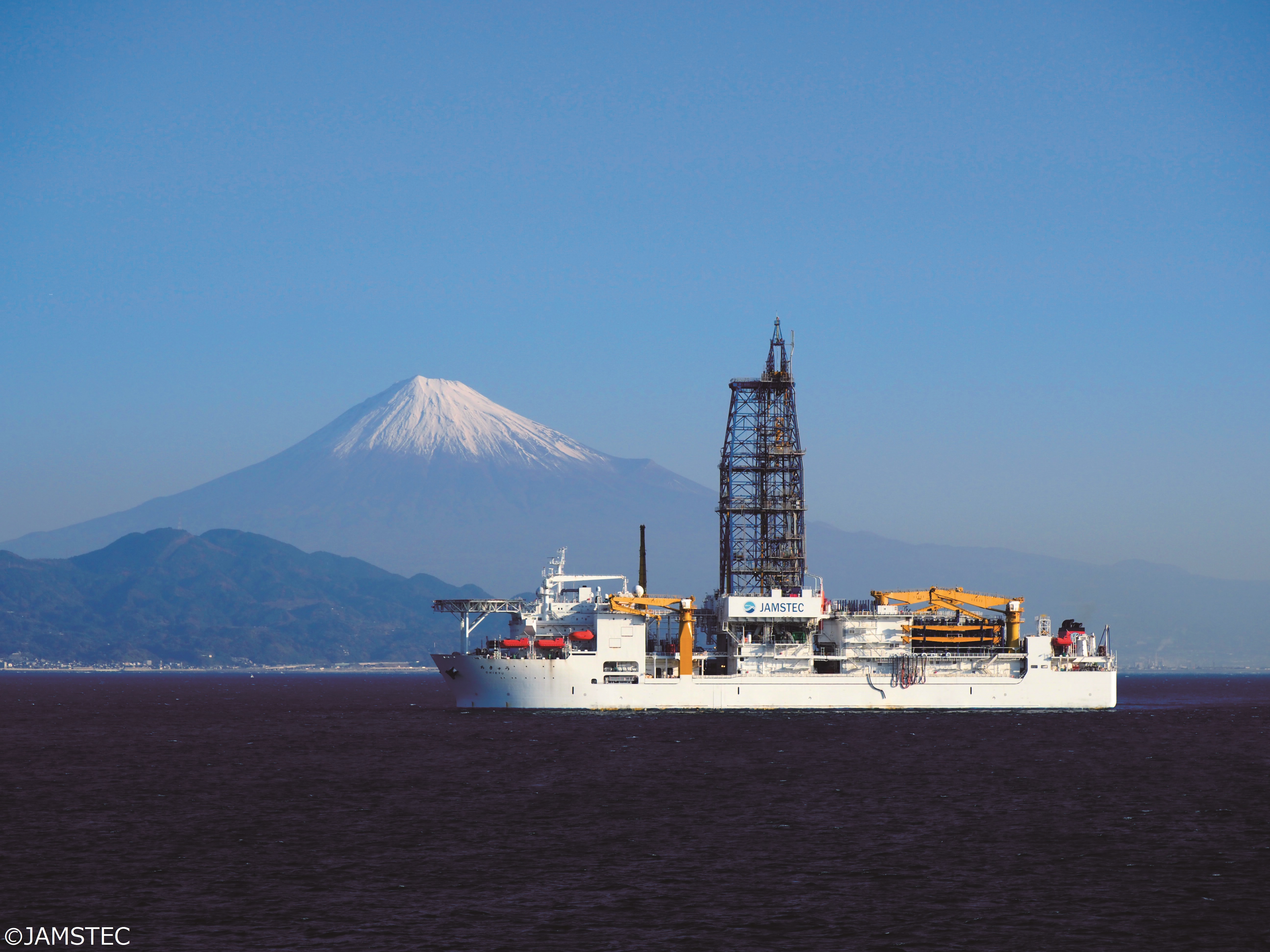
The discovery was made by an international team of scientists including researchers from The Australian National University (ANU), who, onboard the world’s most advanced drilling-equipped science vessel, Chikyu, sailed to the Japan Trench in late 2024 to investigate what caused the Tōhoku-oki fault to rupture and trigger the earthquake.
The researchers drilled up to 7,906 metres below the sea surface, setting a Guinness World Record for the deepest scientific ocean drilling ever conducted.
Earth core samples recovered from in and around the fault zone reveal that the fault rupture occurred in a layer of clay no more than a few metres thick.
According to ANU geophysicist Associate Professor Ron Hackney, the clay is very soft, slippery and exceptionally weak – a discovery that was “surprising and unusual”. He said this is the first time scientists have linked the presence of soft and slippery clay in a fault plane to ancient sediments deposited on the seafloor over millions of years.
“This work helps explain why the 2011 earthquake behaved so differently from what many of our models predicted,” Associate Professor Hackney, who is also Director of the Australian and New Zealand International Scientific Drilling Consortium (ANZIC), said.
According to the scientists, learning more about the properties and nature of a fault plane can tell them how much of the fault plane might rupture during an earthquake and where the energy released during an earthquake will be concentrated along the fault.
This, in turn, provides greater insights into the processes and properties that control giant earthquakes, the resulting movement of the seafloor and tsunami generation, and the likely size and extent of any tsunami that might be triggered.
“This clay-rich ancient mud formed from microscopic particles that slowly settled on the seafloor beneath the Pacific Ocean over time – a process that took place over 130 million years – as the Pacific tectonic plate slowly moved west to ultimately be forced under Japan,” Associate Professor Hackney said.
“The fault zone formed in that weak layer of clay as those sediments slowly slid under Japan, moving roughly 10 centimetres a year. Given that the weak clay layer is sandwiched between stronger layers of rock above and below, the clay acted like a natural ‘tear line’ that caused the fault to form within that layer of clay.”
The 2011 Japan earthquake was the result of a steady build-up of stress over the hundreds of years since the previous earthquake in a never-ending cycle caused by the movement of the Pacific tectonic plate as it pushed under the tectonic plate on which Japan sits.
According to Associate Professor Hackney, once the built-up stress was abruptly released, the weak nature of the clay offered little resistance to the rupture generated, allowing that rupture to rapidly propagate up the fault, all the way to the seafloor. This caused the seafloor to rise by several metres, which in turn triggered a tsunami on a scale not expected for this region.
“Amazingly, the fault didn’t rupture the whole layer of clay, which extends for hundreds of kilometres along the Japan Trench – the deep ocean boundary where the Pacific and Japan tectonic plates collide with one another,” he said.
“The rupture plane was just a centimetre or so thick, yet it allowed between 50 and 70 metres of movement on the fault and caused the seafloor off Japan to rise abruptly by several metres during the earthquake.”
By learning more about the properties of the Tōhoku-oki earthquake fault, scientists hope to conduct better assessments of earthquake and tsunami hazards for coastal communities around the world.
“There are indications that the sediments being drawn towards and under Sumatra may also contain a weak clay layer, which suggests that the giant 2004 Boxing Day tsunami may be linked to similar fault characteristics. Although we can’t be sure without extracting and analysing core samples directly from that fault,” Associate Professor Hackney said.
The research team’s findings are published in the journal Science.
Images and footage available to download from this folder. Image credit rights and captions are included in the folder.

