 Sign In



 Australia; VIC; SA
News release
From:
A mint idea becomes a game changer for medical devices
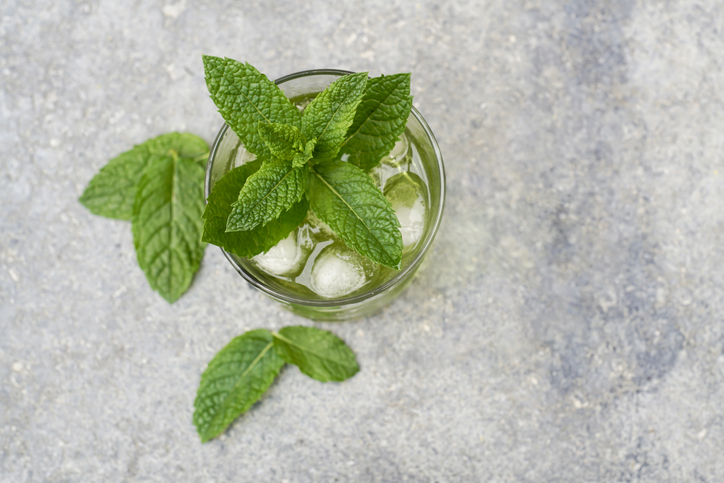
Australian researchers have developed a high‑performance coating made from peppermint essential oil that can be applied to the surfaces of many commonly used medical devices, offering a safer way to protect patients from infection and inflammation.
Matthew Flinders Professor and senior author of the new study, Professor Krasimir Vasilev, says the idea emerged after noticing that eating peppermint leaves from his drink significantly relieved his sore throat, inspiring him to explore whether its bioactivity could be converted into a durable coating using plasma technology – something he has been researching for more than two decades.
The team from Flinders’s Biomedical Nanoengineering Laboratory - including Professor Vasilev (Director), Associate Professor Vi‑Khanh Truong, Dr Andrew Hayes, and PhD candidates Trong Quan Luu and Tuyet Pham - created a nanoscale peppermint‑oil coating that protects against infection, inflammation and oxidative stress, while remaining compatible with human tissue and suitable for medical materials.
In the study, the team used atmospheric pressure plasma to transform peppermint essential oil into an ultra-thin film that bonds tightly to the surface of all types of medical materials.
“This process does not require heating or harmful chemicals and preserves many of the biologically active groups within the oil,” says Professor Vasilev.
“Importantly, it is environmentally friendly since the energy required to run the process can be entirely sourced from renewable sources.
“It allows the fabrication of robust and stable coatings because the plasma reorganises the oil molecules into a cross linked structure that resists breakdown.”
Researchers first tested the coating on urinary catheters - devices frequently associated with infection and patient discomfort.
Co-author, Associate Professor Vi‑Khanh Truong says the peppermint coating removed up to 90% of harmful reactive oxygen species, limiting tissue damage and irritation.
“Catheter associated urinary tract infections are among the most common hospital acquired infections and significantly contribute to patient discomfort, extended hospital stays, greater treatment costs and increased mortality,” says Associate Professor Truong from the College of Medicine and Public Health.
“The plasma coating demonstrated strong antibacterial action against key pathogens such as E. coli and Pseudomonas aeruginosa, killing bacteria on contact without releasing drugs into the body.”
The study also found that the peppermint oil coating increased bacterial sensitivity to common antibiotics including colistin and levofloxacin, a finding that could help reduce antibiotic resistance.
“We found that the coating reduces pro inflammatory signals and increases anti-inflammatory signals, shifting immune cells toward a healing associated phenotype rather than an aggressive one,” says Dr Andrew Hayes.
“This response may help the body tolerate the presence of medical devices more comfortably.”
Laboratory testing confirmed that human cells grow normally on the coating and maintain healthy metabolic activity which proves that the peppermint based film is safe for contact with human tissue.
Beyond catheters, the coating can be applied to many kinds of medical devices, including those used in orthopaedic surgery and long term clinical care.
“The process also supports environmentally conscious manufacturing because it uses renewable peppermint oil and avoids solvent based methods. It can also be powered entirely by renewable sources,” says Professor Vasilev.
“The co-location of the Biomedical Nanoengineering Laboratory within Flinders Medical Centre facilitates close collaboration with doctors and nurses, ensuring that our research remains clinically relevant and strongly positioned for translation.”
The team hopes the discovery will inspire a new generation of medical coatings that harness natural compounds while improving patient comfort and reducing infection risks. They say they are keen to support further development of the technology and are actively seeking engagement with partners to help commercialise their discoveries.
Images available here
Acknowledgements: This research at Flinders University was conducted with experts from RMIT University (Melbourne, Australia). Professor Vasilev is funded by a NHMRC Fellowship GNT1194466 and ARC grants DP220103543 and DP250101028. V.K.T thanks ARC for the grant FT240100067. A.H. thanks the Flinders Foundation for Health Seed Grant.
The article, ‘A Multifunctional Bioactive Nanoscale Coating Deposited by Atmospheric Pressure Plasma Polymerization of Peppermint Essential Oil,’ by Trong Quan Luu, Xuan Duy Do, Tuyet Pham, Ngoc Huu Nguyen, Richard Bright, Wenshao Li, Xiangyang Guo (RMIT University,Melbourne), Vi Khanh Truong , Andrew Hayles and Krasimir Vasilev was published in Small journal. DOI: 10.1002/smll.202510552
Multimedia


Attachments
Note: Not all attachments are visible to the general public. Research URLs will go live after the embargo ends.


