66-million-year-old tooth suggests ocean predator could hunt in rivers

Publicly released:
International
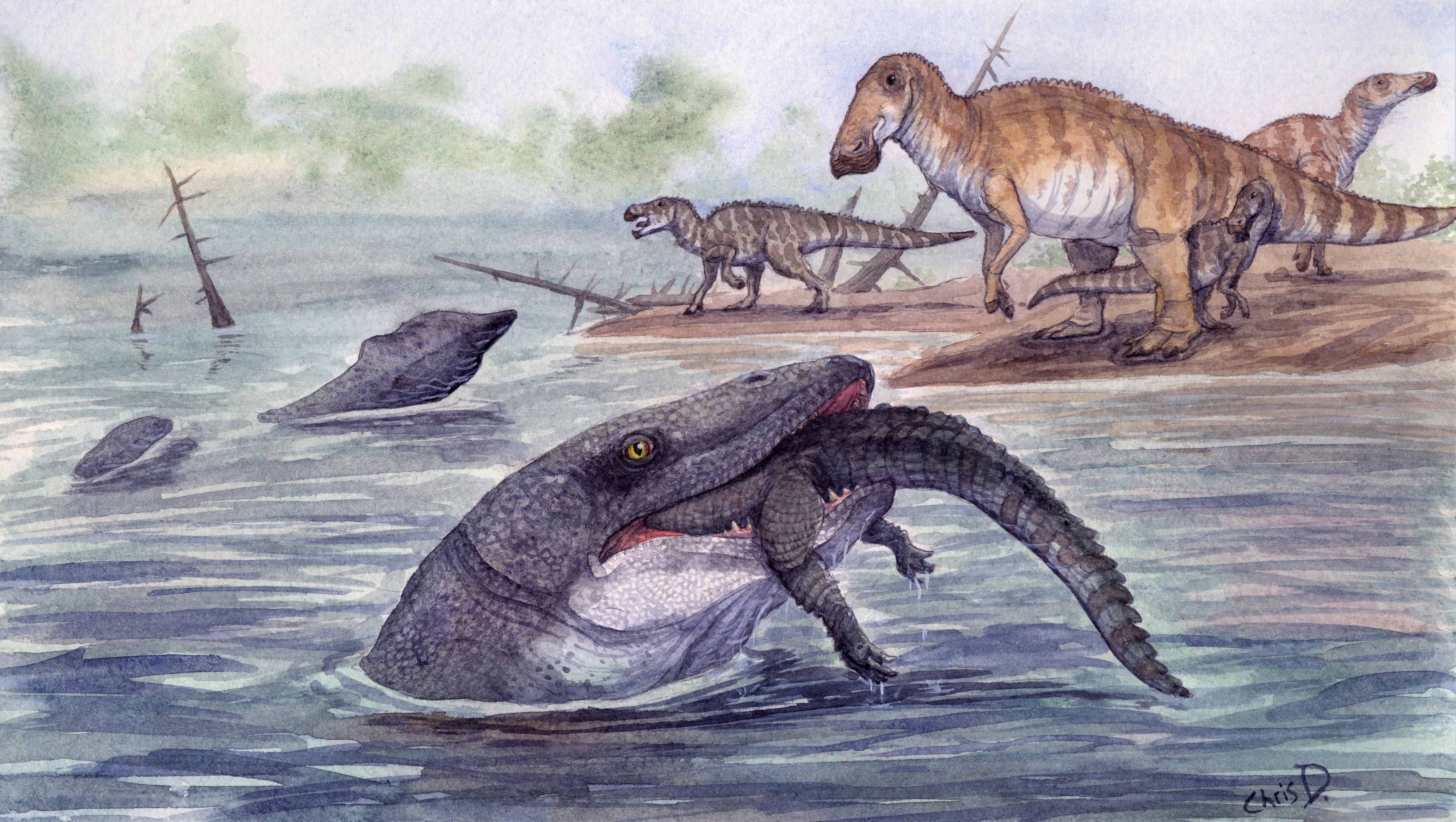
A reconstruction of the Hell Creek Mosasaur. Credit: Christopher DiPiazza

A 12-metre-long sea dwelling lizard-like reptile that lived alongside the dinosaurs may have been able to hunt in rivers, according to international researchers, who analysed a 66-million-year-old tooth from the USA, finding chemical signatures in the tooth that suggest it spent some time in freshwater. The tooth once belonged to a mosasaur, an extinct reptile with a bulky skull and powerful jaws known previously as an ocean predator at the time of the dinosaurs. The tooth was found in the Hell Creek Formation, which was once a rive-like area connected to an ancient sea known as the Western Interior Seaway. The authors suggest that mosasaurs may have been opportunistic predators similar to modern saltwater crocodiles, and may have entered the freshwater environments as salt levels in the Western Interior Seaway declined.

Media release

From: Springer Nature

A 66-million-year-old tooth discovered in North Dakota, USA, suggests that some mosasaurs — extinct lizard-like reptiles that could grow up to 12 metres long — may have hunted in rivers as well as seas. The authors suggest that the findings, which are published in BMC Zoology, may represent the first evidence of a mosasaur hunting freshwater prey in Hell Creek at this time.

Melanie During, Nathan Van Vranken, and colleagues examined the tooth after it was discovered in 2022 in the Hell Creek Formation in North Dakota, USA, in a river-like area formerly connected to an ancient sea known as the Western Interior Seaway. They suggest that it belongs to a member of the mosasaur group Prognathodontini owing to similarities between textured patterns on its surface and on teeth from other members in this group. Previous research has proposed that prognathodontids had bulky skulls and powerful jaws, and hunted in oceans.

The authors analysed isotopes within the tooth’s enamel to infer the conditions in which the mosasaur lived and found oxygen and strontium isotope signatures associated with freshwater environments. They suggest this could have been caused by the mosasaur preying on freshwater animals, indicating it was able to live and hunt away from the sea. The authors also found that the tooth showed no signs of being transported, suggesting it lived and died in Hell Creek. They note that no previously discovered mosasaur teeth that date to the same period have been found in this region. Additional analyses on older mosasaur teeth and other animals from the Western Interior Seaway revealed a concentration of isotopes more consistent with a freshwater habit than a seawater habitat. This indicates that salt levels in the region gradually decreased over time.

The authors propose that members of Prognathodontini may have been opportunistic predators occupying a similar niche to modern saltwater crocodiles (Crocodylus porosus). They may have adapted to a freshwater environment in response to falling salt levels in the Western Interior Seaway and gradually entered the river channels of Hell Creek as the seaway receded.

Multimedia

A reconstruction of the Hell Creek Mosasaur
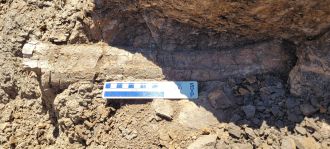
Photograph of an Edmontosaurus rib from the Hell creek locality
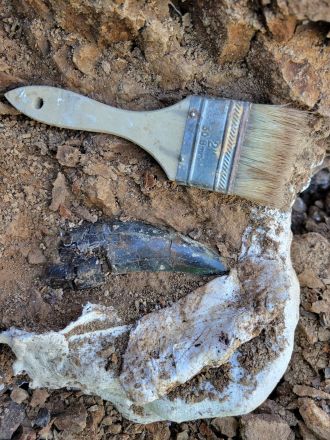
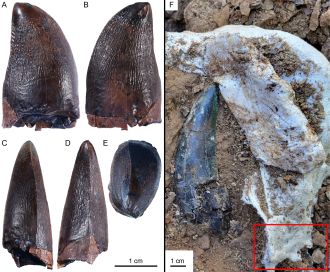
The mosasaur tooth as it was uncovered at Hell Creek.
Displaced slump block where the studied specimens were found.
A sample being prepared for analysis.
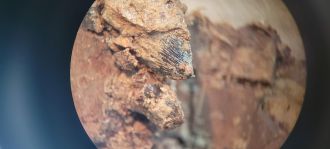
A close-up of the Brachychampsa teeth sampled in this study
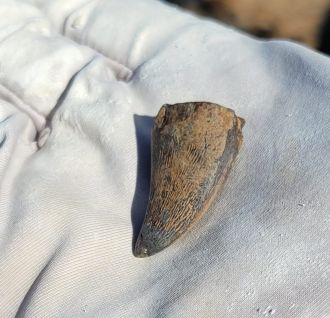
The mosasaur tooth found in Hell Creek discussed in this study.
Mosasaur tooth and t.rex tooth
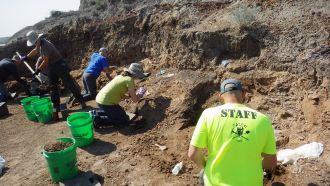
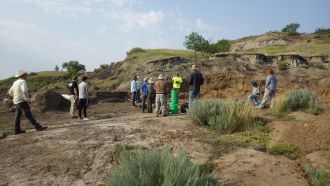
Researchers on-site at the excavation site in Hell Creek.
Journal/
conference:
BMC Zoology
Research:Paper
Organisation/s: Uppsala University, Sweden
Funder: Open access funding provided by Uppsala University. M.A.D.D. and P.E.A. were supported by the Swedish Research Council (2020–03685).
Media Contact/s
Contact details are only visible to registered journalists.