Moths to the (artificial) flame: LEDs suppress moth activity

Publicly released:
International
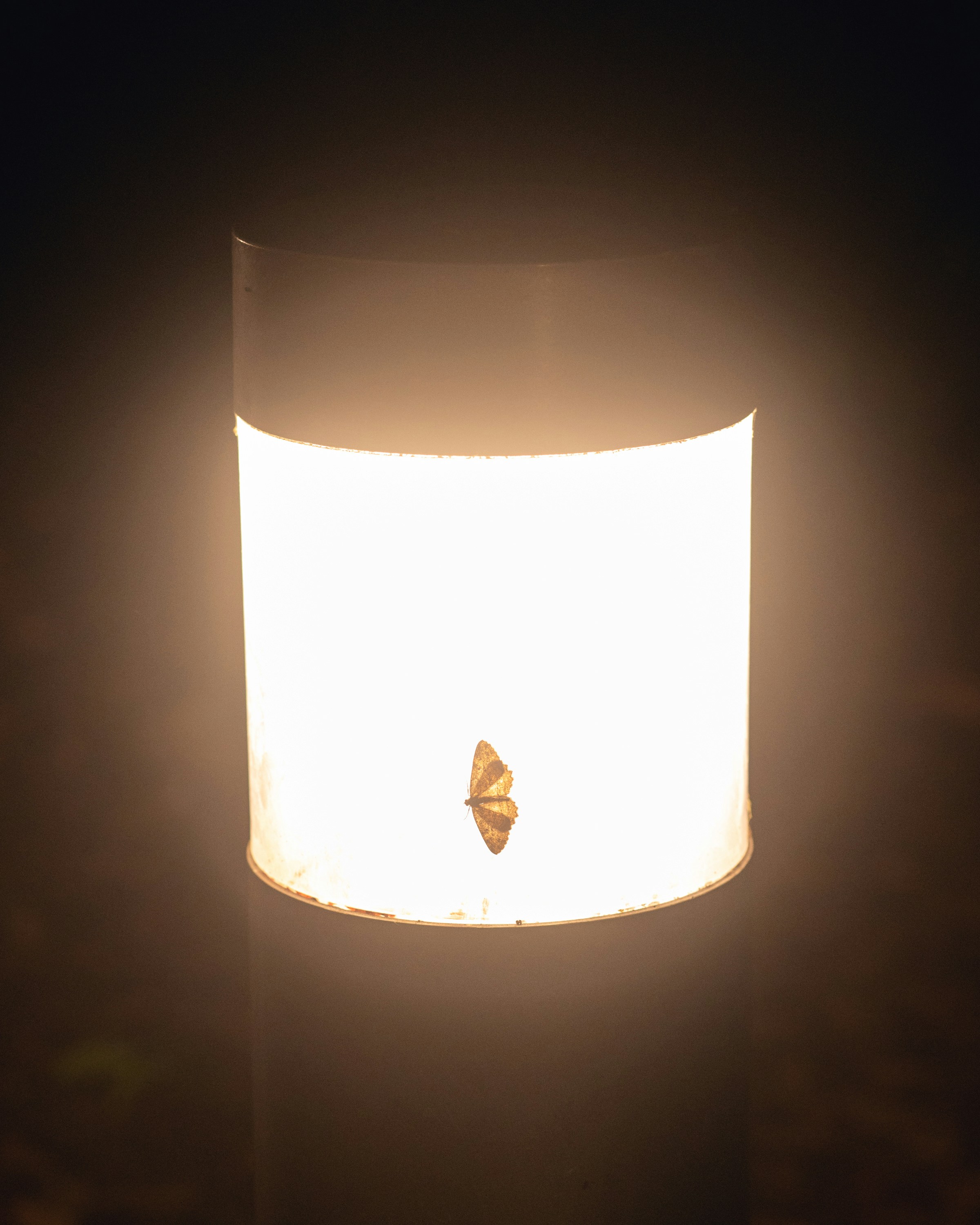
PHOTO: Patrick Perkins on Unsplash

Artificial lights may greatly reduce how active moths are at night, according to a UK study of more than 800 captured wild moths from 23 species. The researchers found that white LED lights at the brightness of a typical streetlight reduced moth activity by 85% on average, across species. To their surprise, amber LEDs, which are thought to be less harmful to insects, had a similar effect. The researchers said it was important to reduce overall light pollution at night, as its effects on moth activity could be contributing to moth population declines.

News release

From: The Royal Society

Severe and widespread reductions in nighttime activity of nocturnal moths under modern artificial lighting spectra

To investigate how changing technologies for artificial nighttime lighting (e.g. streetlights) might impact nocturnal insects, we measured effects of exposure to different light-emitting diodes (LEDs) on activity in a range of common moth species. At light levels realistically experienced, we found substantial reductions in activity compared to natural nighttime conditions, not only under typical white LEDs, but also using lights expected to be less harmful, such as amber LEDs. These pervasive effects on activity, irrespective of light spectrum, suggest potential for severe consequences of light pollution on moth populations, and further highlight the importance of naturally dark skies.

Attachments

Note: Not all attachments are visible to the general public. Research URLs will go live after the embargo ends.

Research The Royal Society, Web page URL will go live after embargo ends.
Journal/
conference:
Proceedings of the Royal Society B: Biological Sciences
Research:Paper
Organisation/s: University of Exeter, UK
Funder: Natural Environment Research Council grant NE/W006359/1 (ESB, JAMG, JB, KJG, JT) Wellcome Trust grants 220540/Z/20/A (CJW).
Media Contact/s
Contact details are only visible to registered journalists.