 Sign In



 Australia; New Zealand; Pacific
Multimedia
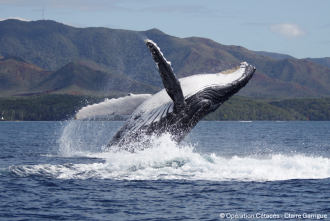

A breaching humpback whale off New Caledonia in the South Pacific.
- File size: 2.1 MB
- Attribution: Opération Cétacés - Claire Garrigue
- Permission category: © - Only use with this story
- Last modified: 28 Feb 2026 3:12am
- NOTE: High resolution files can only be downloaded here by registered journalists who are logged in.
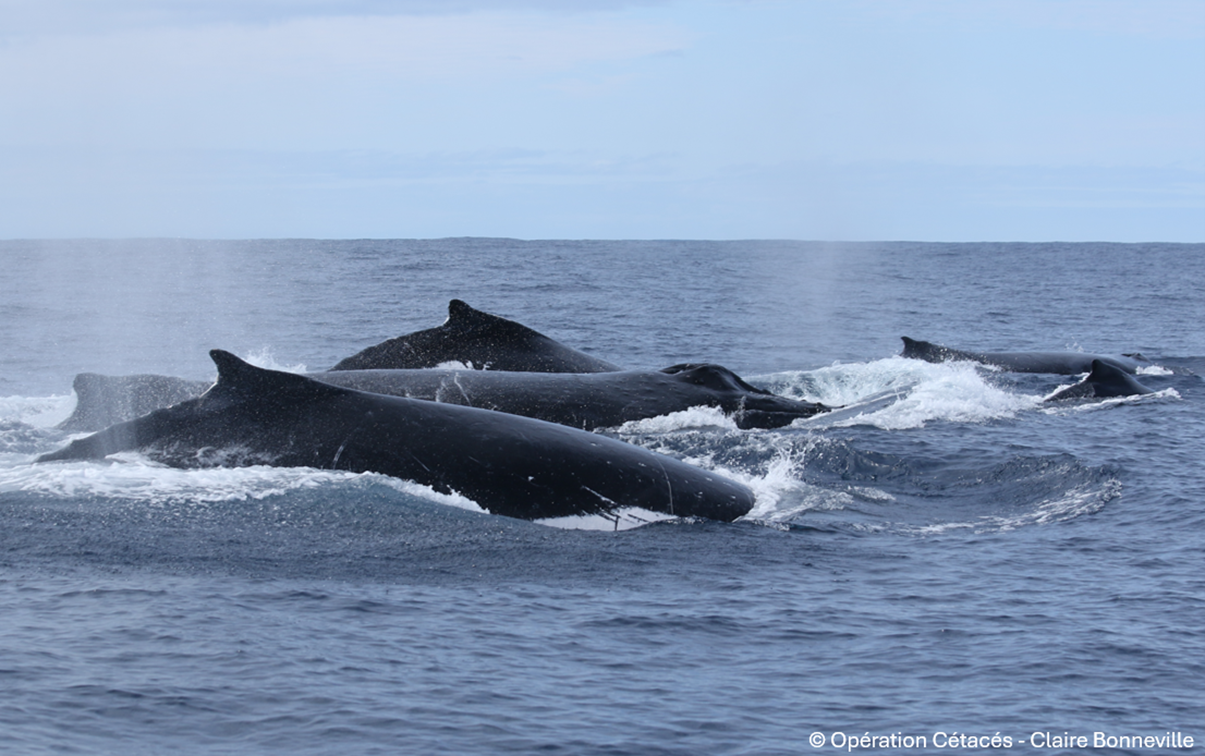
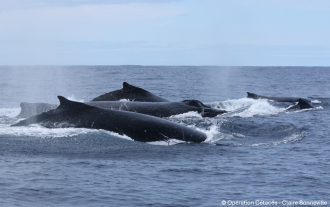
Male humpback whales competing to be closest to the female of the group
A group of male humpback whales physically competing to be closest to the female of the group, as observed on their breeding ground in New Caledonia in the South Pacific.
- File size: 1.6 MB
- Attribution: Opération Cétacés - Claire Bonneville
- Permission category: © - Only use with this story
- Last modified: 28 Feb 2026 3:12am
- NOTE: High resolution files can only be downloaded here by registered journalists who are logged in.
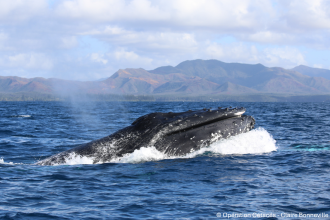
A humpback whale lunging its head out of the water.
A humpback whale lunging its head out of the water with the New Caledonian coastline in the background.
- File size: 2.1 MB
- Attribution: Opération Cétacés - Claire Bonneville
- Permission category: © - Only use with this story
- Last modified: 28 Feb 2026 3:12am
- NOTE: High resolution files can only be downloaded here by registered journalists who are logged in.
Journal/
conference: Current Biology
conference: Current Biology
Research:Paper
Organisation/s:
University of Auckland, Curtin University, University of St Andrews (UK), Opération Cétacés and IRD (New Caledonia)
Funder:
Surveys of humpback whales in New Caledonia were made possible by contributions from Fondation d’Entreprise Total and Total Pacifique; the Provinces Sud, North, and Isles; and the Ministe`re de la Transition Ecologique et Solidaire. The following grants to E.C.G. funded this work: the Royal Society University Research Fellowship (UF160081 and URF\R\221020), the Royal Society Research Fellows Enhancement Award (RGF\EA\180213), the Royal Society Research Grants for Research Fellows 2018 (RGF\R1\181014), the National Geographic Grant (NGS-50654R-18), the Carnegie Trust Research Incentive Grant (RIG007772), the British Ecological Society Small Research Grant (SR18/1288), and the School of Biology Research Committee funding. F.E. was supported by a University of St. Andrews School of Biology PhD scholarship.

