 Sign In



 International
News release
From:
Engineering: Glass offers a clear method for long-term data storage
Laser-modified glass could hold huge quantities of data for more than 10,000 years, according to a paper in Nature. The technology could prove effective for the long-term storage of legal, personal and commercial data that need to be preserved successfully.
Current data preservation techniques — such as magnetic tapes or hard disk drives — degrade after a few years or decades, making them unsuitable for long-term storage. Encoding data into glass via laser is a promising avenue, as this technique is resistant to moisture, temperature changes and electromagnetic interference. However, an efficient system to write and retrieve data using this technique has not been previously demonstrated.
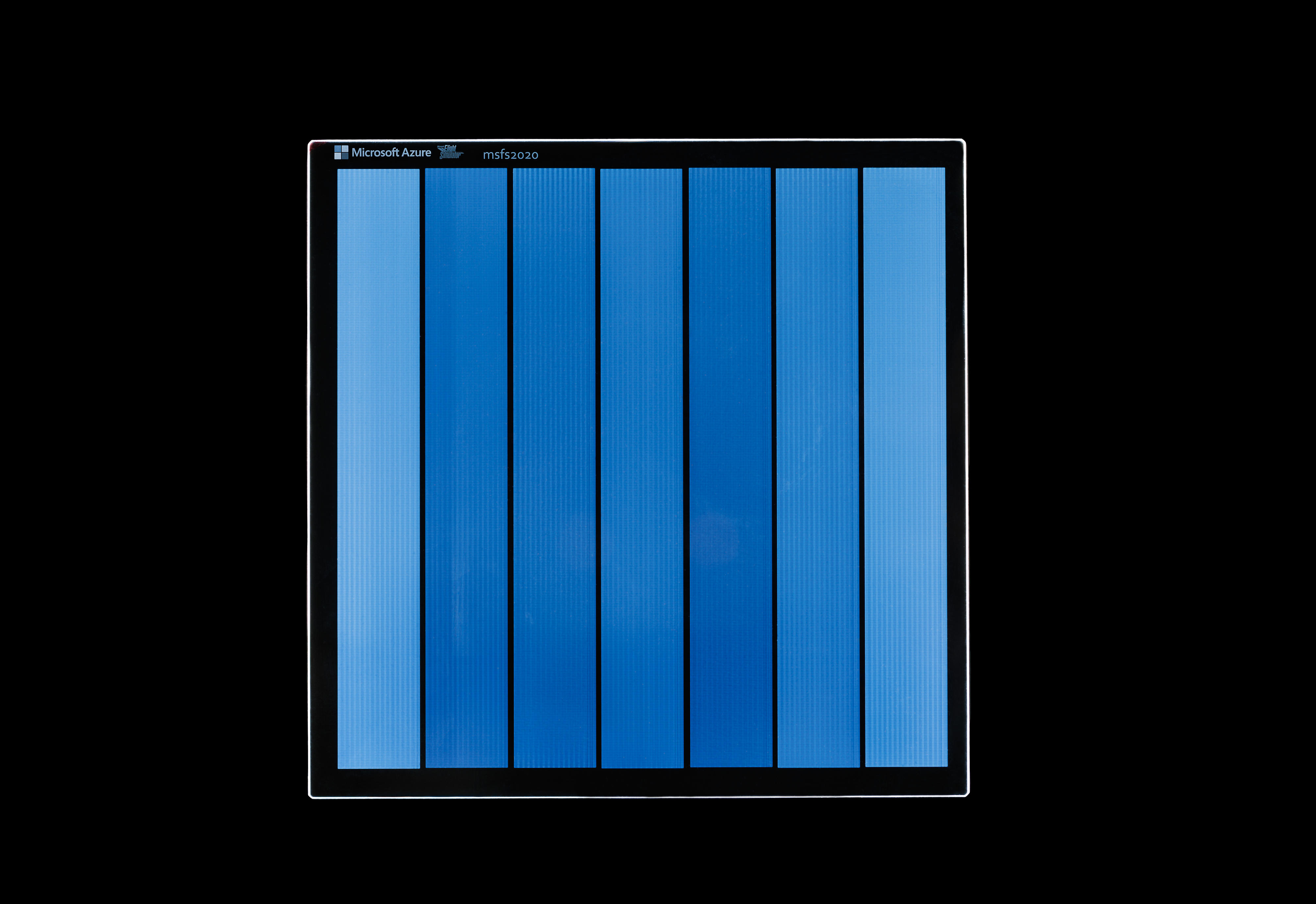
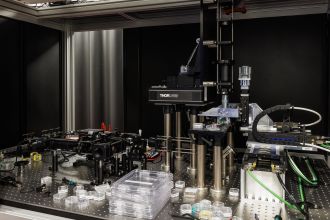
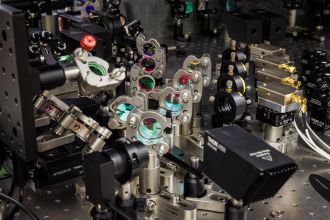
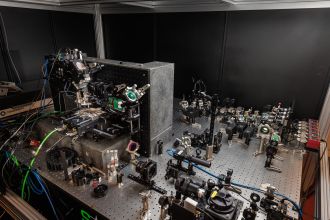
The Project Silica team at Microsoft Research present an archival data storage system called Silica, which writes data in glass using a multibeam femtosecond laser. The system can encode units of data called voxels — three-dimensional pixels — into the glass, which are each capable of storing more than 1 bit of data. The system has a writing capacity of 65.9 megabits of data per second for a data density of 1.59 gigabit per cubic millimetre or 4.84 terabytes in a 12-square-centimetre, 2-millimetre-deep piece of glass. “This storage is equivalent to about 2 million printed books or 5,000 ultra‑high‑definition 4K films,” note Feng Chen and Bo Wu in an associated News & Views. The Project Silica team conducted experiments to gauge the estimated lifetime of Silica that suggest that the data could be readable for up to 10,000 years if stored at 290 °C, indicating that it could likely last longer at room temperature.
The authors note that other glass compositions could influence the system’s ability to read and write data, and that the system can be used with off-the-shelf lasers. However, a limitation of the study’s lifetime experiments is that the lifetime estimates do not account for influences such as mechanical stress or chemical corrosion, which can degrade the glass media and its data.
In their News & Views, Feng Chen and Bo Wu write: “If implemented at scale, [Silica] could represent a milestone in the history of knowledge storage, akin to oracle bones, medieval parchment or the modern hard drive. One day, a single piece of glass might carry the torch of human culture and knowledge across millennia.”
Multimedia

Attachments
Note: Not all attachments are visible to the general public. Research URLs will go live after the embargo ends.


