 Sign In



 Australia; SA

News release
From:
A new international research paper is challenging long‑held beliefs about what makes the world’s fastest sprinters so quick, offering fresh insights that could transform how Australia develops its next generation of speed stars.
Published in Sports Medicine, the paper examines sprinting through a dynamical systems lens, arguing that sprint performance is not defined by one perfect technique but instead emerges from the unique interaction of an athlete’s body, environment and training history.
The study, led by Flinders University in collaboration with ALTIS, Johannes Gutenberg University and Nord University, highlights how coordination, strength, limb mechanics and individual physical characteristics collectively shape how an athlete sprints, explaining why no two sprinters look the same at full speed.
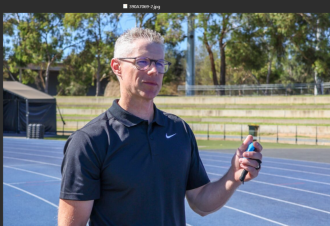
Lead author and Movement Scientist, Dr Dylan Hicks from Flinders’ College of Education, Psychology and Social Work says the findings challenge the conventional idea that there is a single, ideal technical model all sprinters should be coached toward.
“For decades, sprint coaching has often been based on the belief that all athletes should move in one prescribed way,” says Dr Hicks.
“But our research shows that sprinting is far more complex. The best athletes in the world don’t all run the same. What they share is not one technique but the ability to organise their bodies efficiently under pressure and that looks different for every sprinter.”
A key example is rising Australian sprint phenomenon Gout Gout, whose exceptional step length, power and neuromuscular control were highlighted in the paper.
“Gout Gout shows how individual characteristics can shape world‑class speed in different ways,” says Dr Hicks.
“His longer limbs, elastic qualities and remarkable coordination blend to produce the step patterns we see when he’s at full flight.
“You can’t coach another athlete to simply copy that. What you can do is understand the principles behind his coordination and create the right conditions for each athlete to find their own most effective version.”
The paper outlines why sprinting technique naturally shifts as athletes accelerate, reach maximum velocity and fatigue and why these changes are a normal and necessary part of high‑speed running.
According to the researchers, movement variability, long seen by coaches as a flaw to eliminate, is actually a key ingredient that allows athletes to adapt and improve.
This understanding has major implications for coaching. Instead of relying heavily on repetitive, isolated drills, the paper encourages coaches to create learning environments that allow sprinters to explore a range of movement solutions.
By adjusting task constraints, such as spacing hurdles, altering running surfaces or changing rhythm, coaches can encourage athletes to self‑organise more efficient techniques over time.
“Great coaching is not about enforcing one template, it’s more about guiding an athlete to discover how their own body produces speed,” says Dr Hicks.
“When we give athletes opportunities to problem‑solve through movement, we open the door to more resilient and adaptable sprint performance.”
The authors believe this approach could help identify and develop future Australian sprint talent by better recognising how individual athletes move, rather than filtering them against an outdated checklist of technical shapes.
Dr Hicks says the findings also help explain why Australia has recently produced a wave of exciting young sprinters, including Lachlan Kennedy and Gout Gout.
The research team hopes their work sparks broader discussion within coaching circles and provides a more modern, evidence‑based foundation for helping Australian sprinters reach the world stage.
The paper, ‘Sprint Running Coordination: A Dynamical Systems Perspective’ by Dylan S. Hicks, Stuart McMillan (ALTIS, Phoenix, USA), Wolfgang Schöllhorn (Johannes Gutenberg-University of Mainz, Germany) and Roland van den Tillaar (Nord University, Norway) was published open access in Sports Medicine journal. DOI: 10.1007/s40279-025-02380-6
Acknowledgements: Open access funding provided by Nord University.
Multimedia

Attachments
Note: Not all attachments are visible to the general public. Research URLs will go live after the embargo ends.


