 Sign In



 Australia; International
News release
From:
Simulations show why birds paradoxically run in a way that costs other animals significant energy
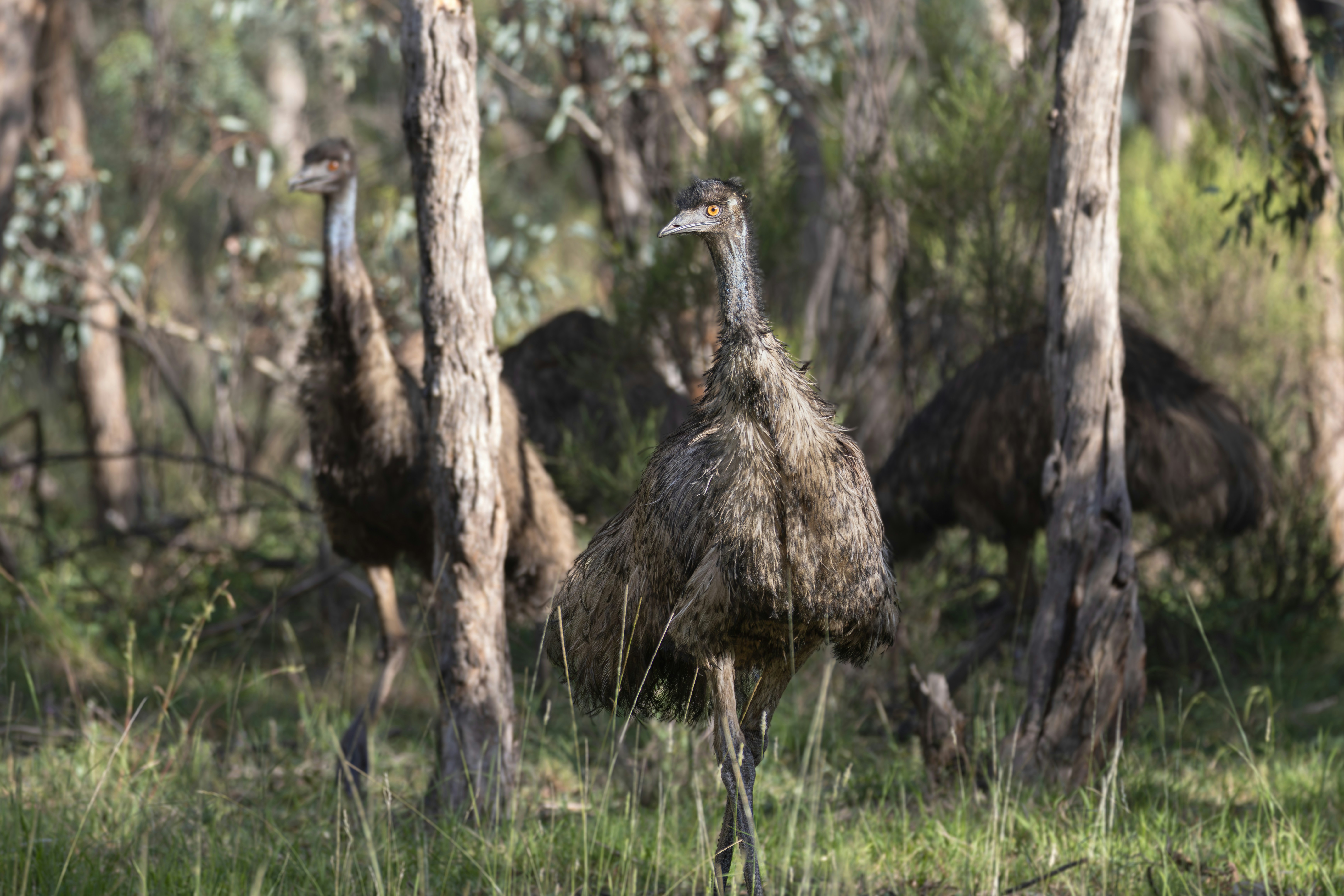
Unique musculoskeletal features explain why emus and other birds must resort to a running style in which one foot is always touching the ground, new research finds. For most other bipedal animals, this “grounded running” style takes more energy, presenting a longstanding paradox in the case of birds. Using the fleet-footed, flightless emu as a model, anatomical simulations showed that birds’ leg muscles are best at crouching, which prevents them from fully straightening their legs as most other bipedal animals can. When humans run, for example, there is a moment in each stride where neither foot touches the ground. Birds, however, always have one foot on the ground when they run. To address this seeming paradox, Pasha van Bijlert and colleagues asked: is there something biomechanically specific to birds that makes grounded running the best choice? They ran detailed simulations of the emu’s gait, examining energy expenditure and muscle movements. Doing so enabled them to study the dynamics of tendon elasticity and posture independent of one another during grounded running – something that cannot be studied in living birds. They found that the emu body plan makes it impossible for the birds to straighten their legs fully. Rather, emu muscles perform best in crouching positions, which predisposes the birds to grounded running. Emus and all birds still share certain morphologies with their ancestors, the non-avian theropod dinosaurs. Thus, van Biljert et al. suggest that these dinosaurs may have been grounded runners before birds evolved. “Fossil footprints of dinosaurs demonstrate a smooth distribution in stride lengths, which provides an independent line of evidence for non-avian theropod grounded running,” they note.
Attachments
Note: Not all attachments are visible to the general public. Research URLs will go live after the embargo ends.


