 Sign In



 Australia; NSW; ACT
News release
From:
Copycat cockatoos learn to adapt from each other
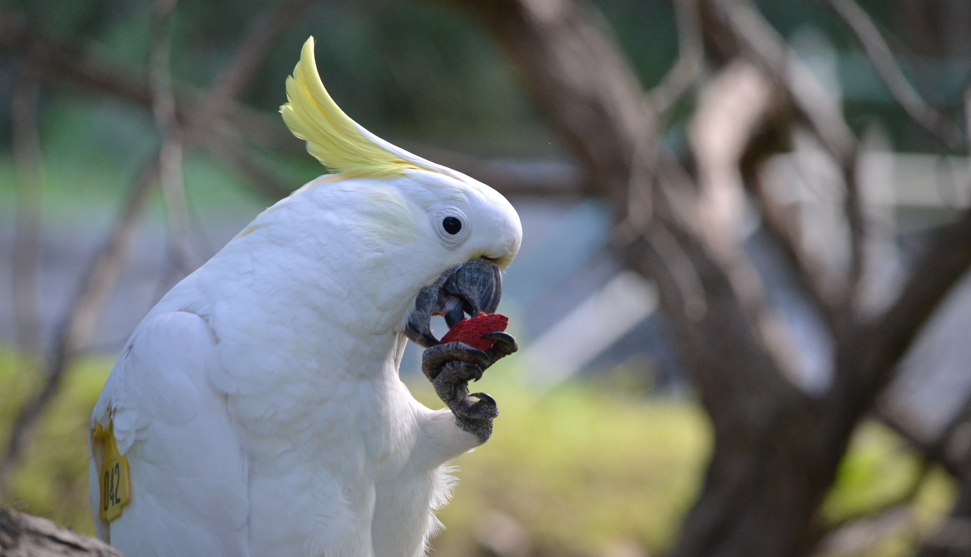
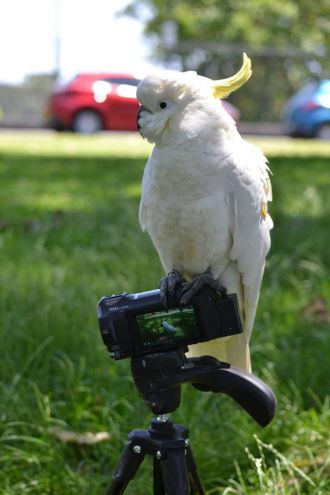
Research led by The Australian National University (ANU) has revealed that wild sulphur-crested cockatoos learn what foods are safe to eat by watching each other — a discovery that helps explain how the species thrives in rapidly changing urban environments.
In a large-scale field experiment across Sydney, scientists studied more than 700 wild cockatoos, training only four birds to eat colourful almonds from feeding stations near five roosting sites.
Within just 10 days, hundreds of other birds adopted the new food, but only in locations where trained individuals were present.
Lead researcher Dr Julia Penndorf, from the University of Exeter, said the results show just how critical social relationships are in shaping animal behaviour in the wild.
“Cockatoos don’t rely on trial and error alone — they use social information to decide what’s safe to eat,” Dr Penndorf, who conducted this research while at ANU, said.
“Once a few individuals learn something new, that knowledge can spread rapidly through their social networks.”
Birds were initially reluctant to try the unfamiliar food, highlighting the risks of experimenting alone.
Social cues helped overcome this hesitation, allowing knowledge about safe foods to spread quickly through flocks.
Statistical analysis confirmed that the spread of this new dietary behaviour was driven almost entirely by social connections between birds, rather than individuals discovering the food independently.
The study also found learning isn’t random, with birds selective about who they copy.
Males were more likely to follow other males, and individuals were most influenced by their closest social partners.
ANU researcher Dr Lucy Aplin said the findings highlight how social learning underpins the species’ success in urban environments.
“It’s not just about being in the same place — it’s about who you associate with,” Dr Aplin said.
“These social connections are what drive how new behaviours spread.”
Juvenile birds tended to follow the majority, while adults were less bound by group behaviour.
“The transmission of knowledge about novel food items was almost exclusively predicted by the social network of cockatoos,” Dr Aplin said.
“Juveniles were more conservative in their food choices than adults, preferring to copy the majority. This mirrors findings in humans, where young children tend to be more conservative.”
Researchers also observed cockatoos developing different techniques to crack open almonds, with these behaviours spreading through social groups.
“This is a clear example of culture emerging in the wild,” Dr Penndorf said.
“Different groups are developing their own ways of doing things, and those behaviours persist over time.”
The findings build on earlier ANU research into the Clever Cockie Project, which showed cockatoos are highly sociable and innovative city-dwellers, capable of learning complex behaviours like opening bins and adapting their foraging to human activity.
The study is published in PLOS Biology.
Multimedia

Attachments
Note: Not all attachments are visible to the general public. Research URLs will go live after the embargo ends.


