What effects did the Roman Empire's collapse have on European genetics?

Publicly released:
International
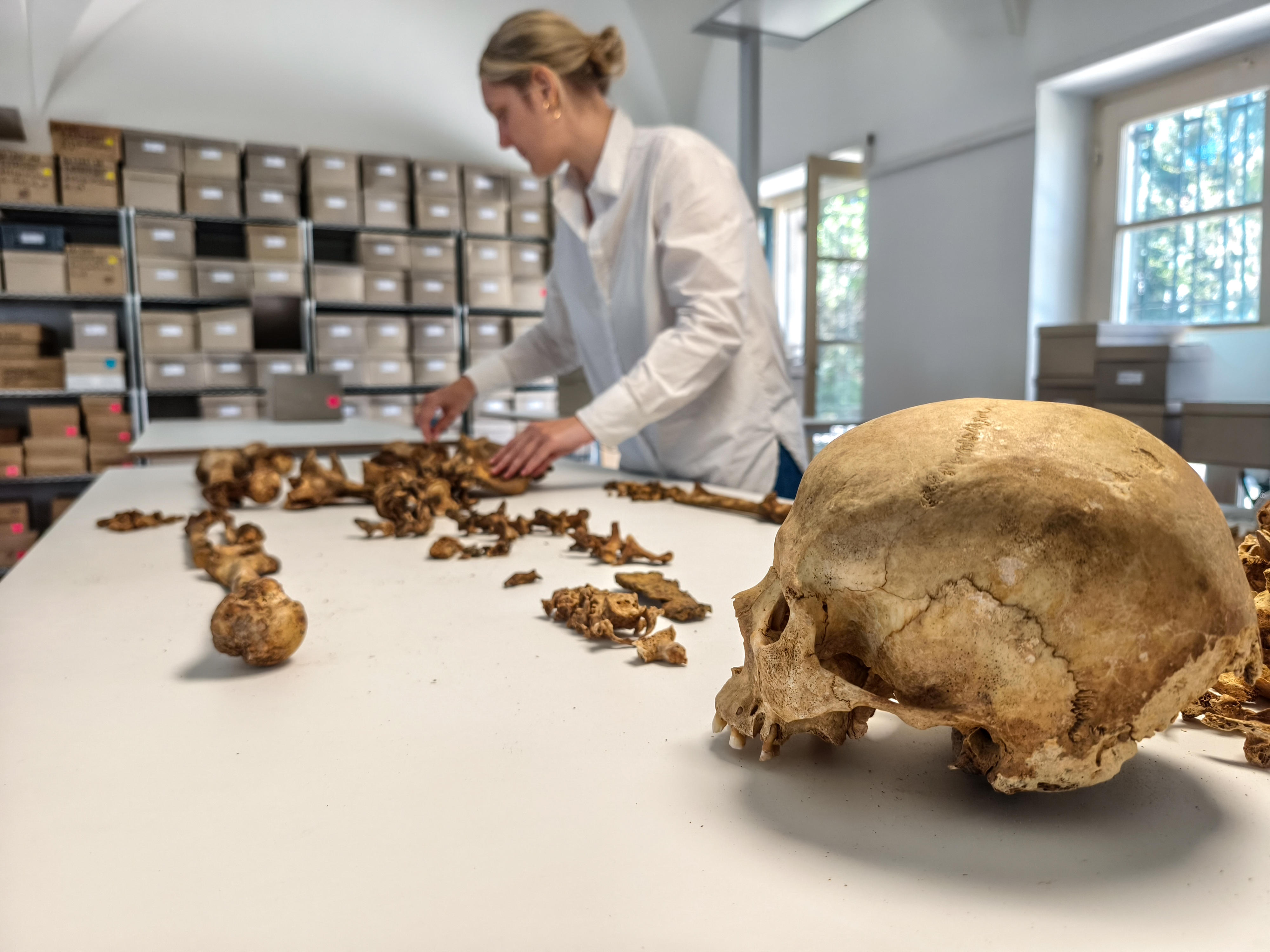
Analysis of a Skeleton. Credit: SAM / Harbeck

When the Western Roman Empire collapsed and Christianity spread, new societies formed in Europe as previously genetically distinct groups interbred, leading to a genetic landscape that resembles modern central Europe's, according to international scientists. The team analysed the entire genetic code of 258 people who lived in southern Germany in the late Roman and early Medieval periods (around 400 to 700 AD), finding that in the late‑Roman period, there were two genetically distinct groups - people with northern ancestry and the inhabitants of Roman settlements. Roman settlement dwellers were highly genetically diverse, the authors say, because many came from across Europe, and some were from Asia. When the Empire collapsed, people were more free to move and mix, so they interbred forming new societies. Despite their diversity, they appear to have shared culture. Despite low life expectancy (43.3 for men and 39.8 for women), the authors say most (81.8%) children grew up with at least one grandparent, and the rise of Christianity seems to have encouraged lifelong monogamy and a focus on the nuclear family, the researchers conclude.

News release

From: Springer Nature

Changes that shaped Europeans during the fall of the Roman Empire

Insights into family structures and demographic changes of Central Europe following the collapse of the Western Roman Empire are published in Nature. This era witnessed the emergence of new societies through the blending of previously genetically distinct groups, a process that shaped a genetic landscape that resembles that of modern Central Europe.

From the 4th century to the 7th century CE, Central Europe shifted from Late Antiquity to the Early Middle Ages. This transition is characterized by massive societal events such as the fall of the Western Roman Empire and the spread of Christianity, as well as changes in the political landscape across the region. However, little is known about the life of the average individual during this time.

Jens Blöcher, Leonardo Vallini, Joachim Burger and colleagues analysed 258 late Roman and Early Medieval (400–700 CE) genomes from ancient grave sites in Southern Germany. Their results show that in the late‑Roman period, the region hosted two genetically distinct groups — people with northern ancestry and the inhabitants of Roman settlements — the latter being highly genetically diverse, drawing ancestry from across Europe and even from Asia. The collapse of the Roman state, which enabled more mobility for many groups, led to the emergence of new societies. Despite their genetic diversity, the different local groups mixed and shared the same material culture.

The authors found that life expectancy was 43.3 years for men and 39.8 years for women, and that giving birth was potentially a major risk factor for early death in women. However, most children (81.8%) in the area grew up with at least one grandparent. The authors note an emphasis on the nuclear family and lifelong monogamy due to the rise in Christianity.

These findings offer insights into the transition from Late Antiquity to the Early Middle Ages, including the origin of the European kinship system, the authors conclude. They note that this transition is complex and should not solely be viewed through the traditional lens of conflict between barbarians and the Roman Empire. Rather than large-scale migration, the data show that migration happened in smaller, family- or kinship-based groups.

Multimedia
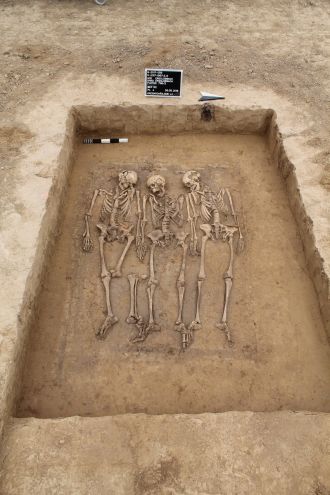
Three Brothers from 1,300 Years Ago
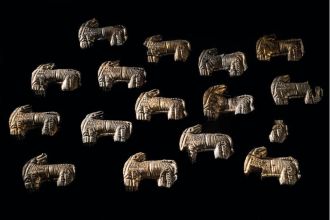
Metal fittings in the shape of lambs
Analysis of a Skeleton from the Early Medieval Site of Altheim
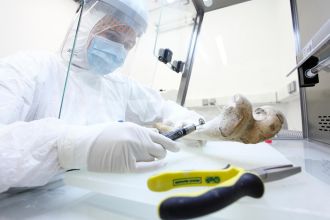
Palaeogenetic facilities at Mainz, Germany

Attachments

Note: Not all attachments are visible to the general public. Research URLs will go live after the embargo ends.

Research Springer Nature, Web page The URL will go live after the embargo ends
Journal/
conference:
Nature
Research:Paper
Organisation/s: Johannes Gutenberg University Mainz, Germany
Funder: Funding: Deutsche Forschungsgemeinschaft (DFG; German Research Foundation) Center for Advanced Studies 2496 ‘Migration and Mobility in Late Antiquity and the Early Middle Ages’ (M. Meier, S.P. and S.S.-H.); DFG grants BU 1403/19-1 (J. Burger) and QU 263/3-1 (D.Q.); Schweizerischer Nationalfonds (Swiss National Science Foundation) grant 310030_200420 (D.W.); European Research Council grants COREX (951385, M.G.T.), SUSTAIN (865515, M. Ivanova-Bieg), NeoMilk (324202, R. Evershed) and YMPACT (788616, V. Heyd); Wellcome Senior Research Fellowship Grant 100719/Z/12/Z (M.G.T.); DFG ‘Co-Move’ 466680522 (M.B.); DFG 555150076 (M.V.); and DFG GRK2526, project 407023052 (Y.T. and C.T.M.).
Media Contact/s
Contact details are only visible to registered journalists.