 Sign In



 Australia; SA
News release
From:
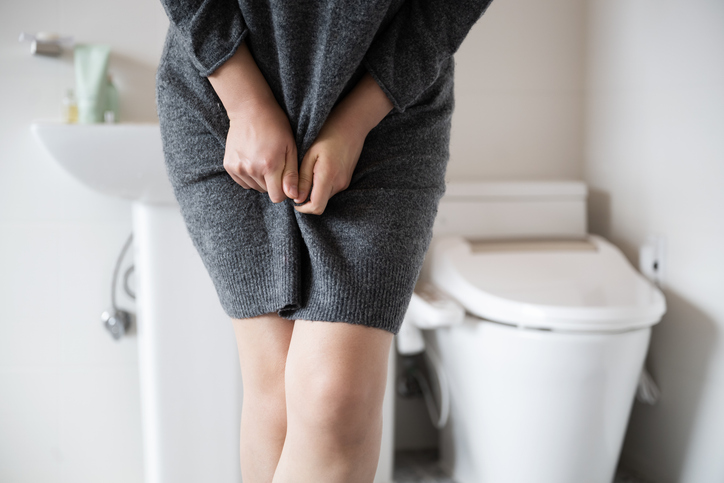
Australian researchers have discovered a previously overlooked group of bladder nerves that help detect urinary tract infections (UTIs) and trigger the body’s response to clear them, providing a potential new target for future bladder pain therapies.
The study shows that bladder nerves located close to the lining of the bladder act as a frontline infection sensor, helping the body recognise UTIs and trigger responses that reduce the severity and spread of infection.
UTIs are among the most common bacterial infections worldwide, with more than 400 million cases reported every year. Nearly one in three women will experience UTIs before the age of 24, and many elderly people and those with bladder issues from spinal cord injuries can experience multiple UTIs in a single year.
Symptoms often include frequent urination, a sudden urge to urinate, pain during urination, and pelvic discomfort can be debilitating for some patients.
Flinders University’s Dr Luke Grundy says that while scientists have long understood how the bladder senses as it fills and triggers urination, the role of a specialised group of bladder nerves near the bladder lining has remained unclear.
“Most bladder nerves act like a fuel gauge, telling the brain when the bladder is filling up and needs emptying,” says Dr Grundy, Head of the NeuroUrology Research Group at Flinders University.
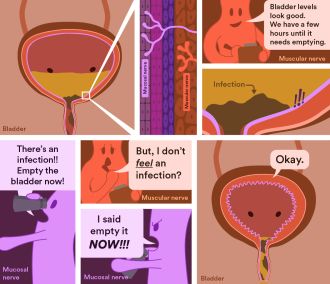
“The nerves we studied in this research are different. They sit close to the bladder lining and appear to act more like an early warning system, detecting infection and inflammation.
“They don't just sense infection. They help coordinate the body's response to it by triggering pain and urinary frequency, behaviours that appear to help clear bacteria from the bladder as part of the body’s defence system.”
Lead author and recently graduated PhD student Dr Cindy Tay says the discovery changes how these nerves are understood.
“These mucosal nerves have puzzled scientists for almost two decades because they stay quiet while the bladder fills and empties, which is the main job of the bladder,” says Dr Tay.
“What we’ve found is that they have a hidden job — acting as an early warning system that springs into action the moment infection takes hold.”
The research team developed a novel method to selectively study a specialised group of sensory nerves in the bladder lining of mice, revealing that while these nerves play little role in normal bladder function, they become highly responsive during a UTI and help detect and respond to infection.
“When the bladder is healthy, these nerves are relatively quiet, but during a urinary tract infection they become highly sensitive and respond to the presence of bacteria and inflammation,” says Dr Grundy.
“It may feel unpleasant, but urinating more frequently actually helps clear the infection by flushing out the harmful bacteria.”
The study also helps explain why people with conditions affecting nerve function may be more prone to recurrent or severe UTIs.
“If the nerves that detect infection aren’t working properly, the body may not respond as effectively,” says Dr Grundy.
Building on previous research, the new study reveals a deeper understanding of how UTIs affect bladder function and the nervous system, and could help develop new treatments that target these nerves to relieve UTI-related symptoms.
“Our findings provide new insight into how the bladder detects and responds to infection, helping explain the biological processes that drive the pain, urgency and discomfort commonly experienced during UTIs,” says Dr Grundy
Researchers say the next challenge is to develop therapies that ease the pain and urgency associated with UTIs while preserving the protective role these nerves play in fighting infection.
The paper, ‘Bladder mucosal afferents detect UTI and aid pathogen clearance,’ by Cindy Tay, Harman Sharma, Stewart Ramsay (University of Adelaide), Georgia Bourlotos, Sarah K Manning, Natalie E Stevens, Sophie J Miller, Geraint B Rogers, David J Lynn, Feargal J Ryan, Andrea M Harrington (University of Adelaide), Vladimir Zagorodnyuk, Steven L Taylor and Luke Grundy was published in Proceedings of the National Academy of Sciences (PNAS). DOI: 10.1073/pnas.2604124123
Acknowledgements: This work was funded by a Flinders Foundation Fellowship (L.G) and a Flinders Foundation Health Seed Grant (L.G. S.L.T). S.L.T and F.J.R were supported by NHMRC Investigator Grants (2008625 and 2017404 respectively).
Multimedia


Attachments
Note: Not all attachments are visible to the general public. Research URLs will go live after the embargo ends.


