Sign In



 International
News release
From:
Introducing Weather Jiu-Jitsu: a new approach to avert catastrophic weather events
Modeling suggests ‘nudges’ could alter hurricane tracks, weaken freezes and reduce extreme rainfall
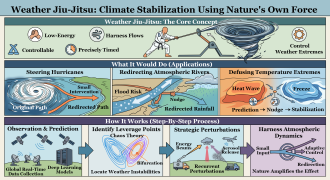
In a new perspective paper, Qin Huang, of Arizona State University, and colleagues, propose that the worst damage from extreme weather events could be prevented through Weather Jiu-Jitsu, a theory-based approach to “nudge” weather systems away from harmful trajectories. The paper publishes June 24 in the open-access journal PLOS Water.
Extreme weather events, such as droughts, floods, heatwaves and freezes, are increasing in frequency and intensity, causing both loss of life and incredible property destruction. In 2024, climate extremes caused an estimated $417 billion in damages. Historically, attempts to control the weather have been limited to small-scale operations – mainly cloud seeding to encourage local precipitation. But Huang and colleagues argue that small adjustments that carefully leverage the atmosphere’s sensitivity to disturbance could avert the worst effects of weather disasters.
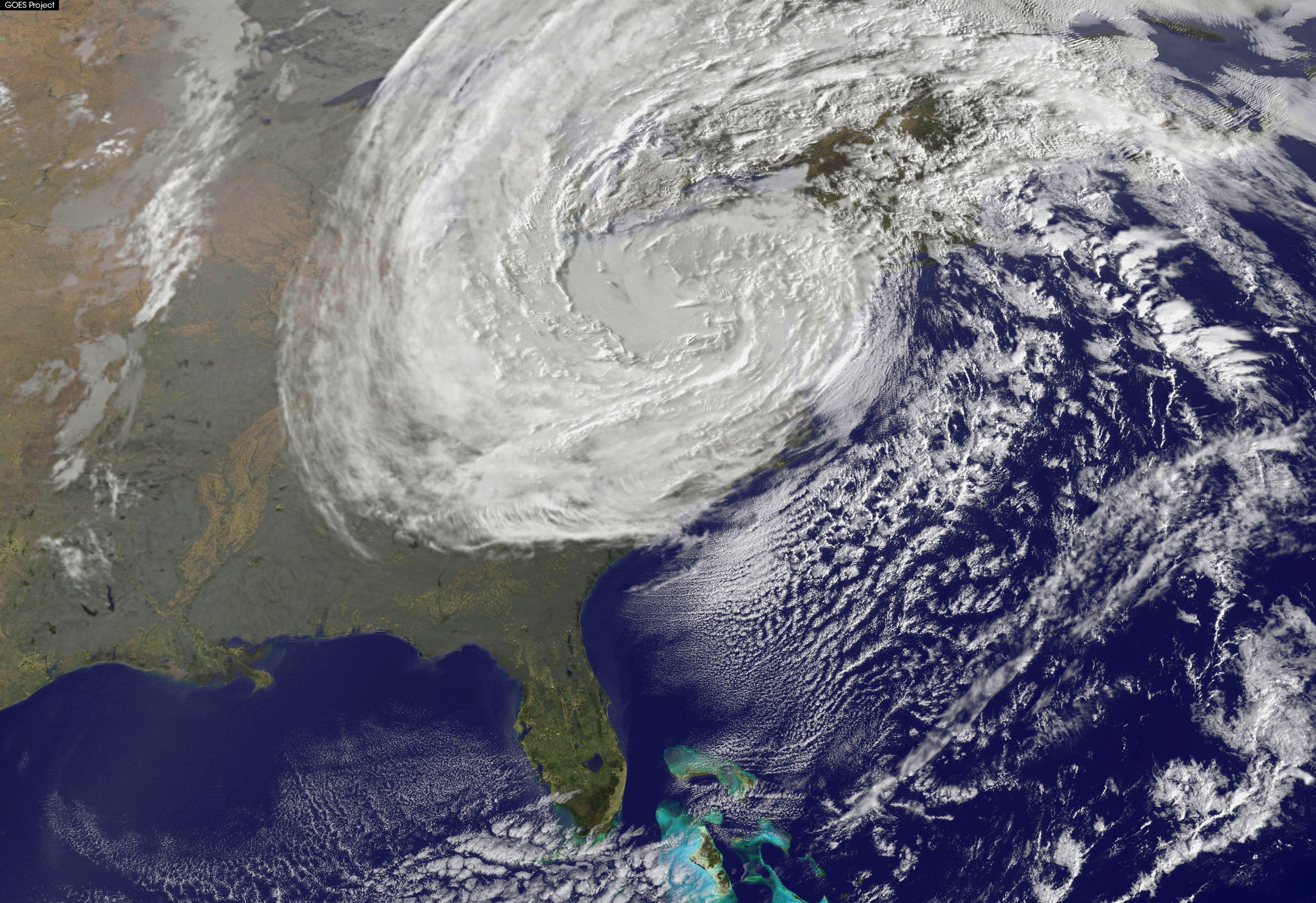
Researchers conducted proof-of-concept simulation experiments using established models of atmospheric circulation and Aurora, a large-scale artificial intelligence model designed to predict weather at high resolution. Their modeling suggested that small, carefully-timed cloud seeding operations applied days before the peak of an extreme weather event could have shifted the track of the 2012 Hurricane Sandy by about 300 miles to miss New York City, raised the low temperature of the 2021 Texas freeze by about 18 degrees Fahrenheit and reduced the amount of precipitation carried by a 2022 atmospheric river that caused flooding in California by about 5%.
While the simulations showed that Weather Jiu-Jitsu is possible, the researchers pointed out that real-world implementation will require advances in weather monitoring and a better understanding of where and how different weather extremes may be controllable. Additionally, the environmental, equity and political implications of the approach need to be researched and addressed. However, if successful, this approach could complement conventional disaster management and encourage more favorable outcomes from potentially devastating weather events.
The authors note: "The growing impact of weather extremes on society highlights that traditional approaches such as dams, levees, and insurance alone may not be sufficient to address the widespread consequences of these hazards. Weather Jiu-Jitsu proposes a new paradigm: using carefully timed and placed small interventions to leverage the atmosphere's own dynamics, potentially steering or defusing extreme events before they cause harm. It is a 21st-century approach to living with nature rather than simply reacting to it. If such an approach to control and redirect weather extremes using nature's power could be made operational, it would be transformative, especially for the most vulnerable who do not have recourse to other protections from weather extremes."
Multimedia