 Sign In



 Australia; New Zealand; International
News release
From:
A review of global tidal stream energy resources
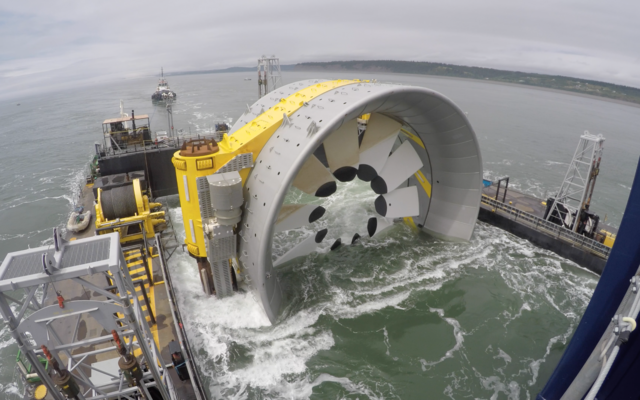
This review identifies 426 candidate sites for tidal stream energy across 19 countries. Most assessments quantify the theoretical resource—the maximum extractable energy. From 262 sites in six countries, this totals ~1,000 TWh/year. More informative assessments consider technical, environmental and economic limits. New UK data link theoretical and practical levels, applied globally to estimate a quasi-practical resource of ~110 TWh/year from 90 sites across the UK, France, Canada, USA, China and New Zealand. The UK, Indonesia and New Zealand show greatest national-scale potential. Estimates remain highly sensitive to turbine design and constraints, with wide P10–P90 variation.
Expert Reaction
These comments have been collated by the Science Media Centre to provide a variety of expert perspectives on this issue. Feel free to use these quotes in your stories. Views expressed are the personal opinions of the experts named. They do not represent the views of the SMC or any other organisation unless specifically stated.
Craig Stevens, Professor of Physics, University of Auckland & Earth Sciences New Zealand
"It is well established that if we want to maintain our Earth system processes in a way that suits our present societies and cultures, we collectively need to reduce greenhouse gas emissions. The impacts of not doing so will be immense and well in excess of the cost of re-tooling for a low-emission way of living. One of the key avenues to keep things in a manageable state is boosting utilisation of low-emission renewable energy resources – including solar, geothermal, wind and marine. From an Aotearoa New Zealand perspective, we are blessed with significant resources in all these flavours.
"This new article is a useful global survey of tidal energy hotspots – one of the leading varieties of marine energy. The hotspots are locations where the shape of the continents and islands interplays with the ocean tides to create regions with very strong ocean currents. These ocean currents are a form of energy just like wind – only with the greater density of seawater compared to air – much more energy. The last several decades has seen the development of technology to capture this energy. While there are many challenges, one of its major advantages is it is relatively predictable.
"The article makes the point that Aotearoa has a very substantial energy resource in the tides of Cook Strait | Te Moana o Raukawa and that singular installations can make a big impact nationally. This is true and well-established and a great reminder of the amazing environment on our doorstep. The nature of the twice-daily tide, the shape of Aotearoa’s main islands, and the contraction associated with the strait all mean there is a very large concentration of kinetic energy in the region.
"However, the reality of energy extraction is it is exactly that – a removal of energy from a system. Such extraction at the suggested scale would be excessively impactful from almost any perspective you care to choose. The way to view the opportunity is in terms of its contribution to an ecosystem of renewable energy resources along with more energy efficient ways of living and thriving. So modest scale tidal energy farms in constrained areas makes for a much more realistic future. While this may seem like a big challenge it is important to recognise that 'business as usual' is not an option in a shifting climate system."

Attachments
Note: Not all attachments are visible to the general public. Research URLs will go live after the embargo ends.

