Sign In



 Australia; SA; NT
News release
From:
Flinders University fossil experts have unearthed more clues about why kangaroos and wallabies have endured to become one of the continent’s most prolific marsupial groups.
They have analysed the powerful limbs of Australia’s earliest ‘true’ kangaroo – the shared ancestor of modern-day kangaroos and wallabies.
The palaeontologists focused on the limb bones of the extinct Dorcopsoides fossilis, found only in the rich Alcoota fossil field in the southern Northern Territory.
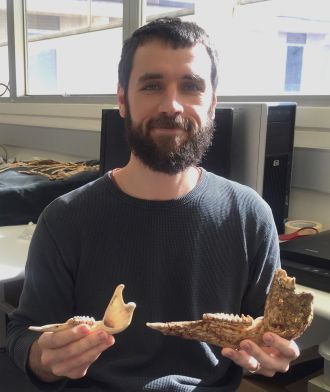
Lead investigator Dr Isaac Kerr says these hardy hopping marsupials, which lived around 7 million years ago in a period called the Late Miocene, are part of the group known as forest-wallabies or Dorcopsini. Although restricted to New Guinea today, dorcopsins had relatives on the Australian mainland until around 5 million years ago.
“Although first described in 1967 from some partial jaws, teeth and foot bones, it has since received minimal attention, despite the accumulation of many more specimens,” says Dr Kerr, from the Palaeontology Lab at the Flinders University College of Science and Engineering, lead author in a new article in Royal Society Open Science.
“For the first time we have analysed all their fossilised limb bones and compared them with limbs of living (extant) species, to shed light on kangaroo evolution.”
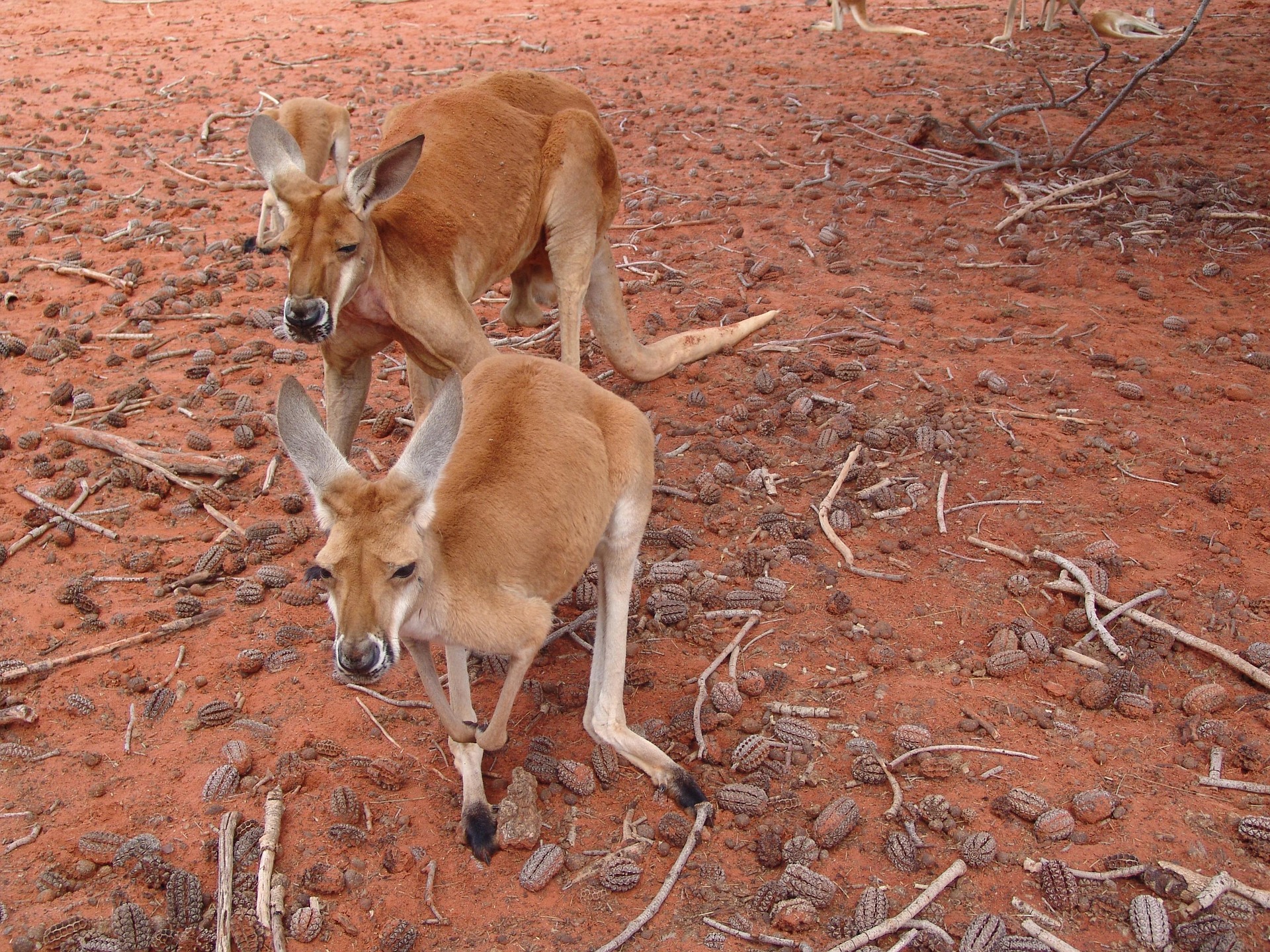
Macropodine kangaroos are those in the subfamily Macropodinae, which contains all living kangaroos and wallabies except one (the banded hare-wallaby).
Between 11 and 7 million years ago, central Australia lost its rainforest and became increasingly arid. This drove an evolutionary radiation in macropodine kangaroos, in which many new species evolved to exploit the new dry, open habitats.
“During this period macropodines became a dominant feature of the Australian landscape, which they still are today. However, until this study of Dorcopsoides fossilis, we have had almost no fossil evidence of the evolution of their iconic hindlimbs during this period,” explains Dr Kerr.
“Although D. fossilis is generally similar to living forest-wallabies, it has certain features seen in, for example, grey kangaroos, that imply some ability to hop powerfully and efficiently.
“These features indicate the species was adapted in part to moving through open habitats, able to move efficiently to find food in the drying landscape.”
This is the first direct evidence of adaptation to open, more arid environments in kangaroos from this time period, adds coauthor Professor Gavin Prideaux. “It bolsters evidence from more recent fossils and from genetic analyses about the timing and nature of the rise of macropodines.”
As to how D. fossilis may have looked, Dr Kerr adds: “Living forest-wallabies are peculiar, with slightly sad, whippet-like faces. Their strong, curved tails arch during slow movement so only the very tip touches the ground.
“Dorcopsoides fossilis may have looked like a larger, longer-legged version.”
The article, ‘Limb osteology and functional morphology of the extinct kangaroo Dorcopsoides fossilis (Macropodinae, Marsupialia) from Late Miocene central Australia (2025) by Isaac A. R. Kerr, Jasmin Hoadley, Gavin J. Prideaux and Aaron B. Camens has been published in Royal Society Open Science. DOI: 10.1098/rsos.251591.
Multimedia