Shared care of kids is more common than previously thought in Aotearoa

Publicly released:
New Zealand
Photo by Ryan Stefan on Unsplash

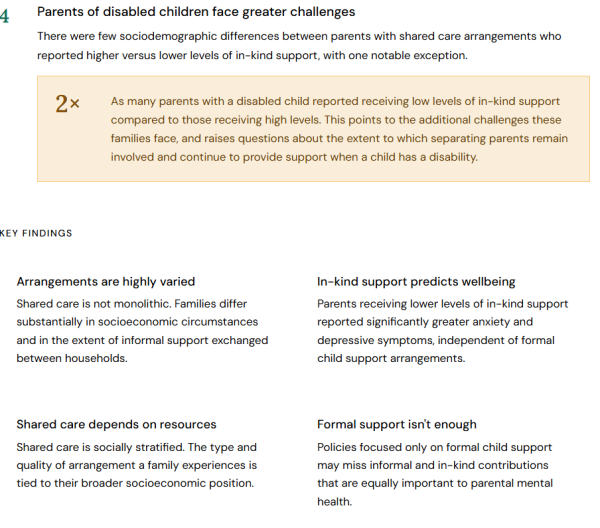
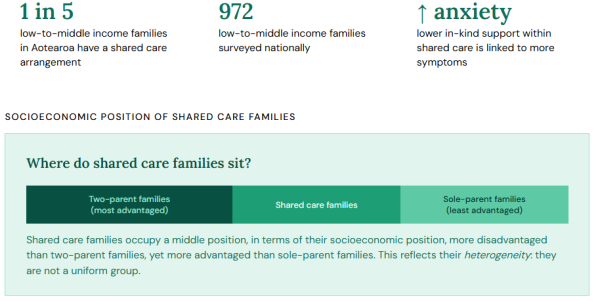
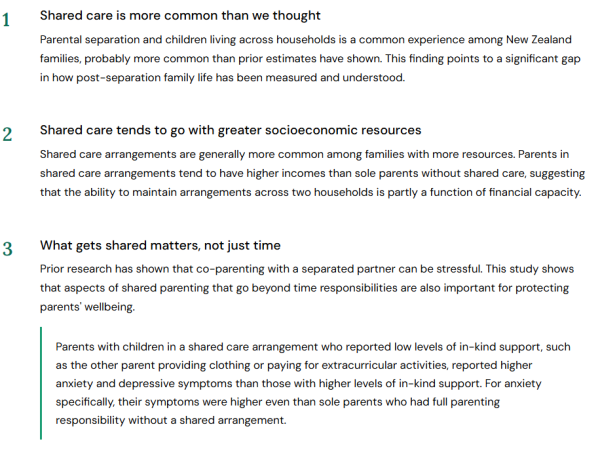
One in five low-to-middle income families have a shared care arrangement, where children live at two different homes after their parents separate, a new working paper shows. After surveying nearly 1000 families, the report author found shared care families were more socioeconomically disadvantaged than families with two parents in one home – but more advantaged than sole-parent families. The author says it shows a significant gap in how we understand post-separation family life, and that formal child support policies aren't enough to ensure a family's wellbeing.

News release

From: Motu Economic and Public Policy Research Trust

Across two households,

When support is thinly shared,

Stress settles at home

Shared care, shared burdens: in-kind support and parental wellbeing in Aotearoa New Zealand

When couples separate, shared care arrangements are typically measured by how parenting time is divided — but the sharing of resources, tasks, and informal support matters too.

This study examines how in-kind support within shared care arrangements shapes parental anxiety and depressive symptoms, drawing on nationally representative data from low-to-middle income families.
Attachments

Note: Not all attachments are visible to the general public. Research URLs will go live after the embargo ends.

Research Motu Economic and Public Policy Research Trust, Web page
Journal/
conference:
Research:Paper
Organisation/s: Motu Economic and Public Policy Research Trust
Funder: This research was funded by the Ministry of Social Development.
Media Contact/s
Contact details are only visible to registered journalists.