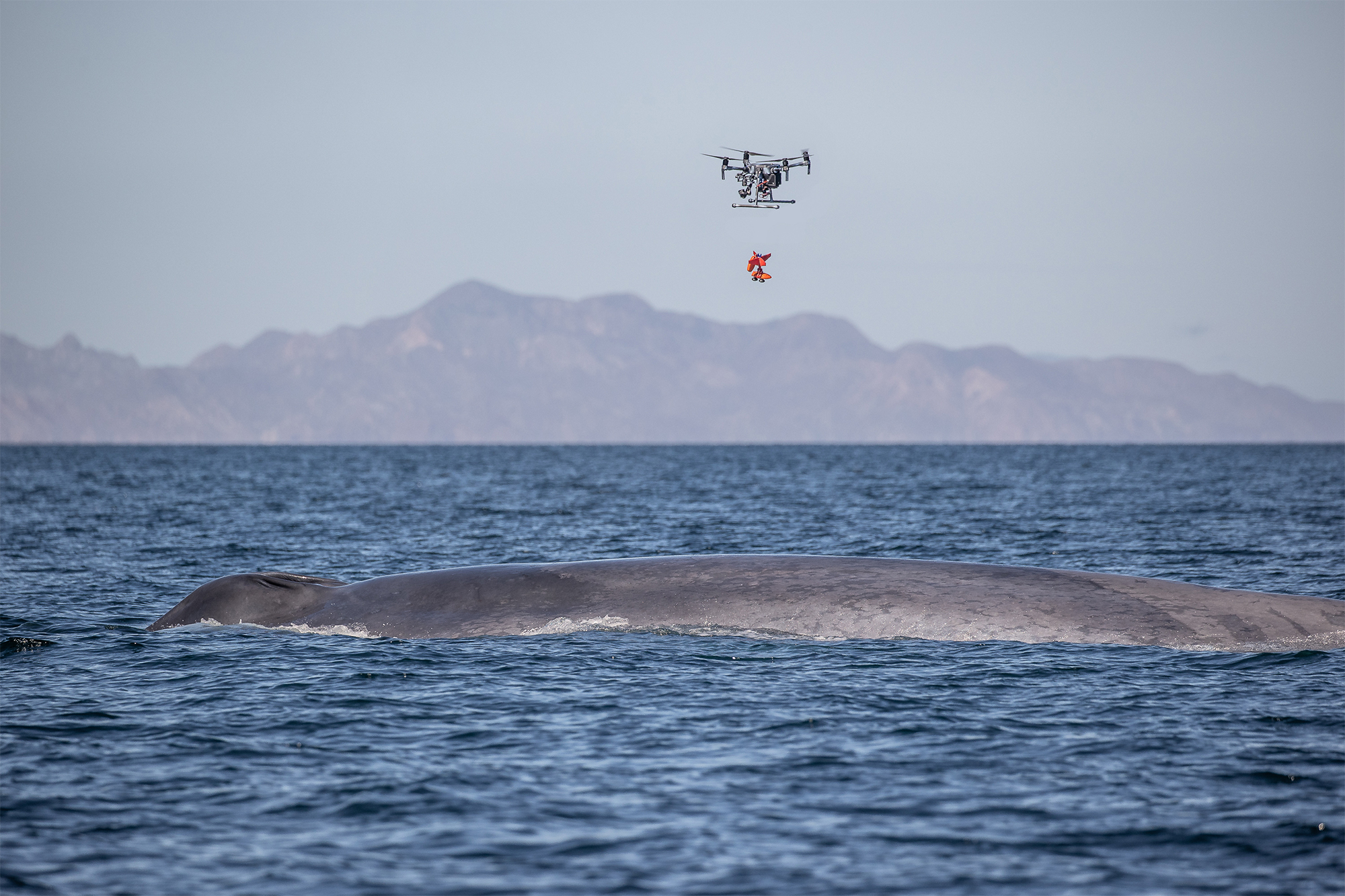
Researchers use drones to deploy tagging devices on wild whales

Publicly released:
International
Image by Christian Miller © Christian Miller

Tagging whales with devices that collect information about their movements and their environment has unveiled important insights into their behavioural ecology. However, getting a boat close enough to affix these tags with suction-cups remains difficult for researchers, distressing to whales, and dangerous for both. As an alternative, a team of international researchers trialled the use of drones to drop bio-logging tags on free-swimming blue and fin whales. The technique proved successful in 21 out of 29 attempts, which took an average of 2 minutes and 45 seconds, and a mean distance of less than 500 metres from the research vessel where the drones were launched. 

Media release

From: The Royal Society

Suction-cup attached biologging tags have provided major advances in our understanding of large whales. However, the close boat approach required to attach tags to free-swimming whales can limit success, harass animals and endanger people. As an alternative, we tested the efficacy of using an Uncrewed Aerial System for tagging blue (Balaenoptera musculus) and fin (Balaenoptera physalus) whales. We targeted whales on 29 occasions and tags were successfully attached 21 times. The mean flight time of from launch to tag deployment was 2.45 minutes and the mean distance from launch vessel to tagging was of 490 m, demonstrating the technique’s viability. 

Multimedia
Photo 2 - Christian Miller
Journal/
conference:
Royal Society Open Science
Research:Paper
Organisation/s: National Oceanic and Atmospheric Administration, US; Ocean Alliance, Inc, US; University of California Santa Cruz, US; Syracuse University, US; University of Michigan, US; Universidad Autónoma de Baja California Sur, Mexico
Funder: Funding for development and fieldwork was provided by OceanX and The Pamela K. Omidyar Trust. Conflict of interest declaration. A patent application was submitted by Ocean Alliance, Inc. based on these results. At the time of writing, Ari Friedlaender is a Board Member of Royal Society Open Science, but had no involvement in the review or assessment of the paper.
Media Contact/s
Contact details are only visible to registered journalists.