 Sign In



 International
News release
From:
Low-soot aircraft engines do not reduce contrails
Reducing aircraft soot emissions may not reduce contrail clouds, according to in-flight observations of emissions from a passenger jet with modern ‘lean-burn’ engines, reported in Nature. Contrails from aircraft contribute to the climate-warming impacts of aviation. The findings demonstrate that more work is needed to understand and reduce the climate impact of jet engine emissions.
The climate-warming effects of aircraft contrail clouds are almost equal to those from carbon dioxide (CO2) emissions, prompting the aviation industry to seek strategies to reduce contrail formation. Contrails form when particles from engine exhausts mix with water vapour and freeze, creating ice crystals that linger at high altitudes, potentially trapping heat radiating from the Earth. Soot particles were thought to have a major role in controlling ice crystal numbers in contrails. Thus, the development of lean-burn engines, which reduce soot emissions, may have the potential to reduce contrail-induced warming, but real-world data have been lacking.
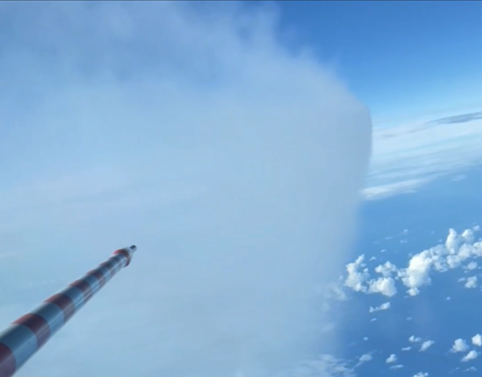
In-flight observations behind an A321neo aircraft (a model used in commercial flight) reveal that the engine combustion mode change alone may not be enough to reduce contrail formation, Christiane Voigt and colleagues report. They sampled the emissions from the test aircraft in lean-burn (low-soot) and rich-burn (high-soot) combustion modes and for different fuels. Soot emissions were 1,000 times lower for lean-burn versus rich-burn mode, but there was no discernable decrease in contrail formation. However, the contrails produced from low-sulfur fuels contained fewer ice crystals than those from fuels with regular sulfur content. For ultra-low sulfur fuels, the release of other vapours and lubrication oils was also shown to contribute to contrail formation.
Together, the results indicate that further research should explore how contrail ice formation can be reduced. However, the findings offer some insights into the changes to fuel composition and engine combustion modes that are needed to reduce the climate impact of aviation.
Attachments
Note: Not all attachments are visible to the general public. Research URLs will go live after the embargo ends.


